Mexico Energy News
Issue 9, March-April 2019
TABLE OF CONTENTS
I. Editor’s Note
II. Slowing Down Renewables, by David Shields
III. Book Review, by Philip L. Russell
IV. Sparks
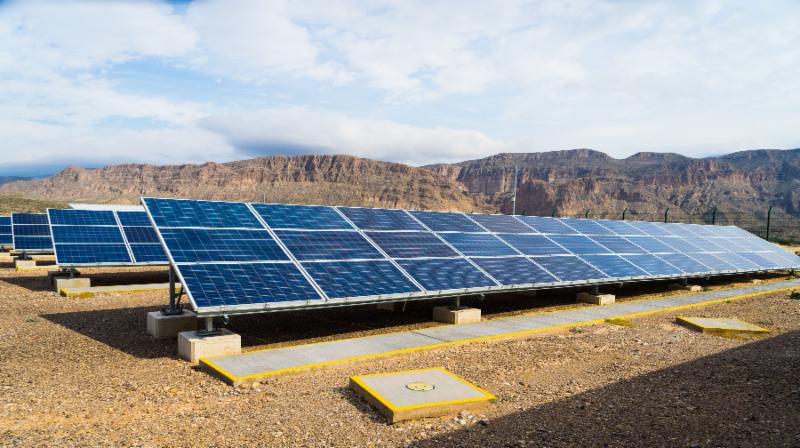
Masthead Photo: Boquillas del Carmen, Coahuila, by Rick Byrnes
I.
Editor’s Note
The energy policy of López Obrador’s five-month-old administration is slowly emerging. It is firmly rooted in the Tabasco of the 1970s. Tabasco is to Mexico as the Permian Basin is to Texas. In the 1970s, it was accepted in Tabasco that oil was the key to supplying energy and that the national oil company, Pemex, would produce it. López Obrador (AMLO) came of age in the Tabasco of the 1970s, and apparently his energy views have changed little since then. Similarly, in the 1970s, the accepted wisdom was that the state-owned Federal Electricity Commission (CFE), burning fossil fuels, was the best supplier of electricity. AMLO’s 2019 budget indicates a move away from renewables. This was emphasized by the postponement and later cancellation of the fourth clean-energy auction.
Currently, it appears that AMLO’s preferences are what determine government action. He has made several major investment decisions, such as abandoning the
partly constructed Mexico City airport, building a train through the Yucatán Peninsula, investing heavily in Pemex production, and constructing a new oil refinery in Tabasco. The refinery decision especially indicates the degree to which AMLO’s whims determine policy. Two agencies of his administration, the Mexican Petroleum Institute (IMP) and the Mexican Competitiveness Institute (IMCO), have decreed that constructing the refinery is folly.
Despite key indictors, such as Pemex production, the number of murders, and first- quarter economic growth, all making turns for the worse, AMLO continues to enjoy record-high public-approval ratings.
These high rating could come crashing down if the Fed raises interest rates or if Mexico’s credit rating is downgraded to junk. Either would result in investment capital leaving Mexico, a devaluation of the peso, and higher inflation. Approval ratings will also sink if AMLO is unable to reverse the key indicators mentioned above.
Even though there are several opposition parties, they are weakened not only by the majorities AMLO’s Morena party holds in both houses of congress, but by their still trying to regroup from their disastrous showing in the 2018 elections. They have little influence over AMLO’s policies.
It is AMLO’s own self-confidence that is pushing his agenda forward. Never, in decades of Mexico watching, have I seen Mexico’s pundits so unanimous in considering a new president’s initial decision-making to be misguided.
Philip L. Russell
Austin, Texas
russell@mexicoenergynews.com
II. Slowing Down Renewable Energy
by David Shields
Worldwide, wind and solar are the energy sources increasing most rapidly. However, everything indicates that in the next few years they will be deemphasized in Mexico, despite Director General Manuel Bartlett of the Federal Electricity Commission (CFE) and other government officials assuring us that they favor sustainable energy.
The first warning sign was the cancellation of the renewable-energy auction and of bidding for construction of high-voltage transmission lines. The auctions had made Mexico the world leader in attracting renewable-energy projects. As a result of this cancellation, Mexico has likely moved to the bottom of the list of Latin American countries receiving new foreign investment to complement government wind and solar energy investment. It is clearly behind Brazil, Chile, and Colombia.
There are various factors working against renewable energy. The concentration of power in the hands of President López Obrador marks a return to a system of energy monopolies. The reforms of recent years are being rejected, and AMLO hopes to dismantle the electricity market. Nor is the environment a priority of the new administration. Ecological protection and the Paris Climate Accords are absent from government discourse and its budget. The environment has to compete with refinery and fossil-fuel projects.
There is disarray in official policy-making. The leaders of the CFE display a general reluctance to adopt solar and wind energy. On the other hand, Energy Secretary Rocío Nahle and her renewable-energy director, Abelardo González Quijano, say that they support a rapid transition to these energy forms, especially solar PV on rooftops. They claim that there will be a mechanism to replace the energy auctions, but it is unclear what this plan will be. Instead of consulting and engaging in dialogue, both governmental entities are dismantling before even deciding how to construct.
According to the Energy Department, the transition to renewables is under way and will include energy storage. But it will not incorporate an energy market. At the macro level, the energy model will be based on the CFE, which will produce its own renewable energy, replacing new private investment. This presupposes that there is a substantial margin of reserve capacity installed and that the risks of energy outages are low, which might not be the case in certain regions of the country.
At the micro level, it will be a decentralized model that gives preference to social inclusion. The goal is to install PV on 4.5 million low-income homes by 2024. On paper, that is sound policy. What is not explained is how this sudden increase in solar PV, known as distributed generation, will be achieved, given the distortion created by government subsidies for household electric consumption. These subsidies eliminate the incentive for families to install PV. In any case, the Treasury Department will have to build incentives into electricity bills.
The CFE feels that solar and wind energy are expensive due to their intermittency and the need to back them up with other sources of electricity. And distributed generation doesn’t please them since they say it hurts CFE finances.
If planners are no longer thinking of turning to foreign companies that have made energy investments in renewables through the auctions, it is because they have gotten the message that the Mexican government is no longer welcoming private investment in large projects.
What does the future look like? Renewable energy has lost its allure in Mexico. The new administration’s views are confused and incompatible with the energy vision of multinational companies and other nations. In summary, as a friend in the wind industry told me, “Winter is coming.”
David Shields is an energy analyst.
Originally published in Spanish in the April 2, 2019, edition of
Reforma
.
II. Book Review
by Philip L. Russell
Sandrea, Iván, Rafael Sandrea, Mario Limón, Karina Vázquez, Andy Horbury, and Mark Shann. (2018)
Mexico: History of Oil Exploration, Its Amazing Carbonates, and Untapped Oil Potential.
Tulsa: PennWell.*
Several indicators give advance notice that this is not your normal book on the Mexican oil industry. The authors of the five essays that comprise the book work in fields such as geology and carbonate sedimentology. The bibliography, which does not include a single social-science source, cites seven American Association of Petroleum Geologists (AAPG) publications, six articles from the
Oil and Gas Journal
, and many similar Spanish-language publications. Finally, the publisher, PennWell, which has published titles such as
Oil Sands, Heavy Oil, and Bitumen
, is not noted for its social, economic, or political focus.
The first essay, by Rafael Sandrea, considers the history of Mexican oil development. Not surprisingly, given his petroleum background, Sandrea emphasizes the pivotal role played by Mexican geologist Ezquiel Ordóñez in Mexico’s early oil development to the almost complete exclusion of wheeler-dealers such as Edward Doheny.
Ordóñez made the site selection for the La Pez-1 well in 1904, which began producing at 1,500 barrels a day (bd). Although this well did not produce major amounts of oil, it did alert the world to Mexico’s oil potential.
Sandrea continues his narrative with descriptions of the blowouts at San Diego del Mar-3 (1908), later known as Dos Bocas, and Potrero del Llano-4 (1910). The narrative continues as water encroachment caused production in existing fields to collapse. This resulted in exploration expanding beyond the Tampico region. Expansion paid off with the 1930 discovery of the Poza Rica field with its 1.4 billion barrels of oil. There are detailed descriptions of the geology of the Poza Rica field and of the Golden Lane (
Faja de Oro
), the name given to the original producing region.
The 1938 oil nationalization is considered in one non-judgmental sentence noting that the nationalization caused a lull in both exploration and production. It is likely the first history of Mexican oil development to not even mention the name of Lázaro Cárdenas, the Mexican president who ordered the nationalization.
Oil exploration increased in the 1940s and 1950s, with the number of exploratory wells breaking 100 for the first time in 1956. That year’s wells resulted in 25 new oil discoveries. During the 1960s, almost 1,200 exploration wells were drilled, and 231 discoveries were made. The 1970s saw exploration move offshore into the Gulf of Mexico.
The outstanding offshore find was the supergiant Cantarell field. Early wells there flowed at many tens of thousands of barrels a day. A chart (Fig. 3-8) indicates the importance of the Cantarell field. It contained five times the reserves of Mexico’s next largest field.
Thanks to offshore finds such as Cantarell, by 2014, Mexico had 4 billion barrels of reserves in 465 fields, located in two “super basins”—Tampico-Misantla-Veracruz and the onshore and offshore Campeche basin. These basins account for all of Mexico’s oil discovered thus far.
The book reminds one of baseball reporting in that it is laden with statistics. Statistical categories include the number of wells drilled, their depth, production, and success rate. Another statistical measurement is the creaming curve (the number of wells plotted on one axis and total discoveries in barrels on the other axis). Such curves are presented for the nation and for each basin.
The latter part of the book shifts from history to the geology of each basin and its reserves. The Campeche offshore basin has the largest reserves—34 billion barrels. These geological descriptions include the age of the formation in the different fields, with the Upper Cretaceous having the most reserves.
The final essay considers the future of Mexican oil production, which is seen as quite bright. Its author, Mark Shann, notes, “Mexico enjoys one of the richest endowments of source rock in the world” (p. 89). Even though some 31,000 wells have been drilled so far in Mexico, given its geology, Shann sees future expansion.
One would have hoped for more discussion of the role of Pemex. The company only has six index entries, thus tying “dolomitization” for the number of entries. Since the book went to press before the December 2018 inauguration of President López Obrador, his policies are not discussed.
There is much of interest in this book, even for the non-geologist. Interspersed with its 100 pages of text are 15 maps and 46 other illustrations including tables, cross-sections, and reproductions of well logs. In addition, there are 23 photos. One standout depicts the close well spacing in the 1921 Gold Lane. (This contributed to the ecological devastation so eloquently described by Myrna Santiago.) Another shows the record Ixtoc-1 well blowout. Two photos concern the Cantarell field. One shows the oil slicks that drew fisherman Rodensindo Cantarell’s attention when he was fishing in the Gulf. The other shows Cantarell himself while holding a photo of his fishing boat. Finally, translations are provided for the Mayan names given to oilfields in the Gulf of Mexico. The Ku-Maloob-Zap (KMZ), currently Mexico’s largest producer, translates as “Nest-Good-Fathom.”
Bibliography:
Santiago, Myrna (2006)
The Ecology of Oil
. New York: Cambridge University Press.
*PennWell has also published a Spanish-language version of this book:
Historia de la exploración petrolera, sus asombrosos carbonatos y futuro potencial.
IV. Sparks
Hydrocarbons provide 91% of Mexico’s energy, coal 3%, biomass 2.9%, nuclear 0.9%, hydro 0.8%, and geothermal, wind, and solar together another 1.4%.
El País
,
March 15, 2019.
The Spanish company Iberdrola is one of the principal private Mexican energy suppliers. By the end of 2019, it expects to have seven wind farms, two solar farms, 11 combined-cycle plants, and five co-generation facilities in operation. It helps meet electricity demand that is increasing by 3% a year, even with 2% economic growth.
El Heraldo de México
,
April 23, 2019, p. 25.
Oil
During 2018, Pemex’s proven crude reserves declined 6% to 6.1 billion barrels.
El Economista
, April 12, 2019.
Gas
Of the 24 gas-pipeline contracts signed during the previous administration, 17 have resulted in completed pipelines, two are still under construction, one has been sabotaged, and four are blocked by social or legal conflicts.
Reforma,
March 22, 2019, p. 8.
During 2018, Pemex’s proven natural-gas reserves declined 3% to 9.7 trillion cubic feet.
El Economista
, April 12, 2019.
Industries in Nuevo León, Jalisco, and the State of Mexico were required to reduce natural-gas usage by 20% to 30% at the end of March. This resulted from a combination of increased use of natural gas by Pemex, pipeline maintenance, and diverting some imported gas to Mexico’s southeast.
Reforma,
March 29, 2019, p. 1.
During January, Mexico imported a record 620,000 metric tons of LP gas, mostly from the United States. The previous record, 570,000 metric tons, was set in December 2017. Imports increased because domestic LP production was 70,000 metric tons (roughly 20%) below the corresponding figure for 2018. LP gas is the fuel used by roughly 80% of Mexican homes.
expansion.mx, April 2, 2019
.
From April 2019, to the end of this year, Mexico’s limited capacity to import natural gas by pipeline will cost $204 million. The CFE signed a contract to import LNG at $6 per million BTU, well above the cost of gas imported by pipeline.
Reforma
,
April 26, 2019, p. 1.
Mexico imports 66% of the natural gas it consumes.
Reforma
, March 5, 2019, p. 1.
Coal
In 2013, President Peña Nieto signed a decree mandating the closure of coal-fired power plants by 2026. This decree formed part of Mexico’s effort to address climate change. The current administration reversed this decision and decreed that coal-fired plants would continue in operation until the end of their useful life. The 2019 budget includes $390 million to upgrade coal-fired plants. When visiting the coal-producing area of Coahuila, AMLO praised coal miners because they allowed Mexico “to generate electricity without depending on imported fuel.”
El País
, April 25, 2019.
The CFE will buy 4.9 million tons of coal from the Swiss firm Glencore for $519.6 million.
expansion.mx, April 10, 2019.
This imported coal will be used at the CFE’s Petacalco plant in Guerrero.
Reforma
, April 10, 2019, p. 6
negocios
.
The Federal Electricity Commission (CFE) requested bids for supplying 330,000 tons of coal—the first such purchase since AMLO took office. Antonio del Río, director of the Renewable Energy Institute of the National University, called the purchase “an open attack against the strategy for combating climate change.” Coal accounts for roughly 10% of Mexico’s electrical generation.
El País
,
March 29, 2019.
Renewables
Ten percent of Mexico’s electricity is now generated by hydro, while wind generates 3%, and solar 2%.
Energía Hoy
, March-April, 2019, p. 19.
At the end of June 2018, 24.2% of Mexico’s electric-generation capacity came from clean sources. This category includes renewables, nuclear, and co-generation. Of this, 17.29% came from renewables and 6.83% from other “clean” sources.
Forbes México
, April 2019, p. 112.
The French Company ENGIE and Tokyo Gas Co., Ltd., announced that they would form a jointly owned firm, Heolios EnTG, that would finance, construct, and operate six renewable-energy projects with a total capacity of 898.7 MW. Two of the projects employ wind while four employ PV.
Energía Limpia XXI,
April 11, 2019.
All of the projects are backed by 15-year power-purchase agreements secured through auctions. Plans call for the six projects to be commercially operative in 2020.
PV Tech,
April 4, 2019.
CFE Director General Manuel Bartlett said that the reason renewables had flourished in recent years was due to “subsidies.” He stated that he was not rejecting renewables, but that the goal of the CFE was to generate electricity, not buy it. He added: “They want to sell us more wind energy. However, we want to generate more electricity, not buy more.”
expansion.mx, March 29, 2019.
The retail chain Soriana reported that it plans to have all of its 978 stores supplied with clean energy. To accomplish this, it has invested $280 million in four wind farms built specifically to supply its stores.
Reforma
,
March 28, 2019, p. 6
negocios
.
Solar
In 2014, Mexico had two solar farms, whose generating capacity was 70 MW. Solar-generation capacity, counting both utility scale and distributed solar, now totals 3,5000 MW. Another 10 to 15 installations are under construction.
Forbes México
, April 2019, p. 108.
The Energy Regulatory Commission (CRE) reported that distributed solar- generating capacity is now 692.83 MW
.
PV Magazine-México
, April 30, 2019.
Mexico now has distributed solar installed on 100,000 rooftops, up from 60,000 in June of 2018.
forbes.com.mx, April 26, 2019.
Mexico now has 12 producers of solar panels. Most Mexican-produced panels are used for distributed generation.
Reforma
,
April 22, 2019, p. 5
negocios
.
All of the major Asian module manufactures, as well as the biggest European and Chinese inverter makers, participated at the first Solar Power México exhibition held in Mexico City. This high level of participation indicates that the PV market is thriving despite regulatory uncertainty resulting from the cancellation of the fourth long-term energy auction. Eduardo López, project director for Solar Power México, was quoted in
PV Magazine
as saying: “Growth is so
strong that it will be difficult not to pay attention to renewables. … We believe that the market will continue to grow.” The number of exhibitors from foreign nations presented something of a compressed economic history of the world. Three came from Spain, eight from the United States, and 24 from China.
PV Magazine USA
, March 27, 2019.
Wind
In 2018, Mexico added 929 MW of wind-generation capacity, bringing the total up to 5,000 MW. This year, an additional 1,500-1,800 MW of wind-generation capacity is expected to come on line.
Forbes México
, April 2019, p. 109.
Human
The city of Orizaba, Veracruz, installed two stationary bikes that allow users to recharge their cell phones by pedaling.
Diario de
Querétaro
, April 18, 2019, p. 8
.
Electricity
The decision to reactive the CFE’s old coal and fuel-oil plants will not only increase costs but will greatly harm the environment.
Sergio Sarmiento,
Reforma
, April 5, 2019, p. 10.
The CFE spends $9-10 billion annually on fuel to generate electricity. Of this, 40% is used to purchase fuel oil and diesel, 45% for natural gas, and 15% for coal. If one excludes the Permian basin, piped natural-gas prices are $2.60 per million BTU, while LNG is $5, fuel oil $10, and diesel $16.
Reforma
, April 24, 2019, p. 5
negocios
.
Financial links between the federal government and the CFE continue to emerge. The firm pays the federal government 46 million pesos a month to cover costs of the army and navy’s protecting its installations from thieves who steal cable and steel. Some 1,240 soldiers and sailors provide this service.
Milenio
,
March 31, 2019.
Hybrids and pure electric cars constitute 1.2% of the 1.4 million vehicles sold in Mexico annually. Such sales are increasing rapidly. In November 2018, they were 93% above the figure for the corresponding month of 2017. Currently, high purchase costs and the limited number—900—of charging stations hold back sales. To stimulate sales, in Mexico City, purchasers are exempt from the New Vehicle Tax (ISAN), a property tax known as the “
tenencia
,” and are exempt from the program known as “
Hoy no circula
,” which prohibits driving for one weekday per week.
Forbes México
, April 2019, pp. 76-77
.
Pemex
Pemex isn’t dead, and it’s not going to die, but its condition is critical. The company requires risky, long-term treatment. The outcome depends on a strategy that we’re still not sure about.
Luis Manuel Martínez, Standard & Poors,
Bloomberg BusinessWeek México
,
April 11, 2019, p. 41.
Production
In March, Pemex produced 1.691 mbd of crude, 8.4% below the corresponding month of 2018.
El Financiero
, May 1, 2019.
During the first three months of this year, Pemex crude production was 12% below the corresponding figure for 2018. During this period, refineries operated at 34% of capacity.
Reforma
, May 7, 2019.
In February, Pemex produced 213,000 bd of gasoline. That month, refineries operated at 35% of capacity.
Reforma
, March 26, 2019, p. 6
negocios
.
Pemex hopes to increase production from marginal onshore fields, fields requiring primary and secondary recovery, and shallow-water fields requiring significant investment. The company plans to let private firms bid on developing these fields, with winners covering 100% of capital and operating costs. They will receive 15- and 20- year production contracts.
El Financiero
, April 25, 2019, p. 10.
Trade
Imports of crude oil and petroleum products sharply increased during the administration of President Peña Nieto. In December 2012, such imports totaled 20 million barrels. By November 2018, the last month of his administration, they totaled 43.2 million barrels.
La Jornada
, April 22, 2019, p. 19.
Late in the Peña Nieto administration, petroleum-fuel imports steadily increased. They rose from 737,000 bd in January 2016 to 1.375 mbd in November 2018.
ONEXPO
, March-April 2019, p. 19.
In 2012, imports accounted for 49% of gasoline consumption. By the end of 2018, this figure had risen to 78%.
Reforma
,
March 18, 2019, p. 1.
Pemex exported an average of 1.475 mbd of crude in February 2019—24,000 bd more than it exported during the corresponding month of 2018.
Reforma
, March 27, 2019, p. 4
negocios
.
In February 2019, Pemex imported 898,500 bd of petroleum fuels. Gasoline comprised 542,000 bd of these imports. Gasoline imports were 16.2% below the corresponding figure for 2018
.
Reforma
, March 26, 2019, p. 6.
Financial
During the first quarter of 2019, Pemex lost 35.7 billion pesos. Losses resulted from a 16.3% decline in domestic sales compared to the corresponding period in 2018. This decline in sales resulted from higher prices for gasoline reducing demand, supply interruption caused by combating fuel theft, and competition from private vendors. Also, export revenue declined by 1.5% due to the volume exported declining by 1.1% and a decrease in the price of crude exported.
El Universal
,
April 30,
2019.
During the first quarter of 2018, Pemex posted a 113 billion-peso profit.
Reforma
,
May 1, 2019, p. 1
negocios
.
In 2019, $1.956 billion of Pemex debt comes due. That figure rises to $5.896 billion in 2021 and $11.156 billion in 2022.
Bloomberg BusinessWeek
México
,
April 11, 2019, p. 44.
Pemex reported that during the first three weeks of April 2019, fuel theft had declined to 4,000 bd, down from the 2018 annual average of 56,000 bd.
Wall Street Journal
, May 7, 2019, p. A10.
Despite reductions in the amount of fuel stolen, fuel theft remains a serious problem. Between December 2018 and February of this year, thieves tapped into pipelines 4,174 times.
El Heraldo de México
,
April 24, 2019, p. 7.
Nor has violence associated with fuel theft ended. In April, 20 armed men posing as police entered a police station in Celaya, Guanajuato, to free Armando N., a suspected fuel thief who was jailed there. Four people were killed as police, soldiers, and the supporters of Armando N. exchanged fire. Among the dead was the presumed thief freed from the jail.
El Sol de Morelia
, April 20, 2019, p. 31.
There was another positive result of combating fuel theft. Greenpeace reported that between January 8 and 26, due to less fuel being burned, there was a noticeable decrease in the amount of nitrous oxides, carbon monoxide, and particulate matter in Mexico City’s air.
Reforma,
March 27,
2019, p. 1
ciudad
.
To prevent the increased price of imported gasoline from provoking the wrath of consumers, the government has been lowering the federal tax on gasoline, known by its Spanish acronym IEPS. Thus, the tax on regular for the week of April 27-May 3 was 1.993 pesos per liter, a 41% reduction. The tax on premium was 3.24 pesos per liter, a 20% reduction. (Reductions are set weekly.)
El Financiero
, April 29, 2019.
This reduction not only runs counter to efforts to reduce emissions of greenhouse gases, but reduces taxes largely paid by more affluent automobile owners. A more progressive move would have been to implement an equal tax reduction on the socially regressive value-added tax.
The Treasury Department announced that it would transfer 100 billion pesos (roughly $6 billion) from the Income Stabilization Fund (FEIP) to Pemex to enable the company to make payments on its debt without incurring costly finance charges. The FEIP was established in 2001 as a rainy-day fund.
La Jornada
, April 15, 2019, p. 6.
AMLO
One day they make a statement, and the next day they deny it. They qualify it, modify it, reverse course, or change the subject.
Víctor Rodrígez Padilla,
Energía Hoy
, March-April, 2019, p. 24.
The Fourth Transformation* reeks of gasoline and coal.
Denise Dresser,
Reforma
, March 25, 2019, p. 11.
*President López Obrador characterizes the changes he hopes to make during his administration as the “Fourth Transformation.”
After the López Obrador administration had completed its first 100 days, Greenpeace declared that its energy polices make it more difficult for Mexico to reach its 2030 clean-energy goals. The organization criticized the cancellation of the fourth clean-energy auction, the reactivation of thermoelectric plants, increasing oil production, a 36% reduction in funds to mitigate effects of climate change, and the decision to emphasize refining, including the construction of a new refinery.
Reforma
, March 15, 2019, p. 13.
López Obrador, contradicting his energy secretary, again stated that there would be no fracking during his administration.
La Mañanera
, March 20, 2019.
The conflict between agrarian interests and the energy demands of a globalizing society continues to play out in Morelos. Despite the AMLO administration’s having organized a referendum that approved putting the 642-MW combined-cycle power plant in Huexca into operation, power-plant protesters refused to accept the results of the referendum. (See Issue 8.) Opponents of the plant, who fear it will deprive them of irrigation water, threatened to demonstrate at the ceremony commemorating the anniversary of Emiliano Zapata’s death. This year’s event drew special attention because it marked the 100th anniversary of his assassination. Rather than face protesters in the Huexca area, the traditional location, AMLO decided to hold a well protected ceremony in the state capital, Cuernavaca, distant from protesters. The plant has yet to generate electricity.
ADN Político
, April 11, 2019.
According to the Mexican Petroleum Institute (IMP), the Dos Bocas refinery that the López Obrador administration plans to build in Tabasco will not be viable technically or financially. (See Issue 8.) Another government agency came to a similar conclusion concerning the refinery. The Mexican Competitiveness Institute (IMCO) concluded that there was a 98% chance that costs of the refinery would exceed benefits. This conclusion only considered direct costs of the refinery and did not consider such costs as pipelines, storage facilities, and remodeling the port where the refinery is to be located.
El Financiero
, April 10, 2019.
Environmental lawyer Alejandra Rabasa commented on López Obrador’s energy proposals: “Even those of us who voted for him are disappointed. His energy views, based on coal and oil, are a throwback to the 1970s. The Dos Bocas refinery alone requires cutting down 300 hectares of jungle and mangrove. No environmental-impact statement was made for the project.”
El País
,
March 15, 2019.