Mexico Energy News
Issue 10, May-June 2019
TABLE OF CONTENTS
I. Editor’s Note
II. Articles
Don’t Reject Energy Options, by David Shields
The
BP Statistical Review of World Energy 2019,
by Philip L. Russell
III. Sparks!
Masthead photo: Boquillas del Carmen, Coahuila, by Rick Byrnes
Other photos by Philip L. Russell
I.
EDITOR’S NOTE
Mexico’s energy development shows some similarities to that of the United States. Both nations have an executive branch little interested in renewables or greenhouse-gas reduction, but in love with fossil fuels. As is the case with the United States, some corporations in Mexico, such as BMW, are ignoring government policy and are taking the need to reduce their carbon footprint seriously. In addition, vocal NGOs are making the case for renewables and greenhouse-gas reduction. In the Mexican case, this is evidenced by the March 2019 issue of
Encuentros 2050
and the World Resource Institute’s
Choosing the Right Path
(Flores Montalvo
et al.
2019). The analogy falls apart, though, in considering the legislative branch. In the U.S. case, at least the House of Representatives has brought climate change to the forefront of discussion. In the Mexican case, both houses of congress are controlled by President López Obrador’s MORENA party and so far have been rubber-stamping his fossil-fuel-friendly plans. Perhaps, after Mexico’s mid-term elections, the Chamber of Deputies will find its voice.
Philip L Russell
Austin, Texas
russell@mexicoenergynews.com
II. ARTICLES
Don’t Reject Energy Options
by David Shields
In a country such as Mexico, where cheap, accessible energy has been exhausted and where proven hydrocarbon reserves have fallen dramatically, two measures appear obvious. The first is initiating a massive search for new hydrocarbon reserves. The second is promoting clean alternatives to oil.
The administration of President Andrés Manuel López Obrador (AMLO) has not presented clear solutions to these two challenges. Its statements concerning oil are half-hearted and involve developing small deposits and mature fields. These measures have limited potential. The government has failed to call on the private sector. Electricity auctions have been halted, and the national development plan barely mentions renewables. This runs counter to the global trend of rapid increases in renewable—and of wind and solar, especially.
Mexico has a mere 7 billion barrels of proven hydrocarbon reserves, which will only last into the next presidential term. Widespread, sustained exploration is needed. This will be very expensive and will take a long time. In recent years, Pemex has barely engaged in exploration due to an acute lack of funding. If this doesn’t change, the company faces a dark future and won’t even produce enough crude to supply its own refineries.
Without massive investment in exploration, there won’t be mid-range production sites. AMLO’s respecting contracts from previous oil auctions made with private Mexican and foreign firms is a good sign. However, if his priority is Pemex, it is hard to understand why he doesn’t permit Pemex to form strategic associations (farmouts) with other companies that could bring in technology and capital for exportation.
Nor is it easy to understand his rejection of fracking, since Pemex could take the lead in association with private companies. This would increase domestic natural-gas production and reduce imports. Among the available options, farmouts are the most obvious. Pemex has development rights to 80 percent of Mexico’s potential oil lands. Some of these areas, which are currently undeveloped, could be developed with partners on terms advantageous to Pemex.
Mexico faces various challenges relating to oil and has multiple options to address them, whether the government wants to acknowledge them or not. To assure Mexico’s energy future and to fulfill Mexico’s commitments relating to climate change, immediate attention must be paid to such challenges as renewable energy, transmission lines, mobility, electrifying transportation, and overall sustainability. It makes no sense for the government to reject in advance what should be part of the solution.
This article was originally published in Spanish in the May-July 2019 issue of
Energía a Debate
.
The
BP Statistical Review of World Energy 2019
by Philip L. Russell
BP’s
Statistical Review of World Energy 2019
gives Mexico a reason to be proud.
While world primary-energy consumption increased by 2.9 percent in 2018, Mexican consumption declined by 1.3 percent. This figure reverses the average Mexican increase of 1.2 percent between 2007 and 2017 (p. 8). This reduction is all the more impressive since electrical generation increased by 0.9 percent in 2018 (p. 54).
Mexican per capita primary-energy consumption also declined in 2018. The 2.5- percent decline in per capita consumption was greater than the 0.2-percent decline between 2007 and 2017 and well below world per capita primary-energy consumption, which rose by 2.4 percent in 2018 (p. 12).
Mexico’s primary-energy sources are (p. 9):
(1) (2) (3)
Oil 82 .8 44 -3
Natural gas 77.0 41 4
Coal 11.9 6 -28
Hydro 7.3 4 1
Other Renewables 4.8 3 12
Nuclear 3.1 2 24
(1)
millions of tonnes of oil equivalent
(2)
percentage of primary energy supplied, 2018
(3)
change in percentage of primary energy supplied, 2017-2018
Production of crude and condensates declined to 1.833 mbd, a 5.9-percent plunge. This followed a decline that averaged 4.5 percent between 2007 and 2017 (p. 17).
At the end of both 2017 and 2018, proven oil reserves totaled 7.7 billion barrels. At the current rate of production, these reserves will last 10.2 years. While reserves did not decline in 2018, they remained far below the reserves Mexico held during the glory days of 1996, when they stood at 21.6 billion barrels (p. 14).
Oil-production figures are more somber. During 2018, production declined by 7.0 percent to 2.068 mbd. This rate of decline is well above the 4.4-percent average rate of decline between 2007 and 2017. Mexico’s production only equaled 2.2 percent of global production. In 2010, Mexico forged ahead of declining Venezuela to become the largest oil producer in Latin America. Then, in 2016, it fell behind Brazil, leaving it in second place (p. 16).
More worrying for Mexico is the 20.6-percent decline in oil refining, well above the 4.9-percent average rate of decline between 2007 and 2017 (p. 16). Refinery throughput in 2018 averaged 0.609 mbd (p. 26).
In 2018, oil exports averaged 1.360 mbd—an increase of 4.7 percent over 2017. While this might appear to be good news, presumably this increase reflects a lack of refining capacity that resulted in crude exports and in imports of refined fuel (p. 12). Of Mexico’s 61.7 million tonnes of crude exports, 33.1 million went to the United States, 12.0 million to Europe, and 8.9 million to India (p. 28).
Mexico’s natural-gas consumption increased by 3.6 percent, to 89.5 billion cubic meters. This rate of increase was slightly below the 2007-2017 average increase of 4.2 percent (p. 34).
Mexican natural-gas production declined 2.4 percent to 37.4 billion cubic meters. Mexico’s share of world natural-gas production only reached 1.0 percent. Even so, Mexico is the second largest natural-gas producer in Latin America, behind Argentina (p. 32).
Imports made Mexico’s increased natural-gas consumption possible. In 2018, it received 45.8 billon cubic meters by pipeline (p. 41). In addition, LNG imports increased by 4.2% to 6.9 billion cubic meters. As was the case in 2017, Mexico remained the largest recipient of U.S. LNG exports. Of the 6.9 billion cubic meters of U.S. LNG exports in 2018, Mexico received 4.9 billion cubic meters (p. 41).
Since 2016, Mexico’s biofuel production has plateaued at 12,000 tonnes of oil
equivalent. Mexico is well behind other
Latin American
nation such as Argentina, Brazil, and Colombia in biofuel production (p. 53).
Coal plays a rather minor part in Mexico’s energy mix. In 2018, Mexico’s coal production equaled 7.7 million tonnes of oil equivalent. Given its limited use, at this rate the country has sufficient coal to last 89 years (p. 42). Coal consumption declined by 21.7 percent to 11.9 million tonnes of oil equivalent (p. 45). To complement its meager production, in 2018, Mexico imported coal equal to 2.6 million tonnes of oil equivalent. Colombia provided 47 percent of these imports while the United States provided 40 percent (p. 47).
Thanks to renewable-energy projects initiated during the previous administration, renewable-energy generation increased by 11.6 percent in 2018, reaching 4.8 million tonnes of oil equivalent. Of the 21.4-terawatt hours of electricity generated by renewables in 2018, 12.6 came from wind and 2.2 from solar. Wind generation increased by 18.9 percent, and solar by a whopping 89.0 percent (p. 52).
In 2018, Mexico saw a 3.0 percent decrease in carbon emissions in a year that saw world carbon emissions increase by 2.0 percent (p. 57). Mexico’s zero-carbon sources facilitated this decrease, as did a decrease in the use of fuel oil and coal. In 2018, hydro generation equaled 7.3 million tonnes of oil equivalent—a 1.7 percent increase over 2017. In 2018, nuclear-power generation equaled 3.1 million tonnes of oil equivalent, a 24.9-percent increase over 2017.
Figures quoted here are given in the units presented in the review. However, on page 60 of the review, conversion factors are given for those preferring barrels and cubic feet. The entire report is available online—no pay wall.
III. SPARKS
Because problems like climate change span continents, for the first time in human history the world must come together to face collective energy challenges.
Michael E. Webber (2019: 2)
Carbon Action Tracker classified 31* nations into six categories based on their meeting climate goals outlined under the Paris Agreement. No nation fell into the top category, “role model.” Only two nations, Morocco and Gambia, fell into the next category, which indicates their actions were compatible with a 1.5° C temperature rise. Five fell within the next lower category of nations whose actions are compatible with a 2° C rise in temperature. Of these, only India was among the top 10 global emitters. The next lower category, “insufficient,” included Mexico and seven other nations.
Axios
, June 3, 2019.
*The EU is regarded as a single nation.
The Spanish energy company Iberdrola announced that it plans to spend up to $5 billion in Mexico during the next five years. Tuxpan, Veracruz will be the site of a combined-cycle plant, and San Juan del Río, Querétaro, will be the site of a co-generation plant. It will build a PV park in Puebla.
El Pais
,
May 15, 2019.
In 2017, 220,000 additional cars began to circulate in Mexico City, compared to only 119,227 births in the city.
Excélsior
, June 2, 2019.
FOSSIL FUELS
Natural Gas
During the first four months of 2019, natural-gas production averaged 4.796 bcfd, 0.5 percent below the corresponding figure for 2018. This was the fifth consecutive year of decline.
El Financiero
, June 19, 2019.
In 2018, 71% of the natural gas Mexico consumed was imported. Pemex operations consume most of the gas it produces. As a result, 99% of gas consumed by others is imported.
Duhalt
et al.
2019: 1 & 6, n. 2.
In 2018, U.S. natural-gas exports to Mexico averaged 5.200 bcfd, 24% above the corresponding figure for 2017.
Arena Pública
, May 27,2019.
Imports in March totaled 6.698 bcfd.
El Financiero
, June 19, 2019.
Coal
The Federal Electricity Commission (FCE) signed a contract to purchase 330,000 tonnes of coal produced in Coahuila’s Sabinas Basin.
La Jornada
, June 30, 2019.
NGL
During the first two months of 2019, Mexican NGL production averaged 218,000 bd, 4.2% below the corresponding figure for 2018.
Oil & Gas Journal
, June 3, 2019, p. 60.
LNG
During the first three months of 2019, Mexico imported 832,000 tonnes of LNG, 20% below the figure for the first quarter of 2018. Likely LNG imports will continue to decrease as pipeline capacity from the United States increases.
Oil & Gas Journal
, June 3, 2019, p. 55.
RENEWABLES
Mexico fell from 13th to 19th place worldwide in the
2019 Renewable Energy Attractiveness Index
. The reasons given for this downgrade were the cancellation of the scheduled renewable-energy auction, the prospect of the state electric utility’s revising existing wind and solar contracts, and the uncertainty that changed policy has injected into the market.
The Mexican government continues to claim that it supports renewable energy, but it doesn’t have a plan to promote it. This policy vacuum discourages investment. As energy consultant David Shields noted, “Mexico needs environmental and regulatory policies which not only promote clean-energy generation but which provide a way to integrate it into a functioning electricity market and to compensate energy developers.”
El Heraldo de México
, June 6, 2019.
Yucatán, far removed from sources of imported natural gas, faces an energy shortage. This is partly addressed by its more than 210 MW of wind and solar capacity. Permits have been issued for an additional 3,400 MW of renewable capacity, representing an investment of $4.5 billion. Local resistance in the municipio of Muna has slowed progress toward completion of one project. There the 310.5-MW San José Tipceh solar farm requires the clearing of more than 700 hectares of forest.
El Financiero
, June 21, 2019.
Solar
Following its stellar 2018 performance, during the first half of 2019, solar-generation capacity increased by 32%, reaching 4,057 MW. Mexico’s 44 solar farms provide 3,364 MW of generating capacity and represent an investment of more than $6.5 billion. In addition, distributed solar capacity increased 22% during this same period to reach 693 MW. There are now 94,893 solar roofs that represent an investment of $1.8 billion.
PV Magazine México
, June 19, 2019.
Solar capacity will continue to increase rapidly in 2019 and 2020, thanks to projects that resulted from auctions that occurred during the previous administration. After that, this increase will slow due to AMLO’s having halted auctions.
manufactura.newsletter.com, June 5, 2019.
At 5.71 pesos per kilowatt-hour for non-subsidized (i.e., high) domestic consumers, Mexico has one of the highest electricity prices in the world. This price has risen 12.6% since 2017. The good news is that this high cost led to a 60% increase in the number of people purchasing solar panels during the past year.
PV Magazine México
,
May 15, 2019.
Solar generating plants awarded PPAs during the last administration continue to come on line. They include the 129-MW Guajiro plant in Hidalgo, built at a cost of $118 million. Also, China’s JinkoSolar inaugurated the 18-MW-San Ignacio plant in Yucatán.
PV Tech
–
International Edition, June 11, 2019.
The San Ignacio plant employs 69,000 Trina Solar panels, 330 Huawei inverters, six Siemens transformers, and 1,320 Hardware trackers.
PV Magazine México,June 11, 2019.
The Mexico City government announced its
Programa Ciudad Solar
, which provides for placing solar water heaters on 134,611 homes. In addition, 240 solar-powered nixtamal mills will be installed
.
El Heraldo de México
,
May 26, 2019.
Hydro
The
2019 Hydropower Status Report
places Mexico 18th worldwide in hydro generating capacity, with 12 gigawatts. Mexico’s generating capacity and world rank are unchanged since 2018 (See Issue 5).
ELECTRICITY
Many people still think that giving fossil-fuel subsidies is a way to improve living the conditions of people. There is nothing more wrong than that. What we are doing is using taxpayers’ money—which means our money—to boost hurricanes, to spread droughts, to melt glaciers, to bleach corals. In one word—to destroy the world.
UN Secretary-General Antonio Guterres, at aclimate-change
conference in Austria (5/30)
,
Peak Oil
Review
,
June 3, 2019.
During the first quarter of 2019, the Federal Electricity Commission (CFE) lost 13.9 billion pesos, a figure that is 22.2 % greater than the corresponding figure for 2018. Higher fuel costs, higher taxes, and unpaid electric bills contributed to this loss.
Excélsior
,
June 4, 2019.
Finally, pension costs contributed to the loss. As of March 31, there were 49,233 CFE retirees, a figure equal to 54% of its current workforce.
El Universal
,
June 2, 2010.
The commercial rate for electricity is 3.28 pesos per KWh, compared to 2.05 pesos per KWh in the United States. Between 2012 and 2018, the price per KWh in Mexico rose 13%, compared to only 5% in the United States. Three million Mexican users pay the commercial rate. However, the 40 million household users pay a heavily subsidized 1.23 pesos per KWh, half of what U.S. users pay.
El Heraldo de México
, June 23, 2019.
BMW invested $700,000 to build six charging stations on a 430-kilometer route stretching from Mexico City to San Luis Potosí.
El Financiero
, May 16, 2019.
Any make of vehicle will be allowed to charge without cost at these stations.
El Universal
,
May 18, 2019.
The CFE debt totals $17.554 billion.
Reforma
, May 14, 2019, p. 1.
The CFE plans to pay private contractors to build 17 power plants that the CFE will then own. The anticipated cost is $8.422 billion. The plants will add 8,831 MW of generation capacity.
Reforma
, May 13, 2019, p. 1.
PEMEX
Pemex Director General Romero Oropeza has joined the campaign initiated by his boss, Andrés Manuel López Obrador, to eliminate endemic corruption.
Pemex has an annual budget of $28 billion and employs 128,000 people.
Stillman (2019: 41).
Production
From January through May, Pemex produced an average of 1.670 mbd of crude, 10.6% below the corresponding months in 2018.
Reforma
,
June 25,2019, p. 3
negocios.
In 2014, Mexico produced 54% of the gasoline it consumed. By 2018, that figure had decreased to 25%. This shift resulted from a 5% increase in demand and a 51% decline in production.
El Heraldo de México
, June 4, 2019.
Last November, the KMZ field, Mexico’s top field, produced 0.8147 mbd of crude.
Petroleum Economist
, February 2019, p. 38.
In 2018, Pemex refined 50% less crude than it did in 2013 and 20% less than it did in 2017. Last year, refining averaged 612,000 bd.
Milenio
,May 13, 2019.
Pemex’s production of gasoline, diesel, and fuel oil fell from 937,600 bd in April of 2018 to
740,800 bd in April of this year.
Reforma
, May 25, 2019, p. 1.
Trade
Pemex crude exports in April of this year totaled 1.02 mbd, 19% below the corresponding month of 2018.
El Financiero
, May 25, 2019.
In May, Pemex exported 1.205 mbd of crude, which was valued at $2.525 billion.
Milenio
, June 25, 2019.
In 2018, Pemex imported an average of 594,800 bd of gasoline, 65% above the corresponding figure for 2013.
Milenio,May 13, 2019.
In April, Mexican gasoline imports totaled $1.612 billion, 11% above the corresponding figure for 2018. These imports averaged 547,978 bd. The volume of these imports was 7.1% below the figure for the corresponding month of 2018. However, their cost rose due to the increased price of imported gasoline.
ArenaPública
,
June 12, 2019.
Finances
Pemex Director General Romero Oropeza, a 60-year-old agronomist lacking experience in the oil industry, has been unable to convince investors that his “clean hands” campaign constitutes a viable business plan.
Amy Stillman (2019: 41)
Reversing its declining production would pose challenge enough for Pemex. That challenge is compounded by its enormous debt. These two challenges are intertwined, since declining production makes Pemex seem less credit-worthy, which raises the costs of refinancing its debt. As the figures below for Pemex debt indicate, Pemex’s debt almost doubled during the administration of Enrique Peña Nieto (2012-2018).
Year Billions of dollars Percent change
2012 59,600
2013 63,600 6.71
2014 76,700 20.60
2015 85,700 11.73
2016 94,600 10.39
2017 101,400 7.19
2018 105,792 4.33
2019 106,502 0.67
Source:
expansion.mx, June 10, 2019.
During the first three months of 2019, Pemex lost 35.7 billion pesos. During the corresponding period of 2018, the company showed a profit of 113.3 billion pesos. This year’s lack of profitability resulted from increased private competition, a decline in sales volume due to higher prices, and disruption resulting from the effort to combat fuel theft.
Reforma
, May 1, 2019, p. 1
negocios
.
The credit-rating agency Fitch lowered the credit rating of Pemex from BBB- to BB+, thus depriving the company of an investment-grade rating. Moody’s and S&P still rate Pemex as investment grade.
expansion.mx, June 10, 2019.
Fitch declared that tax cuts announced for Pemex on May 24 are insufficient to stabilize the firm’s credit rating. The $1.1 billion tax cut represents only 3.7% of Pemex’s 2018 transfers to the government. Fitch felt that a reduction of
at least 50% was needed.
El Heraldo de
México
, May 29, 2018.
Mexico’s 2019 budget allocated Pemex $23.23 billion for operations and capital expenditures, 9% above the previous year. The amount budgeted for capital expenditures is 23% above the 2018 figure. Despite this increase, the Pemex budget is still well below that of some previous years. For example, in 2014, its budget totaled $40.1 billion.
Duhalt
et al.
2019: 3-4.
In 2019, Pemex plans to invest $13.7 billion, of which 77% will be for exploration and production and 21% for industrial transformation, a category that includes refining.
El Heraldo de México
, June 4, 2019.
Farmouts allow Pemex to share financial risk by associating with private capital. However, AMLO declared, “We will evaluate continuing with such contracts, because private companies haven’t started producing.” The president didn’t specify what level of production would convince him that farmouts were desirable. So far Pemex’s three existing farmout partners have committed to investing $2.5 billion in projects.
Energía a Debate
,
May-June 2019, p. 14.
Pemex was the second largest corporation, measured by revenue, in
Latin Trade
’s list of the top 500 Latin American corporations. Its $71.45 billion in revenue was behind only Petrobras.Latin Trade
, Second Quarter 2019, p. 36.
REFORM
Contradictory statements about whether shale development in Mexico should be banned and whether the country should postpone oil and gas auctions have raised a great deal of uncertainty about the future of these two factors.
Duhalt
et al.
(2019: 1)
During the Peña Nieto administration (2013-2018), the energy reform brought in investment upwards of $100 billion through sales of more than 80 blocks for crude production to 70 companies.
Petroleum Economist
, Feb. 2019, p. 38.
Private oil production increased from 1,892 bd in July of 2017 to 32,209 bd in April of 2019. In addition, private natural-gas production reached 53.7 million cubic feet a day.
El Economista
, June 26, 2019.
As of March of 2019, of the 12,247 retail gasoline stations in Mexico, 3,669 sold under brands other than Pemex. Gasoline is sold under 69 brands other than Pemex, of which 48 are Mexican. Only eight brands sell gasoline that they import. The rest sell fuel provided by Pemex.
Arena Pública
,
June 13, 2019.
AMLO
AMLO’s decision to rebuild Pemex is a huge gamble. For what will seem like an eternity, we won’t know if the gamble will pay off. The new economic model, the success or failure of the current administration, and the 2024 presidential succession are all at stake.
Lorenzo Meyer,
El Universal
, May 12, 2019
In 1995, AMLO organized protests against an increase in electricity prices in his home state of Tabasco. He encouraged CFE customers not to pay their electricity bills until electricity prices became “affordable.” Some 550,000 Tabasqueños heeded his call and quit paying their bills. This non-payment continued for 24 years. The AMLO administration announced that this debt, which grew to $570 million, would be forgiven, but that from now on users should pay for the electricity they consumed. To encourage payment, users in the state were granted a special low rate, known as 1F. This rate reduction was justified by the need to use air-conditioning in the state’s tropical climate, where temperatures can exceed 33°C (91°F).
ElPaís
, May 16, 2019.
Following AMLO’S debt forgiveness in Tabasco and his granting the state the low 1F electricity rate, seven other states—Baja California Sur, Campeche, Chiapas, Guerrero, Nayarit, Sinaloa, and Veracruz—requested similar treatment. Different states made different pitches. Nayarit legislator Eduardo Lugo López declared: “This is a struggle which has been ongoing for many years. We’re seeking a lower electric rate. We want them to acknowledge how hot it gets, especially in the northern part of the state.” Chiapas legislator Olga Luz Espinosa pleaded: “Chiapas is the state that produces the most hydroelectric power. However, we Chiapanecos continue to pay high rates for electricity. For many families, rates in the state have become unaffordable. This leads to a permanent demand for fair rates.” The 1F rate they seek is 0.583 pesos per KW/hr.
Reforma
,May 26, 2019, p. 2.
AMLO reversed his treasury department’s announcement stating that funds would be transferred from the Income Stabilization Fund (FEIP) to allow Pemex to avoid costly debt-refinancing charges (see Issue 9). Enrique Díaz-Infante of the Espinoza Yglesias Study Center commented that the decision not to use the FEIP was positive since the fund’s intended purpose was countercyclical. However, he stated that the government’s indecision is worrying.
Zócalo
, May 17, 2019.
This indecision led to the following headline in
Reforma
, “Pemex Rescue Plan Is Confusing.”
Reforma
, May 17, 2019, p. 1
negocios
.
President López Obrador’s Office of the Presidency reported that 53 energy projects, worth almost $20 billion, had been halted. Ten of the projects have problems with Pemex contracts. Eighteen have been stopped due to a lack of proper permits, two have been stalled due to social conflict, and one for “uncertainty”. In addition, six have been halted for various reasons including consultations with indigenous communities.
El Financiero
, May 16, 2019.
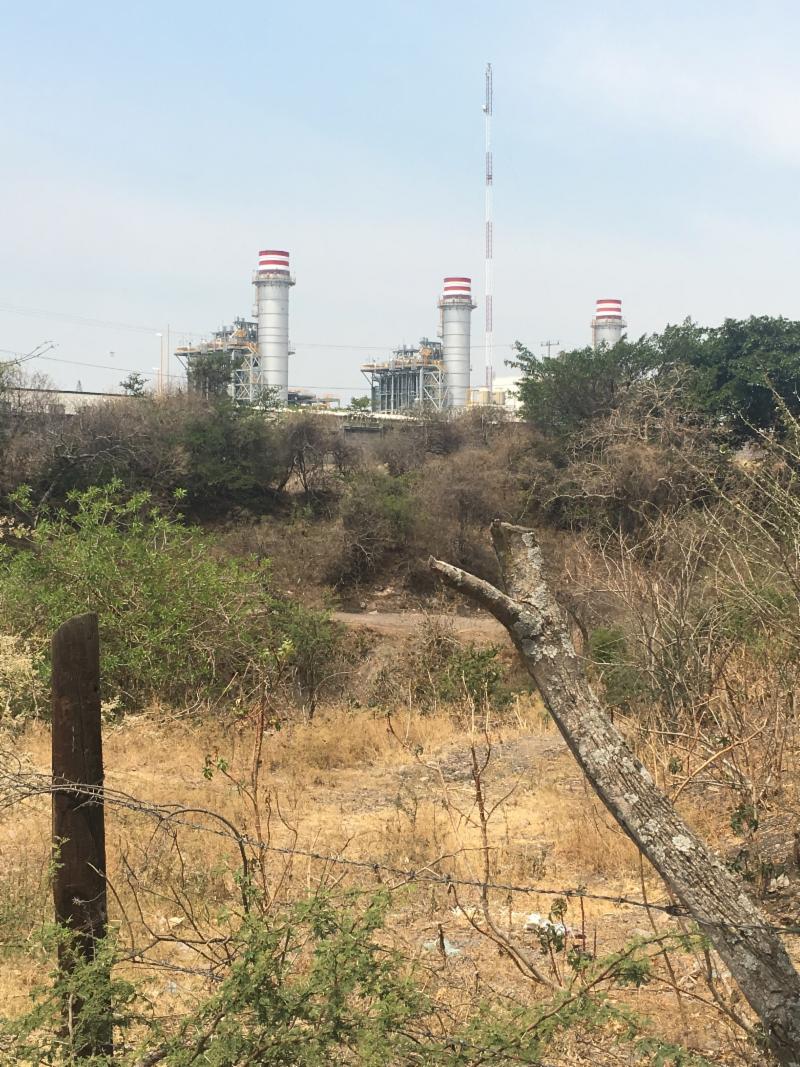
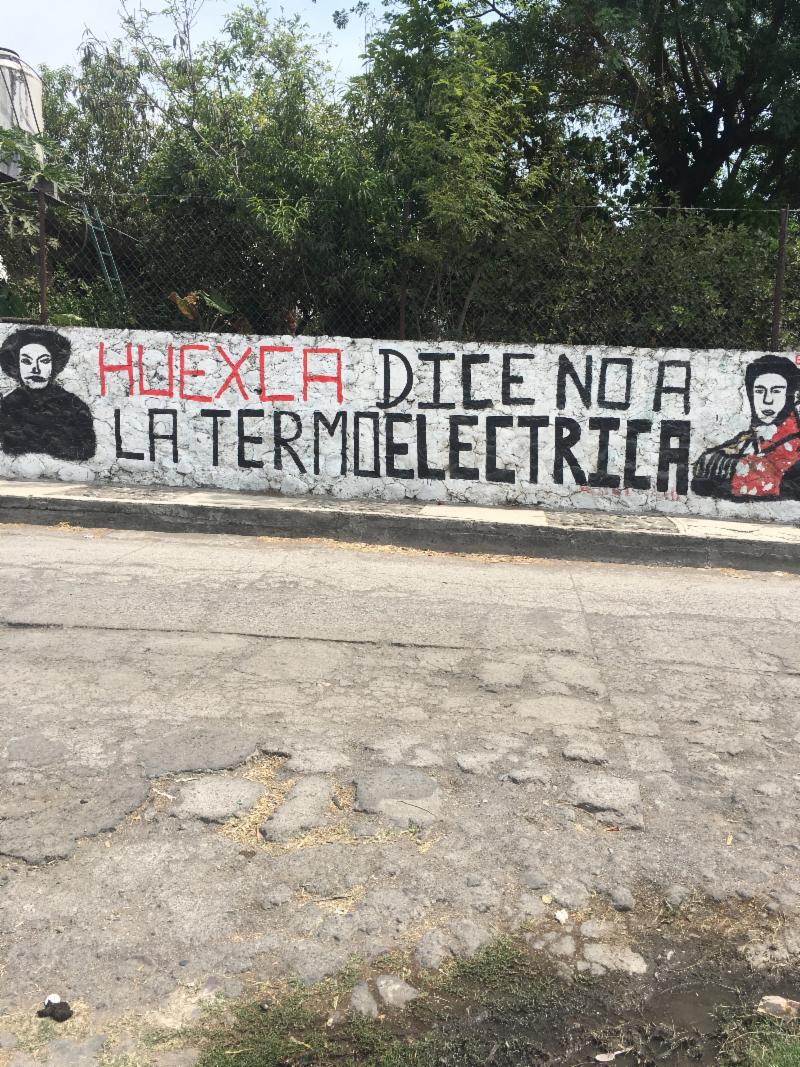
Among these halted projects is the combined-cycle power plant in Huexca, Morelos (see Issues 8 and 9).
BBC NewsMundo México
, May 10, 2019.