Mexico Energy News
Issue 7, October-December 2018
Table of Contents
I. Editor’s Note
II. “Energy Autarchy?” by David Shields
III. “Contrasting Views of the Energy Reform,” by Philip L. Russell
IV. Sparks
V. AMLO Bibliography
I.
Editor’s Note
President Andrés Manuel López Obrador used the first month of his 70-month- long term to reaffirm statements made on the campaign trail that energy production will focus on fossil fuels and will be largely carried out by the state. Most of the provisions of the energy reform legislated under the previous administration have been put on hold, but not formally abandoned. That could come later. As was the case on the campaign trail, the terms “renewable energy,” “greenhouse gases” and “global climate change” were conspicuously absent.
Philip L. Russell
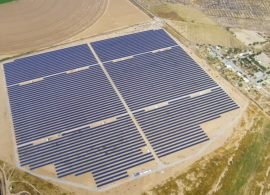
Masthead Photo: Enel solar farm, Viesca, Coahuila
¡World Premiere!
“Energy in Mexico”
PowerPoint Presentation by
Philip L. Russell
El Mercado
1702 Lavaca
Austin TX
February 12, 2019, 7:00 p.m.
II. Energy Autarchy?
by David Shields
It would be great to become self-sufficient in energy, thus eliminating the need to import gasoline and natural gas. Producing more oil and gasoline in Mexico, as Andrés Manuel López Obrador (AMLO) has proposed, would be an enormous achievement. However, meeting this goal will not be easy. Presidents Felipe Calderón (2006-2012) and Enrique Peña Nieto (2012-2018) attempted to increase production, but failed.
Why did they fail? They failed due to declining production from the supergiant Cantarell field, which produced two-thirds of Mexico’s oil. Crude-oil reserves also fell. In addition, as refineries aged, their capacity declined, and the demand for energy increased. This has caused AMLO to be indignant.
Will AMLO be successful? Putting new fields into operation is expensive. However, there is not much money available, and there is little oil income. Increases in production from new fields could be canceled out by the decline of Ka-Maloob-Zaap, the giant field that is currently supplying much of Mexico’s oil.
Pemex’s previous efforts at refining have been unsatisfactory. This raises concerns that a new refinery, built hastily and without careful planning, will suffer multiple problems, just as occurred at the Cadereyta and Minatitlán refineries. A new refinery probably can’t be finished in six years, much less three.
Autarchy is AMLO’s goal. He wants Mexico to produce enough oil and gasoline to meet domestic demand without needing to export or import. He would like a closed system in which Pemex produces, refines, and distributes fuel in Mexico. However, energy markets and trade in general have never functioned that way. For example, it would be economically absurd to supply the
Pacific Coast with gasoline and natural gas from the Gulf Coastal states of Tabasco and Campeche. It makes more economic sense to import energy in some cases and to export it in others.
Global energy trade is essential for economic growth. Norwegian prosperity is the result of exporting oil. Modern Kuwait, Saudi Arabia, and the United Arab Emirates would be inconceivable if they hadn’t exported crude. The economic growth of Japan, South Korea, Germany, and Spain has been based on importing oil and other forms of energy. For many years, the United States was the world’s largest oil importer. The largest importer is now China, the nation with the highest economic growth.
AMLO equates importing and exporting oil with selling his country out and considers it unpatriotic. His ideas are based on ideology, not pragmatism. For him, Pemex’s commercial division is an “enigma.” Nevertheless, he favors foreign and domestic investment in the rest of the economy.
With foreign trade, each nation takes advantage of its competitive advantages. Mexico has benefitted from exporting crude oil and importing the world’s cheapest natural gas from Peru and the United States. However, countries that go against the world’s economic, environmental, and technological progress tend to backslide. Won’t Mexico backslide if it focuses on dirty energy—refineries and coal-fired power plants—and burns fuel oil instead of natural gas?
The new administration’s policies on energy are controversial and not always appropriate. Will Mexico’s legal norms, reforms, contracts, and Paris climate- change commitments be respected? AMLO’s political messaging is undermining the confidence of companies in the energy sector, which require certainty.
AMLO has his own—different—ideas about energy development. In any case, his team should ensure that energy policy, rather than leading to confrontation and dogmatism, unifies his country.
Originally published in the November 27, 2018, issue of
Reforma.
III. Contrasting Views of the Energy Reform
by Philip L. Russell
Hernández Ochoa, César Emiliano (2018)
Reforma Energética: Electricidad.
Mexico City: Fondo de Cultura Económica.
Rodríguez Padilla, Víctor (2018)
Ronda Cero, Ronda Uno,
prologue by Cuauhtémoc Cárdenas and introduction by Gustavo Rodríguez Elizarrarás. Mexico City: Edición del autor.
As their titles suggest, both works reviewed here deal with aspects of Peña Nieto’s energy reform. That is where their similarity ends. As one would expect from a book published by the government-owned Fondo de Cultura Económica, Hernández Ochoa’s book takes a matter-of-fact approach to the impact of the energy reform on the electricity sector. In contrast, Rodríguez Padilla is highly critical of auctioning blocks for petroleum exploration and production—the most important aspect of the energy reform in monetary terms. Despite their diametrically opposite opinions of the energy reform, both works are valuable due to their laying out in detail the changes legislated by the energy reform.
Hernández Ochoa’s brief book (132 pages) begins with an introduction which describes its structure—five sections which consider 1) problems with the pre-reform electricity sector, 2) provisions of the energy reform as it relates to electricity, 3) how the reform has been implemented and its immediate benefits, 4) the future of the reform, and 5) preliminary conclusions concerning the reform.
Hernández Ochoa’s attitude toward the reform is made clear. He not only states that the book will present “a favorable opinion of the reform” (p. 13) but presents himself as having taken part in the design and implementation of the reform in his capacity as deputy secretary of energy for electricity.
Section One notes that, prior to the energy reform, government-operated electrical-generation plants were highly contaminating due to their use of fuel oil. Furthermore, this electricity was 25 percent more expensive than electricity generated in the United States. These high prices, Hernández Ochoa notes, retarded Mexico’s economic development. Finally, progress toward clean-energy generation was unacceptably slow. In 2013, wind and solar only generated 1.3 percent of electricity (p. 22).
To address these shortcomings, the energy reform was passed in order to 1) reduce the cost of electricity, 2) accelerate the introduction of clean energy, 3) introduce electrical service to the two million Mexicans lacking it, and 4) modernize and strengthen the Federal Electricity Commission (CFE).
Section Two describes the five major components of the reform as it relates to electricity. Competition is introduced into the electricity market by allowing private generators to offer the public their electricity and by giving customers a choice of supplier. Included in this market approach are auctions offering long-term power-purchasing agreements for clean energy. Also included are provisions for private companies to build transmission lines. Plans include supplying electricity to the 1.42 percent of the population lacking electricity and to all schools and medical facilities lacking service. These measures are to be carried out by the CFE reorganized as a “productive state enterprise,” as well as by other government agencies such as the Energy Department (SENER), the Energy Regulatory Commission (CRE), and the National Energy Control Center (CENACE).
The next section looks at what the reform accomplished during its first four years. Hernández Ochoa reports that the experience with Mexico’s reform compares favorably with similar reforms carried out elsewhere in the world. He describes the groundwork laid by agencies, such as CENACE, that allow electricity markets to function. By June 23, 2017, there were more than 21 participants in the short-term energy market. In addition, longer-term markets and a capacity market were established.
Running parallel to these markets were clean-energy auctions that produced an anticipated $6.6 billion worth of construction. These new plants will provide 5 percent of Mexico’s generation capacity. The first clean-energy auction received a then-record low bid of $33/MWh. Subsequent auctions received even lower bids from companies based in twelve different nations. Section Three concludes with a description of the organizational changes in the CFE that enable it to function as a “productive state enterprise.”
The forth section considers the future of the energy reform. Citing an OECD report, Hernández Ochoa states that the reform will contribute to Mexico’s economic growth. Another report cited, from the IEA, quantifies the anticipated reduction in greenhouse-gas emissions. Hernández Ochoa also addresses challenges to future efforts to decarbonize the economy. Since the book went to press before the 2018 election, no mention is made of Andrés Manuel López Obrador or of how he might modify the reform.
Hernández Ochoa concludes with a four-page section observing that the reform ended the existing stasis in the electricity sector. New agencies were created promptly and in a transparent manner. Changes were modeled on international best practices. In summary, he states, “Thanks to the reform, we have adopted proactive instruments which allow us to respond in a well-coordinated, coherent manner to the challenges of technological change” (p. 111).
In the prologue of Rodríguez Padilla’s book, Cuauhtémoc Cárdenas, former presidential candidate and well-known critic of the energy reform, sets the tone for the book. He states that the energy reform
was a counter-reform imposed by international capital with the aid and consent of the local elite and the submission of politicians and of opportunistic public officials, convinced of or allied with the dogma of market supremacy and the purity of capital. They sought to abolish the energy model which emerged from the [1938] oil expropriation and which was founded on the notions of pubic service, central planning, and the use of natural resources for the social and economic development of the nation (pp. 11-12).
Similarly, in the
introduction, Rodríguez Elizarrarás, a petroleum engineer, states that the energy reform was “the culmination of the U.S. strategy to reincorporate Mexico’s oil wealth” (p. 28).
The text begins with a short introduction describing the energy reform. The author concludes that it serves to “deepen the oil and energy integration with the United States and for Pemex to be converted from a public entity to just another participant in the market, but without special privileges” (p. 29).
He criticizes the energy reform’s bringing in of private capital, foreign and domestic. Rodríguez Padilla feels that the risks of bringing in private capital have not been properly analyzed. One of the major faults of the book becomes apparent here. While the author is highly critical of the reliance on private capital, he assumes a positive outcome if Pemex could retain its petroleum monopoly. This assumption ignores voluminous references to Pemex corruption and inefficiency. The author claims that problems in the energy sector could have been resolved with “institutional changes,” rather than by adopting a new organizational model (p. 31, n. 5).
His evaluation of the energy reform follows the well-worn path of energy nationalists. The material following this criticism is what makes the book valuable. Rodríguez Padilla presents great detail concerning the regulatory structure created by reform legislation. For example, he describes the power of the National Hydrocarbon Commission (CNH) in 12 bullet points. And, as if that wasn’t enough detail, one of the bullet points has five subdivisions.
Next follows Round Zero of the reform, which allowed Pemex to claim 90,000 square kilometers from which to produce oil. The author characterizes this allocation as Pemex’s loss of 8 percent of its proven reserves and 80 percent of its probable reserves. Here again there is the assumption that Pemex production will benefit the nation, while private production will impoverish it. The author also claims that Peña Nieto and his advisors saw Pemex as a mistake dating from a different era and as an obstacle to modernization of the oil industry.
The author presents in detail the various oil auctions which resulted in leases for 28,500 square kilometers on- and offshore. Detailed information on each contract is provided as to location, government profit sharing, anticipated investment, whether it involves conventional or non-conventional production, and, finally, the type of lease involved (shared production, under license, etc.).
The description of Round One, which involved auctions from December 2014 through December 2015, notes that the process was undermined by the sharp decline in oil prices that occurred after the enactment of the reform. Using 30 bullet points, the author describes changes in the leasing auctions made in response to the price decline.
Only on page 96 does the author make his basic assumption explicit: “The essence of an oil contract is a zero-sum game; what the oil company wins the nation loses. There can be shared interests between an administration permeated with neocolonialism and an oil company, but there is no way that national interests and oil capital can be aligned” (p. 96).
In addition to his writing the prologue, Cuauhtémoc Cárdenas is quoted at length concerning indigenous communities in oil-producing regions. He feels that, as a result of the reform, these communities “will suffer from legislation that prioritizes activities of private oil companies when engaged in exploration, drilling, and transmission of hydrocarbons over traditional activities of indigenous people. If they refuse to sell or rent their land, they face expropriation and even expulsion” (p. 103). While this statement is true, it is left unsaid that Pemex famously abuses the communities in areas where it produces oil. President Andrés Manuel López Obrador first came to national prominence by leading protests against Pemex abuse of communities in oil-producing areas. (1)
Rodríguez Padilla claims that the leasing bids were awarded to companies that only offered “garage-sale prices.” He doesn’t explain why, if the government was willing to accept below-market offers, other companies didn’t come in with higher bids. In addition, his opinion that winners only offered garage-sale prices is by no means unanimous (2).
(1) There is abundant literature on Pemex’s poor environmental record. See for example
Proceso
, Dec. 9, 2018, p. 39, and recent works such as:
Tabasco: un edén contaminado por la industria petrolera: impunidad por la fiebre del oro negro
(Comité de Derechos Humanos de Tabasco) as well as earlier 1980’s works by Heberto Castillo.
(2) See, for example,
Energía a Debate
, Sept.-Oct. 2018, pp. 10-11.
IV. Sparks
“The recently announced energy plan seems to have forgotten climate change.”
Arena Pública
, Dec. 12, 2018.
Mexico, which emits 1.3% of the world’s greenhouse gases, is the thirteenth highest emitter globally and the second highest in Latin America, after Brazil.
Proceso
, Dec. 9, 2018, p. 37.
INEGI, the government statistical agency, reported that 79% of Mexican homes rely on LP gas for energy, while 11% use charcoal and 7% use natural gas. The agency also reported that 99% of homes have access to electricity.
Milenio
, Nov.
7, 2018.
From January to November of 2018, energy prices rose 9.2%.
La Jornada
, Nov. 9, 2018, p. 24.
During the last 25 years, 85% of Mexico’s energy has come from oil, natural gas, and their derivatives.
Energía Hoy
,
Sept.-Oct. 2018, p. 16.
The number of private cars in Mexico increased from 9.6 million in 2000 to 26.5 million in 2015.
Milenio
, Nov. 20, 2018.
Mexico currently has 34 million gasoline-powered vehicles and slightly more than 800,000 diesel-powered ones.
El Universal
, Nov. 5, 2018.
Oil
Oil production peaked in 2003-2004. Since
then, oil production has declined by 4.05% annually while consumption has increased by 1.4% annually.
El Universal,
Oct. 26, 2018.
In November, crude production fell to 1.717 mbd, 8.7% below the corresponding figure for 2017. This was the lowest level since 1990.
Reforma
,
Dec. 22, 2018, p. 1.
Mexican oil reserves total 5.873 billion barrels.
Oil & Gas Journal
,
Dec. 3, 2018,
p. 20.
Gas
In 2018, Mexico imported an average of 4.7 bcfd of natural gas.
expansion.mx, Dec. 30, 2018.
During the first 11 months of 2018, Pemex natural-gas production averaged 4.776 bcfd, 5% below the corresponding figure for 2017.
Reforma
,
Dec. 22, 2018, p. 1.
TransCanada announced the cancellation of the Tuxpan-Tula gas pipeline due to what it termed “extortion” by residents along the pipeline route through northern Puebla.
La Jornada
, Nov. 20, 2018.
Natural-Gas Liquids
NGL production during the first eight months of 2018 averaged 247,000 bd, 15.2% below the corresponding figure for 2017.
Oil & Gas
J
ournal.
, Dec. 3, 2018, p. 68.
Mexican
NGL reserves total 553.9 million
barrels.
Oil & Gas Journal
,
Dec. 3, 2018,
p. 20.
Coal
In November, Armando Guadiana, the president of the Senate Energy Commission, announced that the incoming AMLO administration was considering the construction of two coal-fired 700 MW electrical-generation plants. The move was justified as being cheaper than building combined-cycle or renewable- generation facilities. Also, using domestic coal rather than natural gas would, he stated, prevent Mexico from becoming even more dependent on the United States for fuel. In addition, he noted that wind and solar were intermittent and thus unsuitable for such purposes as steel production.
Milenio
, Nov. 25, 2018.
Guadiana noted that the United States burns 500 million tons of coal a year to generate electricity, while China burns 900 million. In contrast, Mexico only burns 12-14 million tons a year.
expansion.mx, Nov. 29, 2018
. Guadiana also declared that it costs $1 million to install a megawatt of renewable generating capacity, while a megawatt of coal capacity only costs $600,000.
forbes.com.mx, Dec. 27, 2018.
Renewables
Mexico has 12,642 MW of hydroelectric-generating capacity. This capacity only increased by 0.4% between 2016 and 2017. In contrast, wind capacity rose by 12.4% and solar by 47.5% during this period.
expansion.mx, Dec. 10, 2018.
During the first six months of 2018, an additional 1,200 MW of solar capacity was added, almost three times as much as during the first six months of 2017.
PV Magazine-México
, Nov. 28, 2018.
French power giant ENGIE signed a 15-year power-purchase agreement to supply steel producer Gerdau with energy from its 130-MW PV plant in Sonora. The plant is due to become operational at the end of 2019.
PV Tech
,
Nov.
23, 2018.
The Energy Transition Law provided that, in 2018, 25% of electricity should come from clean sources, rising to 30% in 2021, and to 35% by 2024.
PV Magazine-México
, Dec. 6, 2018.
In the first clean-energy auction, winning bids averaged $47/MWh. In the second, they averaged $35/MWh, and, in the third, they averaged $20/MWh.
PV Magazine-México
, Dec. 6, 2018.
Mexican solar auction prices have gone as low as $17.70 MW/h.
Petroleum Economist
, Nov. 2018, p. 14.
During the first half of 2018, 24.12% of Mexico’s electricity, 40,499 GWh, came from clean sources. Thus, Mexico came within less than one percentage point of the 25% goal set by the Energy Transition Law for 2018. Of this 24.12%, 17.29% came from renewables and 6.83% came from other clean-energy sources, a category which includes co-generation and nuclear. Between July 1, 2017, and July 1, 2018, installed clean-energy capacity increased by 11.84%. During the first six months of 2018, six projects resulting from clean-energy auctions went online. Four of these projects added 1,274 MW of PV capacity and two added 168 MW of wind.
PV Magazine
México
, Dec. 12, 2018
.
During the past five years, wind generation has almost tripled. Solar generation, which got off to a slower start than wind, increased by 500% in 2017.
El País
,
Nov. 21, 2018.
As a result of energy auctions, 7,600 MW of clean-energy generation capacity has been added.
PV Magazine-México
, Dec. 7, 2018.
The Canadian firm Hydro-Quebec agreed to modernize 60 of Mexico’s hydroelectric plants.
Milenio
,
Dec. 19, 2018.
Mexico now has 520 MW of distributed PV capacity installed.
PV
Magazine
México
,
Dec. 12, 2018.
Electricity
In 2012, 25% of Mexico’s installed generating capacity was provided by clean energy. By the end of 2018, over 30% was.
Milenio
, Nov. 7, 2018.
In financial terms, the Federal Electricity Commission (FCE) and the federal government are administrative Siamese twins, making it hard to separate the finances of the two entities. The government assumed 161 billion pesos of Pemex and CFE pension and retirement obligations in 2013 and 2014. The federal government’s assuming of part of the CFE’s pension liabilities was an accounting measure which left pension obligations unchanged, but which made the CFE’s finances appear to improve. The national oil company, Pemex, sells fuel oil to the CFE for electrical generation. The price charged by Pemex determines which “productive state enterprise” (the official term for both the CFE and Pemex) can claim a profit. To lower the cost of electricity for domestic users, the federal government subsidizes the supply of electricity. In 2018, this subsidy totaled an estimated 50 billion pesos.
expansion.mx, Nov. 29, 2018.
The CFE will have an infrastructure budget of 34-billion pesos in 2019. Of this, 15.3 billion will be invested in constructing combined-cycle plants, while 10.4 billion will be for constructing coal-burning plants. Geothermal will receive 980 million, while hydroelectric centers will receive 340 million, and conventional thermal plants will receive 171 million.
Reforma,
Dec. 21, 2018, p. 20.
Combined-cycle plants now generate roughly 50% of Mexico’s electricity.
expansion.mx, Dec. 30, 2018.
Reform
Peña Nieto was correct in sowing the seeds of the energy reform, knowing full well that his successors would be the beneficiaries of the oil and the income produced.
Juan E. Pardinas (2018: 24).
What is clear is that the energy reform was a failure. I am waiting for its supporters to offer an apology to the Mexican people.
Andrés Manuel López Obrador,
El Universal
, Dec. 6, 2018.
In the coming years, the interesting part will not be how much the López Obrador administration reproaches or discredits the energy reform. What will be interesting is whether it can propose a different program that is better.
Miriam Grunstein,
Pulso Energético
,
Dec. 11, 2018.
The National Hydrocarbon Commission (CNH) announced the cancellation of two energy auctions that were to have offered conventional and non-conventional onshore blocks.
El Universal
, Dec.
12, 2018.
Crude production by private producers totals about 13,400 bd, all from onshore wells.
offshore.com, Dec. 6, 2017.
At the end of the third quarter of 2018, 10,439 retail stations sold gasoline under the Pemex brand, and 1,568 sold under other brand names. However, only 230 stations sold gasoline that was not supplied by Pemex.
El Economista
, Dec. 29, 2018.
Pemex
Pemex is one of the most indebted oil companies in the world. It is a financial burden for the energy sector and a latent risk to the economic stability of the country.
Juan E. Pardinas (2018: 22).
Production
In November, crude production fell to 1.717 mbd, 8.7% below the corresponding figure for 2017. This was the lowest level since 1990.
Reforma
,
Dec. 22, 2018, p. 1.
During the first 11 months of 2018, Pemex refineries produced an average of 752,700 bd of crude, 25% below the corresponding figure for 2017.
Reforma
,
Dec. 22, 2018, p. 1.
In 2013, Peña Nieto’s first full year in office, Pemex refineries produced 437,000 bd of gasoline—51% of consumption. By 2018, production had fallen to 213,000 bd—26% of consumption.
El Economista
, Dec. 10, 2018.
Trade
Mexico paid $32 billion for hydrocarbon imports in 2018, compared to $26.3 billion in 2017.
El Universal
, Dec. 21, 2018.
During the first eleven months of 2018, hydrocarbon imports averaged 975,200 bd, 5.6% above the corresponding figure for 2017. Gasoline imports alone accounted for 594,300 bd. Seventy-eight percent of the gasoline Mexico consumed was imported.
Reforma
, Jan. 2, 2019, p. 1
negocios
.
Pemex earned 61.1% more from the sale of crude to the United States during the first ten months of 2018 than it did during the first ten months of 2017. During the first ten months of 2018, crude exports to the United States totaled 201 million barrels, 30 million more than during the corresponding period of 2017. Thanks to this increase, Mexico maintained its place as the third largest supplier of crude to the United States, after Canada and Saudi Arabia.
Reforma
,
Dec. 16, 2018.
Finances
Needed investment for exploration and investment are beyond the scale of the Mexican economy.
Juan E. Pardinas (2018: 24).
Pemex lost $16.3 billion in 2017, 74% more than it lost in 2016, and its debt reached $105 billion. Losses resulted in part from a combination of high taxes, lower oil prices, and reduced production.
El País
,
Dec. 10, 2018.
During the first half of 2018, taxes paid by Pemex supplied 17.5% of public spending. In 2008, Pemex taxes supplied 44.1% of public spending and, as late as 2012, they supplied 35.4%.
Heraldo de México
, Nov. 5, 2018, p. 31.
From January through September of 2018, Mexico’s petroleum trade deficit totaled $16.3 billion—$3 billion above the comparable figure for 2017. In 2012, Mexico had a petroleum trade surplus of $9.6 billion.
El Economista
, Nov. 13, 2018.
From January through October, thieves tapped into pipelines 12,581 times to steal fuel—a figure 45% above the corresponding figure for 2017.
El Universal
, Dec. 22, 2018.
In 2017, such theft cost Pemex 30 billion pesos.
forbes.com.mx, Nov. 26, 2018.
Then-Pemex Director General Carlos Treviño estimated that stolen fuel would cost the company 35 billion pesos ($1.7 billion)
in 2018.
Reforma
, Nov. 28, 2018, p. 3
negocios
.
AMLO declared that 80% of the fuel stolen from Pemex resulted from its being illegally removed from Pemex installations by truck rather than from tapping into pipelines.
Reforma
, Dec. 28, 2018, pp. 1, 12.
He sent 4,000 federal police, soldiers, and sailors to 58 Pemex facilities to prevent such theft.
El País
, Dec. 29, 2018.
Pemex Director General Octavio Romero Oropeza reported that losses from fuel theft rose from roughly 30 billion pesos in 2016, to 50.1 billion in 2017, and to more than 66.3 billion in 2018.
expansion.mx. Dec. 27, 2018.
Pemex is due to repay almost a third of its $106 billion debt during the next three years. When asked where the money would come from, Energy Secretary Rocío Nahle responded, “With production; there is no other way.”
reuters.com,
Dec. 11, 2018.
AMLO
We hope to be in contact with López Obrador so he can’t ignore the science and claim climate change is
a problem for the future
. Responding to climate change is not something he promised in his campaign. Populism affects many countries. AMLO has declared that he wants to return to the past—something that doesn’t make sense. We have to look toward the future. Hopefully we’ll be able to convert him.
Mario Molina, Mexico’s Nobel Prize winning atmospheric physicist
AMLO will have to choose between maintaining the energy reform or increasing oil imports.
Juan E. Pardinas (2018: 24).
Commenting on President-Elect López Obrador’s pledges to lower fuel prices and build refineries, columnist Gabriel Quadri wrote, “The incoming administration should either reverse course or leave the Paris Accord.”
El Economista
, Nov. 8, 2018.
Mexico is estimated to have reserves of 545 trillion cubic feet of shale gas and 13.1 billion barrels of shale oil. However, AMLO declared that these reserves would not be fracked due to the environmental danger that fracking would pose.
El Heraldo de México
. Nov. 6, 2018, p. 26.
In his inaugural address, AMLO stated that the energy reform passed during his predecessor’s term “has only resulted in a decline in oil production and in an excessive increase in the prices of gasoline, natural gas, and electricity.”
During the four years since the passage of the energy reform, AMLO reported that only $760 million of foreign energy investment had arrived—a sum equal to 1.9% of the public investment made by Pemex during the same time. He claimed that the $760 million was only 0.7% of the promised investment. When the energy reform was enacted, he stated, its backers had promised that by 2018 oil production would reach 3 mbd. However, it only totaled 1.763 mbd.
The newly inaugurated president claimed that Mexico’s six existing refineries were “barely surviving” and that, as a result, Mexico was the world’s largest importer of gasoline, whereas, before the energy reform, Mexico had been self-sufficient in gasoline. He promised that fuel prices would not increase more than inflation and that, as soon as a new refinery was in operation and the six existing refineries were upgraded, fuel prices would decline.
AMLO announced that, if the winners of oil auctions did not begin production within three years, no further oil auctions would occur.
expansion.mx, Dec. 6, 2018.
The fourth renewable-energy auction, scheduled for December 2018, was indefinitely suspended.
PV Magazine-México
, Dec. 6, 2018.
Construction began on the 155 billion-peso (roughly $8 billion) refinery at Dos Bocas, Tabasco. To fast-track its construction, last September the Tabasco legislature allowed contracts relating to the refinery to be awarded without public bidding
.
El Universal
, Dec. 9, 2018.
The Mexican Center for Environmental Law
(CEMDA)
charged that the clearing of 300 hectares of forest and mangrove on the refinery site was carried out without an environmental-impact statement and without proper land-use permits.
Reforma
, Dec. 8, 2018.
Energy Secretary Rocío Nahle announced that the two oil-production auctions scheduled for February would be canceled. The auctions were to have offered both onshore non-conventional blocks and offshore blocks.
El Financiero
, Dec. 9, 2018.
AMLO’S energy policy is directed at making Mexico self-sufficient in energy, thus enabling it to cease importing energy from the United States. He has proposed a three-prong strategy to accomplish this goal: 1) There will be substantial investment in Pemex, in hopes of increasing crude production to 2.4 mbd by the end of his term in 2024. 2) Roughly $8 billion will be invested to construct a 340,000-bd refinery in Tabasco. In addition, the six existing refineries will be modernized. These measures are aimed at meeting gasoline and diesel demands by 2020 without imports. 3) Finally, plans call for investing 20 billion pesos in upgrading Mexico’s 60 hydroelectric generation facilities, thus increasing their generation capacity by 3,300 MW.
expansion.mx, Dec. 10, 2018.
Despite AMLO’s declaring that his administration would reject fracking, the 2019 federal budget contains 3.350 billion pesos for shale-gas and shale-oil exploration and production wells.
Reforma
, Dec. 27, 2018, p. 18.
In Mexico’s 2019 budget, Pemex receives $23 billion, 14% more than was budgeted for 2018. Roughly half of this is for exploration and production. Another $245 million will be spent to upgrade Pemex’s six existing refineries. Almost $2.5 billion will be spent on the construction of a new refinery in Tabasco.
Reforma,
Dec. 17,
2018.
After two weeks in office, AMLO presented his National Plan for Hydrocarbon Production, which calls for increasing Mexican oil production to 2.4 mbd by the end of his term in 2024.
ADN Polítco
, Dec. 16, 2018.
One hundred and seventeen wells will be drilled on land in coastal areas and in shallow water offshore. He declared that his plan “would allow the recovery of the oil industry, similar to what happened in 1938.”
Aristégui Noticias
, Dec. 14, 2018.
The plan has been compared to going for low-hanging fruit, in that it will concentrate on known deposits but forego exploration that would lead to long-term production. As Gonzalo Monroy, director of GMEC consultancy, commented, “Pemex is compromising the following 20 years of production in order to have five very good years.”
expansion.mx, Dec. 18, 2018.
While AMLO blamed the decline in crude production on the energy reform, others noted that the decline, especially of the supergiant Cantarell field, began well before the passage of the energy reform. In addition, following the 2014 decrease in energy prices on the international markets, Pemex exploration budgets were cut, preventing the company from developing new
fields.
forbes.com.mx, Dec. 1, 2018.
V. AMLO Bibliography
López Obrador, Andrés (2018) “Inaugural Address,” inauguralhttps://lopezobrador.org.mx/2018/12/01/andres-manuel-lopez-obrador-rinde-protesta-como-presidente-constitucional-de-mexico/
Pardinas, Juan E. (2018) “Geología, dinero y política,”
Nexos
, Nov., pp. 22-24.
Reyes Flores, Pedro A. (2018) “Los límites ambientales de la ‘cuarta transformación,’ ”
El Universal
, Oct. 26, 2018.
Shields, David (2018a) “¿Autarquía energética?”
Reforma
, Nov. 27, 2018, p. 4
negocios
.
(2018b) “Contrarreforma en energía,”
Reforma
, Dec. 11, 2018, p 2
negocios
.
(2018c) “La apuesta petrolera,”
Reforma,
Dec. 18, 2018, p. 2
negocios
.
Mexico Energy News
, Issues 4, 6 & 7.