II. Articles
Eighty Years after Its Founding, Is Pemex Still Viable?
by Luis Miguel González
The design of the energy reform showed foresight and attention to detail, but it did not include plans for reforming Pemex. Almost every aspect of the energy reform affects Pemex. However, the company can’t make needed changes nor can it change as rapidly and as thoroughly as is necessary.
Pemex has ceased to be a monopoly. It has ever more competitors, but it does not have the resources to confront them, nor does it have an appropriate corporate culture. It makes an effort to respond to its competitors, but often in an underhanded, cunning way. The Federal Economic Competition Commission (COFECE) has described these responses as anticompetitive. One can come up with some more descriptive terms, such as “dirty tricks.”
Pemex is among the 100 largest firms in the world, with annual sales of more than 1.4 trillion pesos. In theory, it is already a productive state enterprise, but in practice, it continues to be a dependency of the Treasury Department. It is not treated as a full-fledged corporation when it comes to decision-making. It is required to ask permission to form partnerships, and negotiations with its trade union are more political than administrative.
The company is playing in the big leagues and can enter into deals worth billions of dollars. An example is the contract signed with the Australian firm BHP Billiton. Wall Street and the City keep an eye on it, since it is one of the largest emitters of debt in Latin America. Such indications of modernity can bedazzle and confuse observers. Given its entrenched practices, Pemex is still rooted in the Mexico of General Cárdenas* and PRI corporatism. What other oil company in the world, other than PDVSA, could give a union leader such as Romero Deschamps a major role in presenting its business plan?
Pemex performed poorly in 2017. Its 2017 losses were four times those of 2016. They totaled almost 1 billon pesos a day—333 billion pesos for the whole year. These numbers reflect a dramatic reality—the continued decline in the production of crude and refined products. Pemex’s management has made a herculean effort to cut costs. However, the cuts have been insufficient, leading to a reduction in investment. Pemex’s modernizers are pitted against the old guard and have to deal with a harsh reality—Pemex is Mexico’s largest taxpayer. It pays more taxes than all the firms listed on the Mexican stock exchange combined, and it suffers from acute fiscal asphyxia.
Even though it’s necessary, Pemex doesn’t have sufficient resources to transform itself. Nor does it have the required corporate governance. It is the only oil company of the top 10 globally that has changed its director every two years, on average, over the last 15 years. The problem goes beyond top management. Its Administrative Council brought in independent councilors
five years ago, but these “independent” members were unable to limit the excesses of Emilio Lozoya**, nor have they raised their voices to denounce him or to defend him.
Transforming Pemex implies eliminating corruption, increasing productivity, and making the company competitive. It also implies preparing for a clean-energy future. Statoil, the Norwegian firm, just announced that it’s changing its name. It will be called Equinor and will cease to have “oil” in its name, to indicate that its future will not necessarily include oil. This is what happened in Norway. When will it happen in Mexico?
* General Lázaro Cárdenas, president from 1934 to 1940, nationalized the oil industry in 1938.
** Emilio Lozoya served as Pemex director general from 2012 to 2016.
Originally published March 16, 2018, in
El Economista
.
Another Energy Reform?
by David Shields
Ideally, the next presidential administration will carry out Energy Reform 2.0. Guillermo García Alcocer, president of the Energy Regulatory Commission (CRE), suggested such a reform recently. He was referring to the burdensome paperwork required by the current energy reform and the need to simplify and improve its energy regulation.
A little while ago, former Hydrocarbon Subsecretary Lourdes Melgar also commented that Pemex “awaits a major reform.” Such a reform would restore the company’s financial health, which has been undermined by its inflated labor costs and the oil workers’ union. The state-owned company has been “poorly administrated,” as is indicated by its purchasing worthless fertilizer plants. Pemex’s performance has also been affected by a 75 percent reduction in its budget.
This decrease in public investment suggests that Pemex should sell shares on the stock exchange. According to former Pemex director Jesús Reyes Heroles González Garza, this was a major result of the energy reform. At an event in London last March, Juan Carlos Zepeda, president of the National Hydrocarbon Commission, suggested that a minority of Pemex stock should be offered on the stock exchange to obtain sufficient funds to drill exploratory wells and develop Pemex oil fields.
It should be noted that Pemex has closed 4,000 wells—a third of its producing wells—during this presidential term. A modified reform could transfer these wells to other operators. Preferentially, these operators would be small Mexican firms which would assume the risk of operating these wells. Such a measure would involve a new business model for well operations which would be distinct from the large blocks which the National Hydrocarbon Commission (CNH) auctions. In addition, any serious attempt to reverse the decline in hydrocarbon production, as is indicated by the U.S. experience, will require that Mexico find a way to develop shale oil.
Even though the current energy reform has many positive aspects, until now, the results have appeared slowly. The reform has resulted in Mexico’s losing energy sovereignty, as less natural gas and gasoline are produced and more is imported. These imports are necessary to address the demographic explosion—a taboo subject that no presidential candidate wants to mention. Such imports leave Mexico dependent and vulnerable to commercial decisions of the unpredictable Donald Trump.
The provisions of the reform relating to electricity will soon be overwhelmed by societal transformation. Electric cars, smart grids, the internet of things, superbatteries, and robots are coming. This will force a Reform 2.0 and then a 3.0 and a 4.0 to revolutionize energy legislation and accommodate new business models, technologies, and digitization which will transform the way electricity is generated, priced, and consumed. The energy transition will be intensified and, at the same time, will present enormous challenges.
Little if any good will come from energy reforms if the insecurity, violence, corruption, and illegality which prevail in Mexico are not overcome. Many projects have been halted as a result. To our amazement, there was a recent report on fuel markets which stated, “The drug cartels are the only ones who have really benefitted from an open energy market.” Regardless of whether this statement is true, it is certainly the case that the government is increasingly unable to guarantee security and administer justice. Thus, few of the new players in the energy sector are satisfied with the fiscal, regulatory, and social conditions which they encounter as they develop their projects.
Is the future promising? It won’t be if a new administration comes to power with outdated ideas of halting or rolling back the recent energy reform. Changes and modifications are needed. An Energy Reform 2.0 during the next administration should not be a passing whim. Rather, it is a compelling necessity. Do the presidential candidates understand this? Are any of them up to meeting the complex challenges of this magnitude?
Originally published in the June 12 edition of
Reforma.
David Shields is an energy analyst. His email: david.shields@energiaadebate.com.
III. Book Review by Philip L. Russell
Flores Quiroga, Aldo (2018)
Reforma Energética: Hidrocarburos
. Mexico City: Fondo de Cultura Económica.
Flores Quiroga begins his description of the energy reform with a summary of Mexico’s energy and development policies during the 74 years between the 1938 nationalization of the oil industry and the beginning of Peña Nieto’s presidency (2012-2018). He describes Pemex, the state-owned oil company, as being well suited to the post-nationalization environment in that both Mexico’s population and energy needs were small. At the time, state planning was in vogue, and Mexico was plunging into several decades of import-substitution industrialization.
During the 1980s, things began to change. As Flores Quiroga notes, a policy shift led to commercial liberalization, economic deregulation, and the privatization of state-owned enterprises. This left the Mexican oil industry “mired in a business model which corresponded to another era” (p. 17).
By 2012, Mexican energy policy was ripe for change. Pemex “had reached the limits of its capacity to meet the growing needs of the national economy” (p. 19). That year was the eighth consecutive year of declining oil production. In addition, Pemex’s policy of keeping gasoline retail prices capped necessitated government subsidies which inevitably drained funds from other programs. Between 2006 and 2014, this subsidy resulted in the government’s spending 50 percent more on gasoline subsides than it did on health care (pp. 30-31).
Key to Peña Nieto’s ability to reshape energy policy was an agreement by the three major political parties to implement reforms not only in the energy sector, but also in finance, education, and telecommunications. In a near-record 20-day period, Peña Nieto pushed through three constitutional amendments which paved the way for private capital to enter the petroleum sector at every stage from exploration to retail-fuel sales. These amendments were quickly followed by 25 new laws, revisions to 11 existing laws, and new and revised regulations. The reform also established new regulatory agencies and defined the responsibilities of new and existing agencies. Pemex was given a new status, that of being a “productive state enterprise,” which endowed it with more independent decision-making power.
Flores Quiroga describes in detail several of these changes, including auctions which open up new areas for oil exploration. He discusses advantages private capital brings, such as spreading risk in exploration, especially with deep-water wells and non-conventional wells on dry land. Private capital, he notes, will increase hydrocarbon production and, in the process, bring in outside talent and expertise, increase government revenue, stimulate development in other sectors, and increase the amount of stored fuel. The author is justifiably admiring of the auctions, noting that they “clearly made Mexico an attractive destination for foreign investment” (p. 57).
Flores Quiroga’s 120-page book concisely describes the energy reform. It is accompanied by 19 colored graphs and has a detailed appendix listing the winners of the various auctions.
That said, the book suffers from viewing the world through rose-colored glasses. The words “Odebrecht” (referring to a major on going scandal) and “
huachicol
” (referring to massive fuel theft) do not appear in the work. The author makes several positive assumptions which range from questionable to already proved wrong. He notes that “the new laws and procedures guarantee the free access to public information on the performance of the sector” (p. 91). That certainly hasn’t been the case with contracts Pemex signed with Odebrecht. He claims that gasoline prices will be determined by supply and demand (p. 70), when in fact they are routinely determined by raising and lowering taxes to pacify consumers. A final example (p. 55) is the statement that the reform will allow Pemex to do what it knows how to do best, which “is learning new skills in association with others and learning how to complete complex tasks and competing openly with Mexican and foreign firms.” Pemex may well learn and compete, but that is certainly not what it knows best, because up until 2012, it was prohibited from association with other firms and never competed with either Mexican or foreign firms.
IV. Sparks
Tracking SDG7: The Energy Progress Report*
provided detailed information on the energy sectors of the world’s nations. It reported that 100% of Mexico’s population had access to electricity, up from 98% in 2000 (p. 113). Eighty-five percent of the population had access to clean energy for cooking (p. 113). Energy intensity was 3.74 megajoules (MJ) per U.S. dollar (PPP 2011) of GDP, well below the global average of 5.27 MJ (p. 118).
*SDG = sustainable development goal
Between 1990 and 2016, the number of motor vehicles in Mexico increased by 335%, from 9.8 million to 42.9 million. If this 5.8% annual growth rate continues, it will doom Mexico’s effort to limit carbon emissions.
Arena Pública
, June 18, 2018.
Hydrocarbons
Mexico’s proven hydrocarbon reserves have been declining continuously for the past 37 years. In 2000, when a new method of calculating reserves was introduced, they totaled 25 billion barrels. Today they total 8.5 billion barrels, of which 6.5 billion are oil and the rest gas.
Reforma
, June 26, 2018, p. 4
negocios
.
Oil
Mexico’s rig count, which hit 184 in 2009, declined to 19 by 2016. It is now back up to 42.
Pulso Energético
, June 5, 2018.
Gas
During the first half of 2018, Mexico imported an average of almost 120 million cubic meters (4.2 bcfd) of gas a day by pipeline. In May, domestic production totaled 135 million cubic meters (4.7 bcfd) a day, 8.9% below the corresponding figure for 2017.
El Financiero
, July 13, 2018.
In Yucatán, which does not have access to piped gas, gas shortages have resulted in power-plant shutdowns due to a lack of fuel.
Reforma
, June 4, 2018, p. 2
negocios
.
Energy Secretary Pedro Joaquín Coldwell reported that, during the Peña Nieto administration (2012-2018), natural-gas pipeline mileage has increased by 70%, from 11,000 kilometers to 18,800. These pipelines serve 23 states. This expansion was facilitated by Pemex, the Federal Electricity Commission (FCE), and private capital. Piped natural gas is used for
electricity generation, for domestic use, as a raw material, and to supply industrial heat.
Milenio
, June 26, 2018.
During the previous 17 years, gas pipeline mileage only increased by 2,005 kilometers.
Flores Quiroga (2018: 26).
Mexico is by far the largest U.S. LNG customer. In 2017, it imported an average of 0.38 bcfd of LNG, up from 0.07 in 2016. There is currently 7.9 bcfd cross-border gas-pipeline capacity. However, there is insufficient pipeline capacity to bring gas farther south into Mexico. LNG imports allow bypassing these pipeline bottlenecks.
Oil & Gas Journal
, June 4, 2018, p. 83.
The Yaqui community of Loma de Bácum dug up and rendered inoperable the Guaymas-El Oro pipeline. Seven of the eight Yaqui communities approved the line, but Loma de Bácum did not. The Federal Electricity Commission (CFE) estimated that the closure of the pipeline cost $23 million between September 2017 and May 2018.
Reforma
, June 7, 2018, p. 1.
The Mexican Natural Gas Association (AMGN) complained that, due to regulations introduced by the energy reform, it now takes twice as long to complete a gas pipeline as it did before. The association stated that, whereas before the reform it would take 24 months to put a 200-kilometer gas pipeline into operation, it now takes at least four years.
Reforma
, June 26, 2018, p. 1
negocios
.
Jet Fuel
Due to decreased production and increased consumption, Mexico has become highly dependent on imported jet fuel. In 2013, Mexico produced an average of 60,812 barrels a day (bd) of jet fuel. By 2017, this figure had declined to 40,501 bd. In 2010, Mexico imported an average of 3,965 bd of jet fuel. By 2017, this figure had risen to 43,165 bd. During the first four months of 2018, Mexico imported 54,000 bd.
El Universal
, June 15, 2018, p. B5.
LP Gas
LP gas is used in 76% of Mexican homes. Imports supply 30% of domestic consumption.
La Jornada
, June 23, 2018.
Nuclear
Mexico’s lone nuclear power plant at Laguna Verde has 1,608 MW of generating capacity, 3% of Mexico’s installed capacity. However, since it usually runs around the clock, the plant accounts for 15% of generation.
El Universal
, June 22, 2018.
Renewables
Tracking SDG7: The Energy Progress Report
stated that the share of renewable energy in Mexico’s total final energy consumption has decreased. This figure declined from 14.41% in 1990 to 9.22% in 2015 (p. 124). In 2015, renewable energy supplied 17% of energy in heat and 15% in electricity generation. Both of these figures are just below the world average (p. 67, Fig. 4.16).
The decline in the percent of energy supplied by renewables is not surprising, given the rapid increase in the use of natural gas to generate electricity, soaring auto ownership, and the increased supply of clean cooking fuel. In 2015, 6.15% of Mexico’s total energy was supplied by modern solid biofuel, 1.92% by hydro, 0.54% by wind, 0.20% by solar, and 0.39% by geothermal (p. 59, Fig. 4.2). A high percentage of renewable energy does not necessarily correlate with policy. Some nations are simply in the right place, such as is Iceland, which obtains 77% of its energy from geothermal. Other nations have a pre-modern economy where people rely on biomass. That is the case with Burundi, where 96% of energy comes from renewables (pp. 121-23). Worldwide, renewable energy’s share only increased from 16.7% of total final energy in 2010 to 17.5% in 2015 (p. 59, Fig. 4.2).
In 2018, Mexico fell from ninth place to a still-respectable 12th place, worldwide, in the
Renewable Energy Attractiveness Index
.
Chile remains as the only Latin American country ranked higher than Mexico.
RECAI
, May 2018, p. 10.
Geothermal:
In 2017, Mexico ranked fifth worldwide in newly installed geothermal, with 4% of the world’s newly installed capacity. All of the added capacity was at the Los Humeros complex in Puebla state. As a result of the 25 MW added in 2017, Mexico’s geothermal capacity now totals 916 MW. Mexico ranks sixth worldwide in installed capacity.
Renewables 2018 Global Status Report
,
Ch. 3.
Hydro:
With 12 gigawatts of installed capacity, Mexico ranks 18th worldwide in installed hydropower capacity. It ranks third in Latin America behind Brazil and Venezuela. With 17% of its electricity produced by hydro, it is just above the world average of 16.6%. Annual hydro generation totals 31.37 terawatt-hours.
Hydropower Status Report 2018,
pp. 7, 52.
Solar:
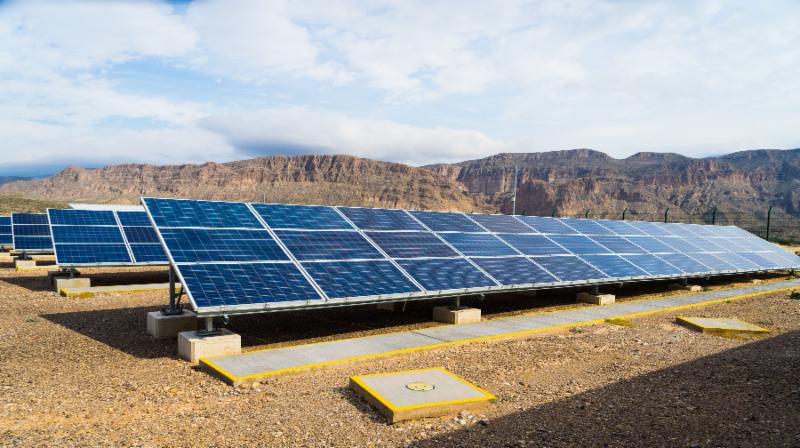
Enel Green Power Mexico inaugurated its 238 MW PV plant in San Luis de la Paz, Guanajuato. The $220 million plant covers 300 hectares.
Energía a debate
,
June 2018, p. 41.
Mexico has 0.28 gigawatts of concentrated solar-thermal capacity installed. This power is mainly used at facilities such as laundries, hotels, and hospitals.
Renewables 2018 Global Status Report,
Ch. 3.
The IEEFA report
Solar is Driving a Global Shift
in Electricity
Markets
credited Mexico with a record-low solar price of $19.70 per MWh (p. 2, Fig. 1.1).
In 2017, thanks to net metering, the number of PV connections to the grid increased by 92%. The installed capacity increased by 63% as a result of 28,000 new contracts. The number of contracts is now close to 60,000, with 400 MW of installed capacity.
PV Magazine Mexico
, July 6, 2018.
Wind:
Mexico added 0.5 gigawatts of wind capacity in 2017. As a result, its installed wind capacity now totals 4 GW.
Renewables 2018 Global Status Report
,
Ch. 3.
Electricity
The Federal Electricity Commission (CFE) reported that, between 2012 and 2018, its carbon dioxide emissions had decreased by 48%.
El Sol de San Luis,
June 20, 2018, p. 1.
The Federal Electricity
Commission
CFE) has 26.9 million customers. It operates 77 generating plants with 50,248 MW of installed capacity. It also maintains 732,000 kilometers of transmission and distribution lines.
Petróleo & Energía
, June-July 2018, pp. 24-25.
Pemex
Production
Pemex refinery production, which includes gasoline, diesel, jet fuel, and fuel oil, continues to decline. In 2016, production averaged 1.110 million barrels a day (mbd), while by 2017 it had declined to 910,000 bd. During the first three months of 2018, it totaled 725,000 bd.
Reforma
, May 21, 2018, p. 1
negocios
.
In May of 2018, gasoline production totaled 245,600 bd, 24% below the corresponding figure for last year.
Similarly, the production of diesel fell to 147,000 bd, 25% below the corresponding figure for last year.
Reforma
, June 24, 2018.
In May, Pemex produced an average of 1.864 mbd of crude—7.5% below the corresponding month in 2017.
Average production for the first five months of 2018 was 1.888 mbd.
Milenio
,
June 23, 2018.
Pemex still produces 98% of Mexico’s crude.
Energía a debate,
July 2018, p. 50.
Financial
In 2017, servicing Pemex debt cost 101 billion pesos—5% of its total debt. The good news is that in 2017 Pemex debt only increased by 50.4 billion pesos, the smallest increase in five years.
Milenio
, July 19, 2018.
Moody’s raised Pemex’s credit rating from negative to stable. This decision was based on company austerity, its refinancing of its debt, and reduced fear of NAFTA collapse.
expansion.mx, May 21, 2018.
Thanks to increased crude prices on the international market, during the first five months of 2018, oil income represented 18.9% of public-sector income. During the corresponding period last year, it only totaled 15.4%.
Reforma
, July 16, 2018, p. 1
negocios
.
Pemex announced it would issue bonds valued at €3.15 billion. Some of the funds raised will be used to buy the company’s Eurobonds due in 2019. The rest would be used to finance Pemex projects.
Milenio
, May 17, 2018.
In addition, the company will issue bonds valued at SFr365 million. At the end of the first quarter of 2018, Pemex debt totaled $106.3 billion.
El Financiero
, May 3,
2018.
During the first five months of 2018, theft of fuel by organized crime was 52.6% above the corresponding figure for 2017. Pipelines were tapped into 43 times a day on average to steal fuel. Puebla was the state with the most taps.
El Universal
, July 6, 2018.
Trade
Since it is refining less crude, Mexico has more to export, despite the decline in production. In May, Mexico exported an average of 1.2 mbd, compared to 958,000 bd during the corresponding month in 2017.
Reforma
, June 24, 2018.
During the first five months of 2018, Mexico registered a petroleum trade deficit of $8.094 billion.
El Universal
, July 20, 2018.
Energy Reform
The purpose of the energy reform is to strengthen Mexico’s energy security and thus guarantee a continuous, reliable supply that meets the quality standards demanded by an economy as diversified as Mexico’s.
Flores Quiroga (2018: 75).
Thanks to the energy reform, investment in oil production has soared. In 2015, before the reform had an impact, investment totaled $5 million. In 2018, such investment reached $1.7 billion. Similar levels of investment are anticipated in 2019 and 2020.
Pulso Energético
, June 26, 2018.
In May, auction Round 2.4 awarded 19 contracts, which will produce an estimated $92.8 billion of investment. The total area contracted was 44,178 square kilometers—all in deep water. The company winning the most contracts was Shell, which won nine, acting either alone or in partnership with other firms.
Energía a debate
,
June 2018, pp. 20-22.
Mexican energy auctions have awarded 101 contracts to 73 companies from 20 nations. The Mexican state is entitled to 74% of the profits from any ensuing production. This profit rate is favorable compared to the rate the U.S. government receives in its Gulf auctions and the rate the Brazilian government receives in its offshore auctions. The auctions have prompted contract holders to spend more than $2 billion on wide-ranging seismic surveys. Mexico’s auction success rate is based on its basins being highly prolific. Mexico has produced 1.6 times more oil offshore than the U.S. has since 1936. The well-established infrastructure serving deep-water fields north of the maritime border in the Perdido Fold Belt also makes Mexican production attractive. Finally, Pemex pipelines to move oil across the Isthmus of Tehuantepec on its way to Asian customers add to attractiveness.
Offshore
, June 2018, pp. 24-26.
In 2017, the United States exported an average of 421,000 bd of gasoline to Mexico—56% of total U.S. gasoline exports.
Reforma, May 25, 2018, p. 2
negocios
.
During May 2018, Mexican gasoline imports averaged 520,000 bd, 65% of domestic consumption.
elfinanciero.com.mx, July 6, 2017.
Even though there is no legal impediment to private gasoline imports, the lack of infrastructure continues to limit such imports. During May, private imports only reached 82,991,000 liters (521,000 barrels).
Reforma
, July 10, 2018, p. 6
negocios
.
The stampede into the retail-gasoline sales market continues. BP, which now operates more than 300 stations in 17 Mexican states, serves more than 500,000 customers daily.
forbes.mx, July
12, 2018.
The company plans to have 1,500 stations in operation by 2021.
Energía a debate
,
July 2018, p. 42.
Hidrosina, with 215 stations, plans to have 400 in operation by 2022 or 2023.
expansion.mx, June 1, 2018.
Fullgas, which specializes in low-volume stations, now has 100 stations and plans to add 250 more in the next three years.
expansion.mx, June 7, 2018.
Oxxogas, with 448 stations, is the private retailer with the most stations.
forbes.mx. June 7, 2018.
G500 Network, an alliance between G500 and the multinational Glencore, now operates 100 stations and plans to open 1,400 more
. Petróleo & Energía
, June-July 2018, pp. 24-25.
Gulf, which plans to open 2,000 stations, has the most ambitious plans.
Milenio,
June 28, 2018.
More than 2,400 stations—21% of the total—now sell under 45 brand names.
forbes.mx, June 1, 2018 &
Arena Pública
, June 18, 2018.
This stampede is not surprising since Mexico is the world’s fifth-largest gasoline market and its tenth-largest diesel market.
Flores Quiroga (2018: 86).
Kansas City Southern de México (KCSM) imported 5.225 billion liters (33 million barrels) of fuel in 2017—84% more than it did in 2016. Imports by rail are necessary to meet fuel demand, given insufficient pipeline capacity. KCSM imports fuel oil, LP gas, gasoline, and diesel by rail from U.S. refineries on the Gulf Coast.
ONEXPO
, May-June 2018, p. 30.
Porter PG Mexico became the first firm to obtain a license from the Energy Regulatory Commission (CRE) to store fuel on Mexico’s Pacific Coast. Its facility, located in Manzanillo, Colima, will have an 870,000-barrel storage capacity. It includes a marine terminal which can receive tankers and a rail spur for shipping fuel. Rail tank cars will transport fuel to a second 300,000-barrel storage facility in Guadalajara. In addition to the CRE approval, approval is required from the Energy Department (SENER), the Environment and Natural Resources Department (SEMARNAT), the National Water Commission (CONAGUA), and the Manzanillo Port Authority (API MANZANILLO). The 3.5 billion-peso project will serve the states of Colima, Jalisco, Michoacán, and Nayarit.
elfinanciero.com.mx, June 30, 2018.
On April 30, Mexicans were paying 17.70 pesos per liter of regular gasoline, while Americans were paying the equivalent of 14.35 pesos per liter. The price differential reflects both taxes and the cost of importing gasoline from the United States.
Reforma
, June 6, 2018, p. 1
negocios
.
The legislated tax on retail-fuel sales, the IEPS, is 4.59 pesos per liter of regular, 3.88 pesos per liter for premium, and 5.04 pesos for diesel. However, as the cost of imported fuel has increased, this tax has been progressively lowered, costing the government 67.9 billion pesos in 2017. The Treasury and Public Credit Department (SHCP) estimates that this year the lowering of the tax will cost the government 107.8 billion pesos.
expansion.mx,
July 6, 2017.
During the first five months of this year, reductions in the IEPS to calm waters in an election year resulted in the government’s collecting 21.4% less from the tax than it did during the corresponding period in 2017, and 38.4% less than it did in 2016.
Arena Pública
,
July 23, 2018.
In a book,
Manifiesto Mexicano
, which came out this summer, political scientist Denise Dresser made the following comment on the energy reform (p. 57), a point of view which differs markedly from that of Flores Quiroga (see book review above):
The energy reform—the reform the government claims will stimulate economic growth—has finally been implemented. It will be necessary to wait to determine if it meets the expectations which have been created. The stakes are enormous; the efficiency of the government is poor; the regulatory challenges are immense; the price of oil has declined; there is a real possibility that the energy reform will recreate Ali Baba’s cave. The reform is being carried out by an ineffective administration, with high levels of insecurity, with rules that are too flexible, and laws that are rarely obeyed. This, plus the rapacity of those who see the energy sector as an opportunity for pillage, could produce results very different from those promised—a result in which investors win, but consumers lose; where the oil workers’ union, which preserves it privileges, wins, but those who want to rein it in, lose; where corporate interests win, but citizens’ interests lose.
Bibliography:
Dresser, Denise (2018)
Manifiesto Mexicano.
Mexico City: Aguilar.
Flores Quiroga, Aldo (2018)
Reforma Energética: Hidrocarburos.
Mexico City: Fondo de Cultura Económica.