Mexico Energy News
Issue 4, March-April 2018
Table of Contents
I. Editor’s Note
II. Articles
III. Sparks
I. Editor’s Note
March 18, 2018, marked the 80th anniversary of the expropriation of the Mexican oil industry. The anniversary has been traditionally celebrated as a patriotic holiday. This year, since the energy reform is one of the hottest topics in the presidential election, there was special emphasis on the anniversary. Pemex and the National University organized a film series concerning oil, including the once censored classic
La Rosa Blanca
(1961). Cuauhtémoc Cardenas, the son of the president who nationalized the oil industry, spoke out against Peña Nieto’s energy reform, and a flurry of commentary appeared in the press.
Philip L. Russell
Austin, Texas
russell@mexicoenergynews.com
II. Articles
Oil Contracts: What Will Happen?
by David Shields
In all democracies, there are changes in government between parties and between ideologies. Many expect MORENA, the new heterogeneous, unpredictable left party, to win in July. MORENA, with its unique leader, reflects social discontent and diverse opinions, many of them radical. It is not a progressive 1990s-style European left. Nor is it a hard-line socialist party.
MORENA is nationalist, conservative, and, above all, anti-establishment. Its members include oil workers, former oil workers, and former electrical workers who are motivated by ideology and opposed to opening investment to private capital. They also oppose neoliberalism, the “abandonment” of refineries, and the “dismantling” of Pemex’s professional staff and the oil workers union. Their proposed energy policy is in basic opposition to Peña Nieto’s energy reform.
López Obrador, the MORENA candidate, and his party won’t have a super majority in Congress to amend the constitution and thus reverse the energy reform, but they will have enough votes to slow such steps as auctions and private investment. Peña Nieto’s government feels that this defies logic and is not in the national interest. Furthermore, it feels the oil contracts are legally binding. However, MORENA has a different interpretation of national interest, which could lead to its returning to polices promoting sovereignty and self-sufficiency via Pemex and the Federal Electricity Commission—both state-owned companies. It could do this by halting the awarding of contracts and natural resources to foreign companies.
Conflict between neoliberals and nationalists is nothing new in the Mexican energy sector. Indeed, it was a daily occurrence during the presidency of Ernesto Zedillo (1994-2000). He wanted to open up the energy industry and privatize it. He appeared willing to resort to a wide variety of illegal and irregular actions to do so. A strong nationalist opposition to his effort arose, based on political parties, social movements, and the business community. Zedillo’s attempts failed.
Now the terms of the ideological dispute have been reversed. The constitution, as amended, and laws now in force favor an opening, not a monopoly. The Peña Nieto administration is riding the global current of open, competitive markets. Its energy reform attracts investment from all over the world and has been widely applauded. If he wins, López Obrador and MORENA will be forced to swim against the current, slowing oil contracts. However, rather than being applauded, they will be harshly criticized within and outside Mexico. Investors will flee from Mexico, and the country will lose all credibility with the international community. The government will be weakened.
The risk inherent in this conflict and confrontation is that López Obrador and MORENA could become more radical. They could ignore the constitution and the law, leading to the downward spiral of conflict in Mexico, similar to what has occurred in Venezuela. This would be the worst-case scenario.
However, no one knows how López Obrador and MORENA members will govern. They could be prudent, tolerant, and pragmatic and avoid conflicts when in power. They could respect laws and oil contracts, giving priority to the cases where fraud is suspected, as with Odebrecht and other Pemex contracts. The energy reform could be used to promote refineries and other oil projects through partnerships between Pemex and private companies which risk their capital. This would be the best-case scenario.
Given their anti-establishment orientation, López Obrador and MORENA could easily confront the powerful political, business, and social groups which have governed Mexico. Energy policy is an area which is prone to ideological confrontation. Thus, regardless of who wins the election, it would be best for all of us to ensure that the political transition will be smooth and conciliatory. We should all avoid exacerbating conflict.
` This article was originally published in the April 3, 2018 edition of
Reforma
. Translation by Philip Russell. David Shields is an energy analyst. His email: david.shields@energiaadebate.com.
Regression of the Mexican Oil Industry in Sight
by Gabriel Quadri
It appears possible that there will be a regression in hydrocarbon institutions and policies in Mexico and a return to the state monopoly with all its financial, fiscal, technological, operative, and competitive implications. Dismantling the energy reform has become the mantra of the leading candidate in the presidential election.
Before the energy reform, Mexico was an anomaly with its oil company, which was opaque, dependent on political decisions, and always plagued by corruption. The oil monopoly was relatively successful at discovering and exploiting large, shallow-water fields. These fields were accessible with conventional technology, required little investment, and had low operating costs (less than $7 a barrel). This was the case with the Cantarell and Ku Malob Zaap (KMZ) fields. Oil income from these two fields fueled nationalistic fantasies, permitted the government’s unchecked operating costs, and created the illusion that it was unnecessary to carry out a fiscal reform. There was a feeling that the government’s stupefying addiction to oil money could be permanent. This addiction was nurtured by a single government firm which faced no competition and did not attract private investment or technology. We were able to produce almost 3.5 million barrels of crude a day. At the same time, Pemex was the source of roughly 40 percent of the government’s income.
Cantarell and Ku Malob Zaap have been declining without any significant additional oil reserves being discovered and with few prospects of finding another super-giant field. The government monopoly has been unable to tap deep-water fields in the Gulf of Mexico due to its financial, technological, and logistical limits. Production has fallen to less than 2.5 million barrels a day and, with it, government revenue. The oil monopoly, which was the last gasp of Stabilizing Development,* went bankrupt and collapsed.
The left claimed that there was a deliberate effort to plunder and suffocate Pemex in order to justify privatizing it. It also had fantasies about massive public investment in new refineries—a measure which would be unprofitable and impractical.
Meanwhile, in the United States, there is large-scale production from deep-water fields in the U.S. Exclusive Economic Zone, and the shale revolution is underway.
It is abundantly clear in this context that the energy reform was a practical, financial, institutional, competitive, technological, fiscal, and operational imperative—necessary to recapture lost ground in a globalized oil industry. It was not an ideological position. It was an absolute imperative.
Cantarell has already gone into decline. That has had a major impact which has been lessened by production from Ku Malob Zaap. There’s no comparable third field in sight. In roughly 20 years, the production of our current fields will be down to around 300,000 barrels a day. That is one-seventh of what we produce today (data from the International Energy Agency).
As the leading candidate and his leftist followers believe, we can abandon the institutional, regulatory, and operative structure of the energy reform and return to the monopoly—trying to recreate the past while imagining an oil environment which no longer exists. We could go into debt looking for another super-giant field and never find it, relying on an obsolete, exhausted, unworkable model which has prevailed even as reserves and production decline. They want to resuscitate the monopoly, without taking into consideration the lack of government transparency and the structural corruption which the monopoly gave rise to.
The energy reform created a model that attracts investment, risk capital, and technology which can be used to find profitable new reserves in a competitive context without jeopardizing public finances. The reform laid the groundwork for auctions, providing unprecedented transparency in Mexico. Auctions allow the Mexican state to channel and regulate the industry and to capture the majority of oil income, which is how the industry operates in more than 100 nations. The energy reform also paves the way for better administration of oil income by creating the Mexican Petroleum Fund. This is how the most advanced nations, such as Norway, United Arab Emirates, and Saudi Arabia, administer their oil wealth. Such a fund can increase public wealth with high-yield, diversified investments and prepare the way for the transition to clean and renewable energy. A profound fiscal reform that provides the government with necessary income without excessive dependence on oil income is essential. Most revenue should go to the Mexican Oil Fund. That would allow a quick, efficient transition to energy sustainability.
Time is running out. Oil will be important as a fuel for just a few more decades. Electricity is clearly the energy source of the future. Electric cars are already a harbinger of this transition. Oil will continue to be an important raw material for petrochemicals, but the global demand will decrease by orders of magnitude. Prices will be very low, and our probable and prospective reserves will lose their value. If we permit the reversal that López Obrador proposes, these reserves may remain underground forever.
*The Mexican economic development strategy adopted between 1955 and 1970 is known as Stabilizing Development.
III. Sparks
At the beginning of 2018, Mexico’s hydrocarbon reserves totaled 8.484 billion barrels of crude oil equivalent (bcoe), a figure which is more than 7% below the corresponding figure for 2017 and more than 40% below it for a decade ago.
La Jornada
, March 24, 2018.
At the current rate of production, these reserves will last 8.5 years.El Universal
, March 24, 2018.
The International Energy Agency (IEA) reported that Mexico was one of the few nations that reduced its carbon emissions in 2017. The 4% reduction was due to reduced oil use, more efficient electrical generation, a sharp increase in renewable energy use, and a small increase in the use of natural gas.
Energía Hoy
, March 26, 2018.
In 2017, Mexico imported more than 1 million barrels of American petroleum products a day, at a cost of $23 billion.
New York Times
, April 26, 2018, p. B5.
Oil
As of January 1, Mexico’s proven oil reserves totaled 6.46 billion barrels, 7.6% below the corresponding figure for 2017. At the current rate of production, these reserves will last 9.1 years.
Reforma
, March 24, 2018, p. 14.
These reserves are the 17th largest in the world. However, on a per capita basis, Mexico ranks 34th.
Pulso Energético
,
March 19, 2017.
Mexico’s extreme oil dependency is a thing of the past. In 2017, it exported $19.93 billion of crude oil, while auto exports totaled $126.67 billion.
forbes.com.mx, April 9, 2018.
In 2017, oil income accounted for 3.8% of gross domestic product, down from 8.8% in 2012.Reforma
, April 4, 2018, p. 5
negocios
.
Gas
Electricity generation with fossil fuels, especially with combined-cycle plants, will continue in the Mexican energy mix given the access to an abundant, cheap supply of gas, albeit one which is imported.
David Shields,
Energía a Debate
, March 2018, p. 5.
Mexico now imports 84% of its natural gas.
Reforma
, March 26, 2018, p. 1
negocios
.
Of theseimports, 4.5 billion cubic feet a day come from the United States through about 20 pipelines. Thanks to gas imports, Mexico generates about 30% of its electricity with gas.
New York Times
, April 26, 2018, p. B5.
Lewis Energy signed a contract with Pemex to drill for gas in the Mexican portion of the Eagle Ford formation. Lewis is expected to invest roughly $617 million.
PennEnergy
, March 27, 2018.
Mexican natural gas reserves total 10.02 trillion cubic feet.
El Economista
, March 23, 2018.
At the current rate of production, this gas will last 5.4 years. This latter figure is 3.4% below the corresponding figure for 2017, indicating that new discoveries almost match production.
Reforma
, March 24, 2018, p. 14.
LP Gas
Pemex supplies 60% of LP gas demand. Since Pemex production is unable to meet domestic demand, in 2017, an average of 58,528 barrels a day (bd) were imported. These imports cost $87.262 billion. Private vendors accounted for 72% of imports.
Reforma
, March 21, 2018, p. 4
negocios
.
Renewables
Mexico has had three clean-energy auctions. The average price per MWh in the first auction was $41.80, in the second
$33.47, and in the third, $20.57.
Energía a Debate
, March 2018, p. 8.
Mexico has now surpassed China in renewables! In 2017, renewable energy investment in Mexico increased by 810%, while in China it only increased by 30%. Of course, in terms of the amount invested, China’s $126.1 billion of investment exceeded that of the next nine countries combined. Mexico invested $6 billion, which placed it in the top-10 investor nations for the first time.
Frankfurt 2018: 23, 27, 30.
Mexico now produces 29% of its energy from clean sources and is on its way to meeting its 2024 goal of 35%.
Energía a Debate
, March 2018, p. 10.
In the past five years, wind and solar capacity have increased by 330%.
Energía a Debate
, March 2018, p. 10.
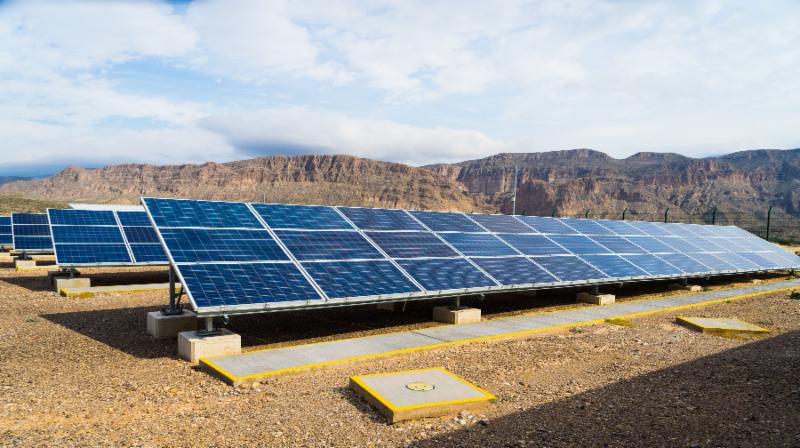
Distributed solar capacity shot up from 1,986 kilowatts (KW) in 2012 to 304,167 KW in 2017. Barriers to more rapid deployment of distributed PV include the lack of mechanisms to finance purchases, the inability of the grid to handle an increased number of installations, tariffs on imported panels, and subsidized electricity rates. Subsidies remove the financial incentive to purchase PV. This subsidy, of course, is paid by the state. In addition to its cost to the government, subsidizing electricity leads to increased greenhouse emissions because the subsidy prolongs generation with fossil fuels. In addition, jobs in solar installation are lost.
Energía a Debate
, March 2018, pp.60-62.
During 2017, Mexican solar panel production doubled to 60,000.
Reforma
, March 26, 2018, p. 8
negocios
.
A November 2017 power auction in Mexico commissioned 5 terawatt-hours (TWh) at an average price of $19.80 per megawatt-hour (MWh). The average winning bid for solar was $20.80/MWh, and the average for wind was $18.60/MWh. Both figures are regarded as world-record lows. The contracts represented $3.3 billion of investment for wind and $2.6 billion for solar. This rapid increase in renewable investment reflects plentiful resources for wind and solar, growing electricity demand, an auction program resulting in low-priced bids, and a government certificate scheme.
Frankfurt School: 2018: 30, 40, 73.
Nine political parties, which have formed three coalitions for July’s presidential election, submitted their platforms to the National Electoral Institute (INE). These documents, which total 550 pages, agree on one single point—Mexico should increase its use of renewable energy.
Pulso Energético
, April 9, 2018.
Mexico’s renewable-generation capacity now totals 19,025
megawatts (MW). Of this, hydropower provides 12,670 MW. Solar, all of which is PV, provides 570 MW. In addition, geothermal provides 914 MW, while bioenergy provides 866 MW. Wind, all of which is onshore, provides 4,005 MW.
IRENA: 2018: 4, 8, 15, 23, 29, 39.
Mexico ranks 18th worldwide in wind capacity.
Energía a Debate
, March 2018, p. 54.
In 2018, Mexico fell from 9th place to a still respectable 12th place worldwide in the
Renewable Energy Country Attractiveness Index
. Chile remains as the only Latin American country ranked higher than Mexico.
RECAI
, May 2018, p. 10.
Mexico’s downward slide is less the result of changes in Mexico than the result of innovations elsewhere that have propelled other nations upward. The Netherlands, for example, climbed from the 15th spot to 9th as a result of recent offshore wind projects being awarded without need for government subsidies, a growing solar PV market, and the government’s move to meet a 14% renewable energy target by 2020.
CleanTecnica,
May 2, 2018.
Electricity
During the first three months of 2018, the Federal Electrical Commission (CFE) lost 11.4 billion pesos. During the first three months of 2017, it earned 6.764 billion pesos. This shift was due to a complex interplay of variables. Its revenue from electricity sales declined by 5.505 billion pesos. In addition, fuel costs increased, as did debt-service costs. Losses would have been even higher had the peso not appreciated in value, lowering the peso costs of importing fuel and servicing the CFE’s foreign debt.
La Jornada,
April 29, 2018.
Thanks to greater efficiency, per capita residential energy use has declined by 20.3%. LED lighting and more efficient refrigerators, water heaters, and washing machines contributed to this decline.
Energía a Debate
, March 2018, pp. 24-25.
The Federal Electrical Commission (CFE) lost 45 billion pesos in 2017. It attributed 55% of these losses to theft of electricity. Stealing electricity is such a deeply rooted tradition that it appears likely to continue despite the CFE’s presenting 20,000 electricity-theft complaints to the attorney general last year.
Energía Hoy
, April 5, 2018.
The Chamber of Deputies voted more than 550 billion pesos for retail-electricity subsidies in 2018. This figure is 7 billion pesos above the amount budgeted in 2017. This subsidy, designed to ease the burden of energy costs for low-income consumers, equals 47% of the budget for anti-poverty programs which directly target the poor.
Energía Hoy
, April 13, 2018.
Mexico has 12,092 megawatts of installed hydro capacity, placing it third in Latin America behind Brazil and Venezuela.
Hydro provided
29.14 terawatt-hours of electricity in 2017.
IHA 2017: 37, 81.
At the end of 2015, hydro provided 22% of Mexico’s installed generation capacity and 12% of generation.
IHA 2016: 36.
The Federal Electricity Commission (CFE) has been signing up a million new clients per year. Ninety-eight percent of the population is now supplied with electricity. The CFE’s declared goals are to serve 100% of the population by 2020 and to generate 35% of its electricity from renewable sources by 2024.
Excélsior
, March 24, 2018.
At the end of 2017, Mexico had 4,005 megawatts (MW) of installed wind capacity, of which 478 MW were installed in 2017. Mexico ranked second in Latin America (behind Brazil) and ninth worldwide in the amount in new wind capacity installed in 2017.
GWEC 2017.
That year, it ranked 26th worldwide in the amount of new hydro installed, with 64 MW of added capacity.
IHA 2017: p. 31.
However,Mexico didn’t make the top 14 worldwide in solar expansion in either 2016 or 2017.
PV Tech
, March 28, 2018.
Pemex
Trade
Mexico imported an average of 571,000 bd of gasoline in 2017—50% above the 2013 rate.
Wall Street Journal
, March 13, 2018, p. A6.
During the first two months of 2018, Pemex imported an average of 609,100 barrels a day (bd) of gasoline, 11.9% above the corresponding figure for 2017.
Reforma
, March 24, 2018, p. 14.
Importation of premium gasoline was especially pronounced. In February, of the average of 117,200 bd consumed, Pemex only refined 2,900 bd.Reforma
, April 2, 2018, p. 6
negocios
.
Despite its facing competition in the domestic market, Pemex sold 443 billion pesos worth of gasoline during 2017, 31% more than in
2016.
This increase in sales reflects increased retail prices rather than increased sales volume.
forbes.com.mx, March 29, 2018.
Mexico exported $20 billion worth of crude in 2017. Exports averaged 1.17 mbd.
Wall Street Journal
, March 13, 2018, p. A6.
Mexico accounts for 8% of U.S. crude imports. In 2017, it supplied the Untied States with an average of 610,000 barrels a day.
New York Times
, April 26, 2018, p. B5.
Production
During the first three months of 2018, Pemex produced an average of 598,000 barrels a day of refined products. This figure was 36.8% below the corresponding figure for 2017.
El Economista
, April 30, 2018.
During the first three months of 2018, Pemex produced an average of 1.89 mbd of crude, 6.3% below the corresponding figure for 2017.
forbes.mx, April 27, 2018.
The number of wells operated by Pemex has declined along with the amount of crude produced. In 2014, the company operated 9,558 wells. By 2017, this number had declined to 8,008.
Reforma
, March 19, 2018, p. 6
negocios
.
In 2017, Pemex’s six refineries produced an average of 257,000 bd of gasoline, down 44% from a decade ago. This low level of production resulted from Mexico’s six refineries operating at an average capacity of only 48%—the lowest level on record.
Wall Street Journal
, March 13, 2018, p. A6.
Financial
In 2015, as part of the energy reform, Pemex created six new subsidiaries. Five of them, Transformación Industrial, Fertilizantes, Logística, Cogeneración, and Etileno, lost a total of 63.3 billion pesos in 2017. One of them, Perforación y Servicios, showed a profit of 1.734 billion pesos.
Reforma,
March 26, 2018, p. 1.
In dollar terms, Pemex lost $18 billion in 2017.Aristegui Noticias
, March 29, 2018.
Theft of fuel cost Pemex 30 billion pesos in 2017. The arrest of 1,600 people for fuel theft and the closing of 100 service stations for selling stolen fuel did little to prevent such pillage.
Energía Hoy
, April 11, 2018.
Pemex reported a profit of 113 billion pesos during the first three months of 2018. The main factor accounting for this profitability was the increased value of the peso, which lessened the peso costs of importing fuel. Higher export prices for crude also contributed to profitability, as did higher prices charged domestically for gasoline and diesel
.
La Jornada
,
April 27, 2018.
During the first two months of 2018, Pemex reported that thieves had tapped into its pipelines to steal fuel 2,274 times. This figure is 38% above the corresponding figure for 2017. Hidalgo was the state with the most taps.
El Economista
, April 5, 2018.
The thieves,
huachicoleros
, steal gasoline, diesel, jet fuel, crude oil, and LP gas—the fuel used in 75% of Mexican homes.Reforma
, April 8, 2018, p. 1.
Pemex declared that agendas of meetings attended by former Director General Emilio Lozoya would not be released until 2023. Similarly, it announced that the text of the 1.811 billion-peso contract that Pemex signed with the Brazilian construction firm Odebrecht for the modernization of the Tula refinery would not be released until 2021. In both cases, the rationale offered was that the documents could not be released since the attorney general was investigating possible bribery related to Odebrecht.
Reforma
, April 26, 2018, p. 1.
Energy Reform
This government and the outside interests which direct it want to convince us that the energy reform is irreversible, that it is here to stay, that legal contracts have been signed which prevent any change in the current situation …
Cuauhtémoc Cárdenas,
Aristegui Noticias
, March 18, 2018.
On the 80th anniversary of the expropriation of the oil industry, Cuauhtémoc Cárdenas, the son of the president who nationalized the oil industry, lamented the condition of Pemex and declared that it would indeed be possible to reverse the energy reform. (See epigraph above.)
Aristegui Noticias
, March 19, 2018.
Hydrocarbon-exploration auctions through Round 3.1 resulted in 107 contracts. Of these, 30% are in shallow water, 25% are in deep water, and 45% are onshore. Seventy-three firms from 20 nations have participated in the auctions.
El Financiero
, March 28, 2018.
This year, as a result of energy auctions, the Mexican government has earned $525 billion in signing bonuses.
New York Times
, April 26, 2018, p. B5.
The Center for Economic and Budget Research (CIEP) commented that the government was working at cross-purposes. It levies a special tax designed to raise the cost of fuel and thus reduce CO
2
emissions. Yet the government also has lowered another tax, known by its acronym IEPS, collected on diesel and gasoline to limit politically sensitive price rises which have occurred since the government ceased to set fuel prices.Reforma
, March 23, 2018, p. 1
negocios
.
Gasoline retailers are beginning to bypass the Pemex supply chain. Pipelines, if available, are the least expensive way to transport fuel to retail markets. According to the Energy Regulatory Commission (CRE), ocean-going tankers are twice as expensive as pipeline transport, rail tank cars are six times as expensive, and tanker trucks are 14 times as expensive. Fuel not only has to be shipped, but must be stored. Kansas City Southern de México is the sole supplier of fuel shipped by rail from the United States to a $45 million terminal in San Luis Potosí. This terminal supplies gas stations not selling under the Pemex brand.
Reforma
, March 26, 2018, p. 12
negocios
.
Oxxogas, with 448 gasoline stations, has almost twice as many stations as its nearest private rival.
forbes.com.mx, March 29, 2018.
In February, private companies sold 11.9% of the 374,066 bd of diesel sold in Mexico. Twenty private companies now import diesel.
Reforma
, March 30, 2018, p. 14.
One of the last energy markets to be opened to private investors is the jet fuel market, which has been supplied by a government agency, Airports and Auxiliary Services (ASA). At Mexico’s eight principal airports—Mexico City, Cancún, Guadalajara, Monterrey, Tijuana, San José del Cabo, Puerto Vallarta, and Toluca—ASA will cease retailing jet fuel. It will continue to supply jet fuel in smaller airports that are less attractive to private suppliers. At major airports, ASA will continue to store fuel, which will then be provided to private retail vendors.
Reforma
, April 2, 2018, p. 1
negocios.
Of the 35 blocks in shallow waters offered in Round 3.1, contracts were awarded for 16. Of these, seven went to Pemex, acting either alone or in partnership with other companies. The Energy Ministry (SENER) expects winning bidders to invest $8.626 billion.
El País,
March 29, 2018.
Auction Round 3.2, which will offer conventional onshore fields, and Round 3.3, which will offer non-conventional onshore fields, are both scheduled for September.
Reforma
, March 28, 2018, p. 15.
2018
Making a U-turn from the current reforms would be detrimental to the Mexican economy.
Fatih Birol, executive director of the IEA,
New York Times
, April 26, 2018, p. B5.
If elected, Ricardo Anaya, the presidential candidate of the National Action Party (PAN) and its two coalition partners, declared that he would lower gasoline prices in border areas so that they would equal those in the United States
.
Reforma
, March 31, 2018.
Commenting on this proposal, columnist Sergio Sarmiento noted that Anaya failed to explain how he would make up for lost tax revenue and that gasoline taxes are progressive, easy to collect, and place a charge on pollution.Reforma
, April 2, 2018, p. 10
.
Columnist Mauricio González further noted that any reduction in taxes was problematic since government spending would increase for pensions, due to an aging workforce, and for debt servicing, due to the increased amount of foreign debt.
Reforma
, April 4, 2018, p. 5
negocios
.
Anaya stated that he would continue with the energy reform, since it created wealth, jobs, and income for the government. He emphasized that the National Anticorruption System (SNA) required strengthening “to guarantee that contracts are awarded legally and, of course, to maximize benefits for all Mexicans.” He challenged the notion that the energy reform delivered hydrocarbons to private individuals and foreign companies. Rather, he asserted, oil and gas remain property of the state. With the reform, he said, “we create a public-private partnership to maximize oil and hydrocarbon income to benefit all Mexicans.” He also stated that clean energy could stimulate economic growth, create jobs, and benefit the environment.
Pulso Energético
, April 9, 2018.
To promote sustainability, Anaya proposed introducing clean energy to Mexican homes, setting pollution limits for industries, promoting non-motorized and electric transportation, and providing economic incentives so that at least a third of small- and medium-sized businesses would use solar energy. He set a goal of generating 40% of electricity with clean energy by 2024—5% above the goal set by the Energy Transition Law. He stated, “Mexico should and can be a force for the energy transition and can set an example for other nations by creating incentives to attract investment in solar, wind, and geothermal.”
El Financiero
, April 22, 2018.
Anaya announced that, if elected president, he would lower gasoline taxes. He noted that taxes constitute 36% of the retail price of gasoline and that the price people pay for gasoline is “excessive.”
Reforma
, May 7, 2018, p. 5.
The platform of the PAN, of which Anaya was president until he launched his presidential campaign, calls for “guaranteeing energy security, with certainty in supply, quality, price, and sustainability, thus favoring final consumers, especially Mexican families.” In addition, it calls for “promoting the development of clean and renewable energy and its incorporation into the Mexican energy mix.”
José Antonio Meade, the candidate of the Revolutionary Institutional Party (PRI) and its two coalition parties, also favors the energy reform, noting that it permits Pemex to modernize, improve its technology, and remain relevant. The reform, he feels, will attract more capital, more technology, and more certainty, which will bring more jobs, growth and social inclusion.
Pulso Energético
, April 9, 2018.
Margarita Zavala, an independent presidential candidate, declared that she was in favor of the energy reform.
El Economista
, March 2, 2018
.
Front-running presidential candidate Andrés Manuel López Obrador (AMLO) stated that, if elected, he will request that President Peña Nieto cancel auction Rounds 3.2 and 3.3, scheduled for September.
expansion.mx, March 27, 2018.
AMLO, the candidate of MORENA and its two coalition parties, promised that, if elected, he would freeze energy prices for three years. Critics charged that such a freeze would deter private energy investment and create market distortions. Alfredo Álvarez, of the global accounting firm EY, noted that such a freeze would result in subsidizing gasoline. He asked, rhetorically, “Should the money of all Mexicans subsidize hydrocarbons, which emit carbon, or should it support education?”
Reforma
, April 13, 2018, p. 1.
AMLO declared that, if he were elected, there would be no more theft of fuel from pipelines, a practice known colloquially as
huachicoleo
. Such theft, he asserted, would end because people would have jobs and good wages.
El Economista
, April 6, 2018.
Olga Sánchez Cordero, whom AMLO has announced as his pick for interior minister, commented on his plans for the energy reform: “Andrés will not cancel the energy reform. What he has said is that if there are contracts tainted by corruption—something questionable—it will be necessary to review them. There has to be transparency, and complete clarity.”
Reforma
, April 6, 2018, p. 8.
In response to AMLO’s threats to terminate the energy reform, President Peña Nieto declared that if the energy reform were canceled, 800,000 jobs and $200 billion of investment would be lost.
El Universal
, March 23, 2018.
AMLO called for a temporary freeze in new private investment in oil exploration and production. Instead, he advocated shifting federal investment from exploration and production to refining. As a result of such policies, he claimed, “By the middle of the next presidential term, we’re going to stop buying gasoline; we’re going to produce gasoline in Mexico.”
Wall Street Journal
, March 13, 2018, p. A6.
AMLO has been compared to Trump in that, at times, he and his campaign team seem to give contradictory responses, leaving voters (and potential investors) unsure of what his positions are. For example, Carlos Urzúa, whom he has announced will be his treasury secretary, declared: “It is quite possible that there will be no changes in the energy reform and that contracts that have already been signed will not be modified or rescinded. Mexico can’t afford to reject foreign investment, and there’s no reason to expect that the progress made in oil auctions would be halted. Going back on the contracts would be highly inappropriate and would be contrary to AMLO’s economic plan.” However, in the first presidential candidates’ debate, AMLO declared that the
Pacto deMéxico*
“was contrary to Mexico’s interests. That’s where they approved the structural reforms. There they approved the privatization of oil which caused increases in the prices of gasoline, the
gasolinazo
,** and other reforms which are against people’s interests.”
Reforma
, May 1, 2018, p. 5
negocios
.
*
The
Pacto de México
was a multi-party agreement made early in the Peña Nieto administration to amend the constitution to permit the energy reform and other reforms.
** The
gasolinazo
was the sharp increase in gasoline prices at the beginning of 2017 which generated widespread protest. (See Issue 1.)
Bibliography
GWEC (2017)
Global Wind Statistics 2017
. Brussels: Global Wind Energy Council.
IHA (2016)
2016 HydropowerStatus Report
. London: International Hydropower Association.
-(2017)
2017 Hydropower Status Report
. London: International Hydropower Association.
IRENA (2018):
Renewable Capacity Statistics 2018.
Abu Dhabi: International Renewable Energy Agency.