Mexico Energy News
Issue 3, January-February 2018
Table of Contents
I. Editor’s Note
II. Book Review
III. Sparks
I.
Editor’s Note
It’s now election season as Mexico prepares to elect a president and members of congress on July 1. This edition of the
Mexico Energy News
considers the positions taken by front-running presidential candidate Andrés Manuel López Obrador concerning energy. The next issue will consider the positions of the candidate running second in the polls. Readers interested in events in Mexico during the past year can read my:
http://www.theragblog.com/philip-l-russell-2016-another-bad-year-for-mexicos-pena-nieto/
Later this spring, I plan to do an article on the election process.
Philip L. Russell
Austin, Texas
russell@mexicoenergynews.com
II. Book Review by Philip L. Russell
Pérez, Ana Lilia (2017)
Pemex RIP: Vida y asesinato de la principal empresa mexicana
. Mexico City: Grijalbo.
In
Pemex RIP
, veteran Mexican journalist Ana Lilia Pérez, author of
El cartelnegro
(2011), continues her investigation into Mexico’s state-owned Pemex.
The book opens recounting the unlikely but often-told story of how British businessman Weetman Pearson missed a train in Laredo, Texas, and thus spent the night there. While in Laredo, according to the story, he observed the feverous activity generated by the 1901 Spindletop oil discovery and thus decided to pursue oil wealth. The story is unlikely because Laredo is 350 miles southwest of Spindletop.
Pérez then briefly recounts the major events and players of early Mexican oil development, including oil imports by the Waters-Pierce Company and production in the Golden Lane along the Gulf Coast. Foreign oilmen are cast as villains, as indicated by the statement that the norm for foreign oilmen was “hiring cruel foremen who used moistened whips on the naked backs of workers to incentivize drilling, or for federal forces to intervene at their service in case of labor troubles” (p. 14).
Pérez describes the 1938 oil nationalization decreed by President Lázaro Cárdenas. He is quoted extensively on how oil companies flouted the law and thus were nationalized in accordance with the then-current Expropriation Law.
Pérez is very sympathetic to the 1938 expropriation, noting (p. 35):
The Cardenista utopia, produced by the expropriation of the oil industry, gave Mexico autonomy and sovereignty not only in terms of energy, but in economic terms. The oil nationalization would contribute to Mexico’s identity and provide the nation with the most important economic institution of its history.
For several decades after the oil nationalization, Pemex remained a low-profile enterprise supplying Mexico with cheap energy and remaining largely isolated from international oil markets. Through the Echeverría administration (1970-1976), company directors general tended to be engineers. Pérez views these engineers favorably. For example, she describes Pascual Gutiérrez Roldán (1958-1964) as “a nationalist engineer who believed in Pemex’s capacity and its ability to be self-sufficient” (p. 51).
With the arrival of the Mexican oil boom of the late 1970s, as Pérez observes, Mexican “presidents decided that the goose that laid the golden eggs did not need engineers or oil experts, but economists and financial experts to administer the eggs” (p. 75). At the same time, the mindset of directors general changed from that of patriot to potentate.
This shift in the nature of directors general was personified by Jorge Díaz Serrano (1976-1981), who oversaw the breakneck expansion of Pemex. Díaz Serrano’s life style was the source of frequent comment. He bought Audemar Piguet watches, Persian carpets, and fine wines for himself and friends. Pérez notes he owned “mansions, penthouses, apartments, sports cars, jewels, and a lavish art collection which included works by Salvador Dalí and Diego Rivera” (p. 65). In addition to his salary, he profited from Pemex contracts with various service companies he had an interest in, as well as from influence peddling (p. 46). He eventually fell from grace, was removed, and jailed for skimming $35 million off Pemex tanker purchases.
Pérez notes that subsequent Pemex directors general followed Díaz Serrano’s example. They received the highest salaries among public-sector firms as well as “stratospheric benefits” completely out of proportion for a nation where 57 percent of the working population is underemployed with no benefits. After 1980, presidents selected directors general based on political arrangements rather than the aptitude of those chosen.
These directors general oversaw a company which operated 9,400 wells, 279 drilling platforms, and 34,074 kilometers of pipelines, as well as petrochemical facilities. In addition, the company built and managed schools, day-care centers, kindergartens, sporting clubs, libraries, hotels, hospitals, and clinics. Pérez notes that at the end of the century Pemex was the world’s third-largest crude producer and its largest offshore producer. This allowed the company to become the “support of the economy.” In addition, she notes that along with increased production came “directors, administrators, trade unionists, workers, suppliers, contractors, and service providers, who weakened the company with their rapacity, corruption, and impunity …” (p. 40).
Embedded within this gargantuan entity is the Oil Workers Union of the Mexican Republic (STPRM). Even before the 1970s oil expansion, the union had developed an unsavory reputation. Entering into union coffers, but far from evenly distributed, were 2 percent of the value of Pemex contracts, 2 percent of wages of unionized employees, money from selling jobs, “charges” for providing goods and services, and “a list of criminal practices which made the union corrupt, practically from its beginning, and Pemex the most plundered company on the planet” (p. 129). Money received by the union was invested in oil transport, factories, houses, cattle ranches, and farms. Control of the union and its wealth sometimes turned violent. In 1957, violence resulting from factions vying for control of the union in Poza Rica resulted in what Pérez termed a “massacre” (p. 50). Elsewhere union conflicts resulted in oil workers dying in “strange accidents.”
Income controlled by the union allowed union officials to amass vast wealth. One of the more famous union heads, Joaquín Hernández Galicia (La Quina), had property comparable to that of Middle Eastern oil sheiks. Pérez observes that Romero Deschamps, the current union head, “owns luxurious residences and condos, flies in private jets, and enjoys yachting—all part of a life style that no head of an oil company, private or public, can match” (p. 150). As is typical of the Mexican union movement, Deschamps has been long-lasting, having served under four presidents, 12 energy secretaries, and eight Pemex directors general (as of the writing of the book).
Much of the information in the book has been published before. Its ground-breaking investigation is a detailed description of the shell companies created by Pemex. These companies have been established in such tax havens as the Netherlands Antilles, Bahamas, Caiman Islands, and Luxemburg. Once established, as Pérez notes, “The dollars flowed into them by the cartload (
carretadas
) without anyone demanding to know their destination” (p. 372). Many of these companies exist only on paper and lack personnel and even offices. As Pérez makes clear, their “object was to take resources from Pemex without being accountable to any Mexican institution” (p. 372). At the beginning of 2017, there were 77 such companies, of which 37 were offshore and thus subject only to foreign laws concerning capital movements and disclosures (p. 372).
Pérez’s book provides a service in allowing the average Mexican to understand some of Pemex’s workings. Her description of Pemex shell companies received widespread comment and thus had an impact far exceeding readership of the book itself.
Pérez incongruously closes her book with a quote by Cuauhtémoc Cárdenas, the son of the president who nationalized the oil industry, criticizing Peña Nieto’s energy reform. However, there is no suggestion of how to clean up Pemex, nor is a reason presented why one would trust such a demonstrably corrupt entity more than a foreign oil company which obtained oil exploration rights through competitive bidding.
The book has other drawbacks. Despite its being printed in October 2017, only on page 287 (of 404) does it begin to consider the Peña Nieto administration. It is long on events, such as the sinking of the service boat
Seba’an
(pp. 239-48) and of the
Usumacinta
platform (pp. 248-73), but short on questions concerning why Pemex has developed as it did.
Historian Lorenzo Meyer commented on Pérez’s book. He does provide insight into just why Pemex developed as it did. As late as 1967, the
Wall Street Journal
quoted a U.S. oil executive who declared, “As a successful government venture, Pemex is the model to other countries wanting to nationalize their oil.” As Pérez documents, today’s Pemex is hardly a source of worry for foreign oil executives.
Meyer views the current condition of Pemex as resulting from a combination of corruption and the irresponsibility of Mexican decision-makers. The explosion of corruption during the Alemán presidency (1946-1952) began to undermine Pemex. Decades later, the death of former President Cárdenas, the triumph of neoliberalism, and the influx of billions of dollars from oil exports further undermined the company. During the two National Action Party (PAN) administrations (2000-2012), oil income was used to meet current government expenses rather than being re-invested in the company, and corruption further undermined Pemex. For ideological reasons, both PAN administrations were more sympathetic to the private sector than they were to public-sector enterprises. By the time of President Peña Nieto’s 2014 energy reform, burdensome rates of taxation and the contracting of private corporations to carry out a wide variety of services had further hollowed the company out. As Meyer notes, the reform “made it possible for private Mexican and foreign capital to confidently plan the displacement of Pemex from its historical role of producing and marketing Mexican oil wealth.”
Meyer, Lorenzo (2018) “¿Ochenta años para esto?”
Reforma
, March 1, p. 8.
Pérez, Ana Lilia (2011)
El cartel negro
. Mexico City: Grijalbo.
Turner, James C. (1967) “Nationalized Oil Agency in Mexico So Successful It Worries the Industry,”
Wall Street Journal
, Jan. 26, p. 1.
III. SPARKS
LP gas provides energy to 75.68% of Mexican homes. Natural gas provides energy to 8.05%, while wood, mainly in southern Mexico, provides energy for 14.27%.
Mexican LPG Market
, Comisión Reguladora de Energía, Nov. 2017.
At COP 23 in Bonn, Mexico reported that it had reduced greenhouse gas production by 5 million tons a year since 2007.
El Universal
, Nov. 14, 2017.
Deforestation offsets Mexico’s effort to reduce greenhouse gas production by shifting to renewables. In 2016, Mexico lost 253,141 hectares of forest due to urban sprawl, the construction of tourist facilities, and the conversion of land to grow oil palms, avocado trees, and crops such as soy.
Reforma
, Nov. 27, 2017, p. 2.
NATURAL GAS
In 2017, Mexican natural gas production averaged 5.068 billion cubic feet a day (bcfd), a figure 12.5% below the corresponding figure for 2016 and 28% below the 2010 figure.
ElEconomista
, Feb. 13, 2018.
In September 2017, Mexico consumed 8.1145 billion cubic feet a day (bcfd) of natural gas, of which a record 61% was imported.
Excélsior
, Nov. 20, 2017.
Natural gas production during the first month of 2018 totaled 4.910 bcfd, 7.8% below the rate of the first month of 2017.
El Financiero
, Feb. 25, 2018.
Natural gas imports are facilitated by 18,895 kilometers of gas pipelines, a figure 67% above the 2012 figure. The National Hydrocarbon Commission (CNH) has warned that such a high degree of dependency could produce security risks.
El Economista
, Feb. 13, 2018.
According to a study by Monterrey Tech and Risk Counseling Associates, replacing diesel buses with buses powered by natural gas reduces costs by 290% over the lifetime of the bus. In addition, particulate emissions decline by 94%, CO emissions by 35%, and NOx emissions by 73%.
Energía a debate
, Jan.-Feb. 2018, p. 23.
In 2017, Mexico paid $9.77 per million btu for imported LNG compared to $3.81 for natural gas imported by pipeline. LNG is purchased due to inadequate pipeline capacity to meet natural gas demand. In November 2017, LNG imports averaged 0.8 billion bcfd.
Reforma
,
Feb. 26, 2018, p. 1.
Natural gas deliveries through the Guaymas-El Oro gas pipeline in the state of Sonora were interrupted due to members of the Yaqui community Loma de Bácum having used a backhoe to dig up an eight-foot section of the pipeline. Of the eight Yaqui communities, Loma de Bácum is the only one which rejected the pipeline. Community members claim they denied permission for construction, but that the pipe was laid despite their opposition. IEnova, the owner of the pipeline, has been unable to make repairs due to a judicial restraining order which prevented them from doing so. As of December, the standoff remained.
Reforma
, Oct. 31, 2017,
El Financiero
, Dec. 19, 2017.
In addition to the Guaymas-El Oro pipeline, the Samalayuca-Sásabe pipeline and the Sur Texas-Tuxpan pipeline have been delayed by local opponents going to court to halt construction. These delays in pipeline construction have forced the Federal Electricity Commission (CFE) to burn fuel oil (
combustóleo
) to generate electricity. Burning fuel oil not only emits more greenhouse gases, but is more costly. The Mexican Natural Gas Association noted that the cost of generating electricity at the natural gas-fueled Hermosillo plant is 249.34 pesos per megawatt-hour. The comparable cost of generation at the Mazatlán plant, which burns fuel oil, is 989.26 pesos.
Reforma,Dec. 14, 2017, p. 1
negocios.
The Energy Information Agency (EIA) ranks Mexico as sixth among shale-gas holders, with 545 trillion cubic feet in potential resources. Shale acreage has yet to be offered in auctions implemented as part of the energy reform. Exploration is being held back by a lack of local fracking expertise, poor infrastructure, and security concerns in promising areas in northeastern Mexico near the U.S. border.
Petroleum Economist
, Feb. 2018, p. 16.
Also, the $3-per-million-cubic-feet price of imported natural gas decreases the incentive for domestic production
. ElEconomista
, Feb. 13, 2018.
LP GAS
A
s part of the energy reform, private vendors are allowed to set prices for LP gas—the fuel used in 76% of Mexican homes. Prices were deregulated as of Jan. 1, 2017. During 2017, average prices rose by 27%. Since much of this gas is imported, the Mexican price reflects both the dollar-peso exchange rate and the world-market price for LP gas
.
The Mont Belvieu price—the international reference price—increased by 58% during 2017.Reforma
, Jan. 25, 2018, p. 1.
Between Jan. 31, 2017 and Jan. 31, 2018, the average price of LP gas sold by the cylinder rose from 15.05 pesos per liter to 18.96 pesos.
Reforma
, Feb. 13, 2018, p. 5
negocios.
In 2016, LP gas sales totaled 9.14 million tons
.
Mexican LPG Market
, Comisión Reguladora de Energía, Nov. 2017.
LP gas
: In 2017,LP gas imports cost $2.174 billion.
El Economista
, Feb. 13, 2018.
ELECTRICITY
During 2017, the Federal Electricity Commission (CFE) lost 9.923 billion pesos. Its costs rose by 36%, mainly due to an increase in fuel purchased on the international market.
Milenio
, Feb. 27, 2018.
The Ministry of Treasury and Public Credit (SHCP) reported that subsidies provided by the government for residential electricity purchases are regressive. Those in the top income decile receive 19.1% of the subsidy, while those in the bottom decile only receive 5.1%. The subsidy is regressive since it is proportional to consumption, and the affluent consume more electricity
.
El Universal
, Feb. 17, 2018.
In 2017, 43.114 billion pesos were budgeted for electricity subsidies.
Reforma
, March 12, 2018.
In 2015, subsidized residential customers paid only 40% of the cost of generating electricity.
ICM 2017: 10.
Through the first half of 2016, non-subsidized electric rates declined as increasing amounts of natural gas were used to generate electricity. Then these rates began to rise as the price of imported natural gas increased.
ICM 2017: 13.
Mexicans purchased 7,283 hybrid and electric vehicles during the first nine months of 2017—32.5% above the corresponding
figure for 2016.
Reforma
, Dec. 28, 2017, p. 13.
Of these, only 197 were pure electrics—0.02% of the Mexican market. High initial purchase cost and lack of charging infrastructure deter electric-vehicle purchases
.
El Financiero
, Jan. 8, 2018.
NUCLEAR
From January to June 2017, Mexico’s lone nuclear plant at Laguna Verde produced an average of 1,032,265 megawatt-hours a month. Production in September declined to
547,417 megawatt-hours due to reloading fuel.
Reforma
, Nov. 27, 2017, p. 2
negocios
.
RENEWABLES
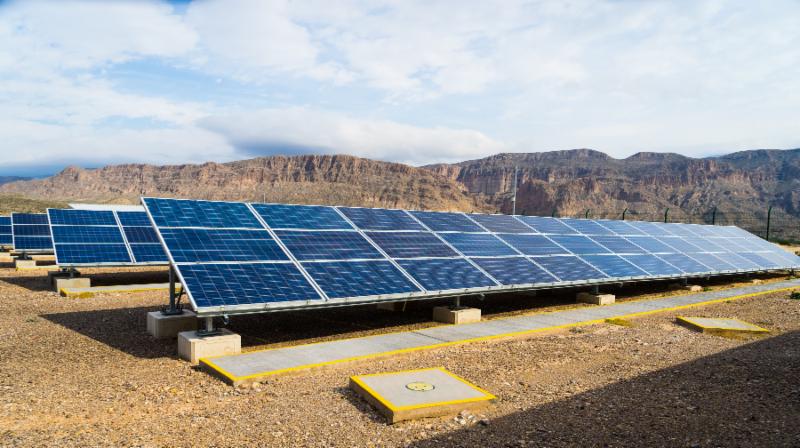
During the past three years, installed solar PV capacity increased by a factor of nine. This was due to the decreased price of PV systems and the rising price of non-subsidized electricity.
ICM 2017: 15.
During 2016, the installed capacity of distributed PV rose to 243.6 megawatts (MW). This represented an investment of more than $400 million. Most of this capacity belonged to commercial users and high-use domestic customers.
ICM 2017: 44.
The Mexican Energy Regulatory Commission’s having increased the upper limit for net-metering plants to 500 KW as well as installers’ offering attractive financing packages should further increase the rate of PV installation.
GreenTech Media
, Dec. 13, 2017.
The third clean-energy auction in November 2017 awarded bidders the rights to build 15 projects in eight states at a cost of $2.4 billion.
Reforma
, Dec. 4, 2017, p. 3
negocios
.
These projects will have a capacity of 2.5 gigawatts and produce electricity at an average price of $20.57 per megawatt-hour.
CleanTechnica
, Nov. 11, 2017.
Solar bidders won contracts for 55% of the power, while wind won the remaining 45%.
GreenTech Media
,
Nov. 29, 2017
.
The Enel group won 593 MW of wind projects. These projects consolidated Enel’s position as Mexico’s leading renewable energy developer.
GreenTech Media,
Nov. 26, 2017.
During the first three renewable energy auctions, winning bidders committed to investing $6 billion. The approved projects will increase generating capacity by 6,000 MW.
Energía a debate
, Jan.-Feb. 2018, p. 25.
At the end of 2017, wind generation capacity totaled 4,005 MW.
El Financiero
, Jan. 17, 2018.
PEMEX
In November 2017, José Antonio Meade resigned as treasury secretary to facilitate his designation as the PRI presidential candidate.
Pemex
Director General José Antonio González Anaya was then appointed as treasury secretary. When González Anaya became director general, Pemex crude production totaled 2.2
million barrels a day
(mbd). By September 2017, it had declined to 1.9 mbd. Carlos Treviño replaced González Anaya as Pemex director general. Treviño had been serving as Pemex’s corporate director of administration and services.
Reforma
, Nov. 28, 2017, p. 1
negocios
.
Production
During 2017, Pemex crude production averaged 1.95 mbd.
El País
, Feb. 28, 2018.
Production in 2017 was the lowest since 1980. Pemex production has declined each year since 2004, when it totaled 3.38 mbd.
expansion.mx
, Jan. 24, 2018.
Production from the Cantarell Field, formerly Pemex’s star performer, declined to 134,000 barrels a day (bd).El Universal
, Jan. 22, 2018.
In 2017, due to a combination of flooding, fires, accidents, earthquakes, and maintenance shutdowns, Pemex refineries operated at 47% capacity. In contrast, U.S. refineries operated at 90.6% capacity between January and November 2017.
Reforma
, Feb. 7, 2018, p. 1.
In January 2018, Pemex crude production averaged 1.929 mbd. Of this production, 82.5% was offshore.
Milenio
, Feb. 24, 2018.
During the corresponding month of 2017, production averaged2.02 mbd.
Reforma
, Feb. 24, 2018, p. 12.
In 2017, Pemex gasoline production averaged 256,978 bd, 21% below the 2016 figure. Its diesel production averaged 153,620 bd, 29% below the 2016 figure.
El Economista
, Feb. 13, 2018.
During January of this year, Pemex produced 727,800 bd of refined products, compared to 1.062 mbd during the first month of 2017. During January, its gasoline production averaged 187,300 bd, 38% below the corresponding figure of 2017.
El Financiero
, Feb. 25, 2018.
In 2017, Pemex produced 257,000 bd of gasoline, 21% below the corresponding figure for 2016.
Reforma
, Jan. 27, 2018, p. 1.
During January 2018, Pemex produced 187,300 bd of gasoline, compared to 304,700 during the corresponding month of 2017. To meet domestic demand, 576,600 bd were imported.
Reforma
, Feb. 24, 2018, p. 12.
Pemex petrochemical production has been steadily declining. Its peak production of 19.2 million tons was in 1995. By 2017, it had declined to 7.4 million tons.
Reforma
, Feb. 19, 2018, p. 1.
Trade
Gasoline and diesel imports in 2017 cost $21.126 billion, 35% more than they cost in 2016. The volume of these imports increased by 17%, while higher prices account for the remaining cost increase. In 2017, 69% of gasoline and diesel was imported, 12% above the 2016 figure.
El Economista
, Feb. 13, 2018.
In 2017, Mexico’s petroleum trade deficit hit a record $18.402 billion dollars, $5.654 billion above the 2016 deficit.
El Economista
, Feb. 13, 2018.
In 2017, the United States imported an average of 527,000 bd of crude from Mexico—7.7% of U.S. crude imports. The previous year, U.S. imports from Mexico averaged 582,000 bd—7.4% of U.S. crude imports.
Oil & Gas Journal
, Jan. 1, 2018, p. 22.
In 2017, Pemex exported an average of 1.174 mbd of crude, 1.7% below the rate for 2016.
Milenio
, Jan. 27, 2018.
In 2017, Mexicans consumed an average of 797,000 bd of gasoline. Magna (regular) accounted for 83% of this consumption.
Milenio,
Jan. 30, 2018.
In 2017, Pemex imported an average of 570,600 bd of gasoline. This figure equaled 72% of Pemex sales.
Reforma
, Jan. 27, 2018, p. 1.
In January of this year, Pemex imported an average of 576,000 bd of gasoline, 75% of total sales.
Reforma
, Feb. 25, 2018.
Pemex gasoline sales in 2017 averaged 797,000 bd, 3% below the corresponding figure for 2016.
Reforma
, Jan. 27, 2018, p. 1.
At the end of 2017, Pemex regular sold for 21.00 pesos per liter, while regular gasoline in Houston sold for the equivalent of 18.30 pesos per liter.
Petróleo & Energía
, Feb.-March 2018, p. 38.
Financial
“Theft of fuel has become more profitable than drug trafficking because it is less risky. You don’t have to risk crossing the border to find buyers. We all consume gasoline. Not all of us consume drugs.”
Deputy Georgina Trujillo,
El Financiero
, Jan. 24, 2018.
In 2017, there were 10,363 illegal taps into Pemex pipelines—51% more than in 2016. Guanajuato was the state with the most taps.
Reforma
, Feb. 6, 2018, p. 1
negocios
.
Theft of fuel deprives the government of more than $1 billion a year in income, terrorizes employees, and deters the private foreign investment that the government hopes to attract.
El Financiero
, Jan. 24, 2018.
In 2017, Pemex lost $17.747 billion dollars, 74% more than it lost in 2016. Reasons for increased losses include higher debt-service costs, disruption from Hurricane Harvey forcing expensive fuel purchases from the Old World, and a change from Mexican accounting practices to International Financial Reporting Standards (IFRS). On the positive side, Pemex earnings from domestic sales and exports both increased due to higher prices.
El País
, Feb. 28, 2018.
Pundits continue to remark about the lack of progress on investigating bribes paid by the Brazilian construction firm Odebrecht (see Issue 2). The Supreme Auditing Institution of the Federation (ASF) found that a single contract awarded to Odebrecht for work on the Miguel Hidalgo Refinery involved “excess” payments of $41.6 million.
El País
, Nov. 2, 2017.
In December, the government did prohibit the Odebrecht Company from receiving government contracts for four years.
Reforma
, Dec. 12, 2017, p. 1.
Between 2012 and the end of 2016, Pemex reduced the number of its employees from 140,676 to 126,940. Even with this reduction, Pemex production per employee only totaled 23.9 bd. The comparable figure for ExxonMobil was 57, for Chevron 47, for Shell 41.2, for BP 43.8, and for Petrobras 40.5.
Reforma,Dec. 14, 2017, p. 1.
The results for those engaged directly in hydrocarbon production are similar. In 2015, each Pemex worker directly engaged in hydrocarbon production produced 71.7 bd. The comparable figure for Shell workers was 134.2 and for BP workers was 151.
Reforma
, Dec. 15, 2017, p. 1
negocios
.
In November 2017, Pemex issued debt of £450 million on international markets.
expansion.mx,
Nov. 9, 2017.
ENERGY REFORM
Those who still question the energy reform generally do so for political reasons. For them, to recognize that the reform is functioning and is resolving long-standing problems would be to admit that their analysis and solutions were wrong.
Roberto Newell,
Reforma
, Jan. 25, 2018 p. 4
negocios.
In Round 2.4, the latest energy auction, 19 of the 29 deep-water blocks in the Gulf of Mexico were successfully bid on. Royal Dutch Shell submitted nine of the winning bids.
El Economista
, Feb. 4, 2018.
China Offshore Oil won two contracts close to the maritime border with the United States.El País
, Feb. 1, 2018.
Winning bidders are expected to invest $92.8 billion over the next 35 years and to provide the government with $525 million in signature bonuses
.
Petróleo & Energía
, Feb.-March 2018, p. 22.
After eight rounds of bidding in oil-exploration auctions, contracts have been awarded to companies from 20 nations. They are expected to invest a total of $153 billion. More than half of this total came from Round 2.4 in February.
El Financiero
, Feb. 2, 2018.
These contracts have granted private corporations production rights to 161,059 square kilometers on- and offshore.Proceso
, Feb. 11, 2018, pp. 30-31.
Private producers of crude in Mexico added less than 1,000 bd to total Mexican crude production in 2017.
expansion.mx
, Jan. 24, 2018.
Eni, Italy’s state-backed energy group, raised the reserve estimate for its offshore field in the Gulf of Mexico from 1.4 to 2.0 billion barrels of oil equivalent. Of this, 90% is crude and 10% associated gas. Production is expected to begin in the first half of 2019.
Offshor
e, Jan. 2018, p. 17.
There are 11,865 gasoline stations in Mexico. Of these, 2,456 are privately owned stations which sell under 37 brand names other than Pemex.
Reforma,
March 26, 2018, p. 5
negocios.
As of the end of November 2017, the Mexican government ceased setting maximum prices for gasoline retail sales. However, to prevent sudden price spikes resulting from changes in the exchange rate or in the price of imported gasoline, the amount of the IEPS—the federal tax on retail gasoline sales—will be adjusted to minimize sudden price shifts.
El Economista
, Nov. 29, 2017.
As part of the energy reform, gasoline retail stations are required to post their prices on the internet. The Energy Regulatory Commission (CRE) has developed a mobile app which allows users to locate the least expensive nearby source of gasoline. The app has been downloaded more than 100,000 times.
Reforma
, Dec. 27, 1017, p. 17.
In December, ExxonMobil opened a gasoline station in Querétaro—the first to be completely independent of Pemex. Gasoline and diesel are imported from one of the company’s Texas refineries by rail. Fuel is then stored in facilities built specifically for ExxonMobil distribution.
expansion.mx,Dec. 7, 2017.
Privately owned trucks then deliver fuel to the station.
Reforma
, Dec. 6, 2017, p. 1.
Taxes account for roughly 30% of the retail price of diesel and gasoline sold in Mexico. In January, taxes totaled 5.03 pesos per liter of gasoline selling for 17.02 pesos in Mexico City. There are four different taxes on gasoline. The federal government collects a Special Tax on Production and Services (IEPS). Its rate is varied to prevent sudden price shifts resulting from changes in the dollar-peso exchange rate or in the international price of imported gasoline. A second tax is the IEPS imposed by states, which is adjusted annually to reflect inflation. A third tax is the IEPS for
CO
2
emissions which is designed to discourage fuel use. Finally, a value-added tax of 16% is charged on the final price of fuel.
expansion, Feb. 8, 2018.
2018
The current frontrunner in the 2018 presidential campaign is Andrés Manuel López Obrador, often referred to simply as AMLO. He is the candidate of a coalition of MORENA, a party which he founded, and two other small parties—the Workers Party (PT) and the Social Encounter Movement (MES).
In his campaign book
2018La salida
(Planeta 2017), López Obrador states that corruption is the principal problem for Mexico. He refers to Peña Nieto’s energy reform as the “privatization of the oil and electricity industry” (p. 204) and notes that the Energy Ministry (SENER) predicts energy use to double by 2024. The year 2024 would be the last year of his term if he were elected. He calls for a plebiscite on changing the energy law. If the plebiscite were approved, he would “return to the nation the exclusive control of the oil and electricity industries” (p. 206). Using legislation currently in place, he vows to “halt the bleeding of onerous subsidies to private electric companies and the loss of foreign exchange from importing gasoline and other petroleum products” (p. 206). He also calls for Pemex to cease granting lucrative contracts which benefit foreign firms and corrupt politicians. The decline in oil production since the 3.4-mbd peak in 2004 is blamed on “the recent privatization policy.” AMLO calls for an end to exporting crude and importing refined products. The construction of two new refineries and the reconfiguration of three existing ones would facilitate the shift to domestic refining. Finally, to halt foreign dependence, the petrochemical industry should be rescued and natural gas production stimulated.
AMLO calls for hydroelectric plants and other Federal Electricity Commission plants to increase generation and thus decrease the 60 billion pesos annually paid to foreign companies for electricity. His policy on renewables is explained in one sentence: “I commit myself to support the development of renewable energy so as not to squander natural resources which belong to future generations” (p. 208).
Change is to be financed by honesty and austerity without going into debt (p. 177).
AMLO’s campaign book reflects a traditional focus. In 274 pages of text, there is one sentence on renewables and four pages on energy, while there are 24 pages on agriculture and rural development.
Another López Obrador campaign document,
Proyecto 18
(http://proyecto18.mx), calls for:
1.
Increased generation from existing hydroelectric facilities and the construction of new ones, while “taking care of ecosystems and communities.”
2.
Accelerating renewable energy use by establishing solar-powered recharging stations to incentivize electric-vehicle use, promoting the manufacture of parts and other inputs for electric cars and for wind and photovoltaic generators, bringing renewable energy to 45,000 marginal communities, promoting sustainable energy use in federal agencies, and fiscal incentives and credit for firms that install renewable energy.
3.
Investing in Pemex, building two new oil refineries, and promoting biodiesel refineries.
4.
Reconfiguring thermoelectric plants, improving their efficiency by modernizing, institutionalizing dual-fuel use, and increasing the number of natural gas combined-cycle plants.
Each of these four proposals is accompanied by a multi-page pull-down tab which elaborates extensively on the point.
A fourth 461-page López Obrador campaign document entitled
Plan de Nación Completohttps://drive.google.com/file/d/1UwBfA6aW1vyqyPzI2NxZ177yc81Kk6wc/view
elaborates on similar energy proposals in greater detail (pp. 181-211). Rather than the one sentence on renewables found in
2018 La Salida
, there are five pages.
AMLO announced the persons he will include in his cabinet, if elected. Among them was Rocío Nahle as sectary of energy. Energy analyst David Shields described her as “a determined opponent of the energy reform.”
Energía a debate
, Jan.-Feb. 2018, p. 16.
Rocío Nahle has stated that, if elected, AMLO would freeze energy auctions until he could determine if the auctions which have occurred resulted in increases in production. She did not elaborate on what the criteria for success would be.
Reforma
,
Feb. 24, 2018, p. 1.
AMLO declared that, if elected, he would review the 91 oil exploration and production contracts already signed to see if there were any signs of graft.
Wall Street Journal
, Feb. 16, 2018, p. A18.
AMLO charged that former Pemex director general Emilio Lozoya had escaped prosecution for having received bribes from Odebrecht because the bribe money was used to finance Peña Nieto’s 2012 presidential campaign
.
Reforma
, Feb. 3, 2018, p. 6.
The Workers Party (PT), a small party allied with López Obrador’s MORENA, proposed reducing the price of gasoline to 10 pesos per liter, noting that production costs were only 5.7 pesos per liter. The party claimed that reducing the price of gasoline would lower the incentive to steal it.
La Jornada
,
Jan. 1, 2018.
Carlos Treviño, who became Pemex director general in November 2017, commented on AMLO’s opposition to the energy reform. He noted that reverting or significantly modifying the energy reform would be “almost impossible since changing the energy reform would require changing the constitution.” He added that such a change would require a majority of both houses of congress and “it would be really difficult for a president to have that level of support.”
El Financiero
, March 8, 2018.
Bibliography:
Iniciativa Climática de México (ICM) (2017)
Mercado de energía fotovoltaíca de baja escala: generación distribuida.
Mexico City.