Mexico Energy News
Issue 2, May-September 2017
Table of Contents
I.
Editor’s Note
II.
Articles
–
“
Betting on Dirty Energy Doesn’t Make Sense”
by David Shields
– “
Odebrecht and the Energy Reform” by Araceli Damián
III. “Review Essay” by Philip L. Russell
IV. Sparks
I. Editor’s Note
Editors must decide what to pass on to readers. One reason for not passing information on is that it is obviously false. Thus, for example, I did not pass on the
Wall Street Journal
’s declaration that Mexico is “the world’s fourth largest per capita consumer of gasoline” (Jan. 31, A16). Other cases are a little harder, such as the statement (passed on in Issue No. 1) claiming that charging stations outnumbered electric cars in Mexico. Since there was no easy way to refute that statement, it was passed along for readers’ consideration despite my suspicion that it was unlikely to be true. (There needs to be a raised-eyebrow emoji.) The data on electric cars in this issue appears much more plausible.
Philip L. Russell
Austin, Texas
russell@mexicoenergynews.com
Masthead Photo: Boquillas del Carmen, Coahuila, by Rick Byrnes
II. Articles
Betting on Dirty Energy Doesn’t Make Sense
by David Shields
During his election campaign, Donald Trump not only proposed a wall, but promoted coal, oil, and pipeline projects. However, he didn’t support increased use of clean energy. He knew his positions would win him popularity and votes in certain sectors of the population. Now that he is in power, he has begun to dismantle government environmental agencies. He has also reduced financial support for clean energy.
Mexican presidential candidate Andrés Manuel López Obrador (AMLO) considers building refineries a partial solution to Mexico’s energy problems. He also favors revising the energy-reform laws which have opened the Mexican energy market to private Mexican and foreign investors. Given his coming from the oil-rich state of Tabasco and his political background, it is understandable that AMLO focuses more on oil than clean energy.
It is unlikely that an energy policy based on fossil fuels will prosper in the medium and long run. The whole world is now shifting from an energy model based on coal and oil to a more sustainable one based on natural gas and renewable energy. Solar and wind energy are already price-competitive with fossil fuels. They are replacing natural gas and oil in new electricity-generation facilities and will continue to increase rapidly in the next decade.
Trump himself created a business council that included the presidents of the largest U.S. companies, such as General Electric, General Motors, Boeing, IBM, Tesla, EY, WalMart, and BlackRock, to advise him on economic policy. Almost all of these companies are now making massive investments in renewable energy, sustainability programs, and reduction of carbon emissions. It is inconceivable that these leaders advised Trump to use more fossil fuel. In addition, the construction of new coal-fired generating facilities is slowing down throughout the world, including in China. In the United States, such plants are rapidly being retired.
In the Mexican case, AMLO’s position is understandable, given the energy-security implications of increased gasoline imports. Nevertheless, Mexican refineries were built at a time when the oil industry was highly competitive and there was an excess supply of crude. Mexico no longer has sufficient crude to supply new refineries, given declining production and low prices.
There are still no signs that Mexican crude production will bounce back in the foreseeable future, not even with the energy reform and its promise of large-scale private investment. These new investments will not be highly profitable. Pemex fields are mature and in decline. Fields which are now being awarded to private investors tend to have less potential and much higher costs than Pemex fields. Despite this, thanks to the reform, dozens of companies will be operating in Mexico, replacing the oil monopoly. In the foreseeable future, crude production will continue to decline.
Mexico’s next president can and should revise the energy reform, especially with respect to Pemex. This would put the company on a sound operating basis and permit the recovery and modernization of its refineries and other infrastructure. He must investigate and identify what does function and what doesn’t function in this declining company and provide a realistic vision of the future.
In contrast, renewable energy is the great success of the energy reform. In the electricity auctions, the Energy Regulatory Commission (CRE) announces winners and projects which will add real energy-production capacity in the near future. In addition, 100 percent of this energy is produced in Mexico, increasing energy security and reducing greenhouse-gas emissions.
From now on, fossil energy will be a losing bet. It already is in Mexico and throughout the world. It’s time to bet on a transition to clean energy. Politicians won’t be able to blunt the momentum that this transition already has.
(Published February 28 in the Mexico City newspaper
Reforma
.)
Shields is a Mexican energy analyst.
Odebrecht* and the Energy Reform
by Araceli Damián
The supposed benefits of the energy reform were only lies. Even as President Peña Nieto claims that the reform is benefiting families, the price of gasoline has increased. The price of Magna (regular) jumped from 12 pesos per liter in 2013 to more than 16 this year.**After adjusting for inflation, the price of electricity went up 3 percent between January 2014 and February 2017, thus affecting many household budgets. Electricity rates for the service sector and the agricultural sector rose 20 percent, while rates for commerce rose 10 percent, and those for small and medium industry increased by 5.4 percent. Only large industries benefited, with a reduction of 4 percent. Residential electricity rates supposedly declined by 2.8 percent. (1)
The core principle of the energy reform is the transfer of national wealth to private hands and, especially, foreign hands. The reform has failed in that it has not produced benefits for the Mexican people and also in that its planners did not foresee the oversupply of hydrocarbons worldwide. This oversupply has kept oil prices low. Nor was the low level of Mexico’s proven reserves (which will last only 10 years) taken into consideration. Low reserves make investment in Mexico unattractive. It should be noted that, even before the reform, favorable contracts had been granted in the energy and petrochemical sectors. These contracts benefited large transnational corporations, such as Odebrecht. The reform sought to provide a legal basis to these concessions.
The record of private firms participating in activities which formerly were reserved exclusively for the government has been disastrous. Let’s recall the highway bailout, the irregularities associated with public-private partnerships, etc. Examples can be found in the energy sector and in secondary petrochemicals. Shortly after beginning operation in 2013, there was an explosion at the Coatzacoalcos petrochemical plant. Thirty-two workers died and more than 130 suffered injuries. In conjunction with Pemex, the firm Petroquímica Mexicana de Vinilio, a branch of the Brazilian firm Mexichem, operated the plant.
Then came the corruption scandals revealed last week involving Odebrecht and Pemex. Various media reported that the Supreme Federal Court of Brazil published a list of officials from various counties who had received bribes. Included was the name of Emilio Lozoya Austin, who was director general of Pemex from December 2012 to February 2016.
According to the media, the person incriminating Lozoya Austin was Hilberto Mascarenhas (known as Uncle Beto), a top executive of Odebrecht. He headed Odebrecht’s “Office of Bribery.” Mascarenhas stated that he had financed political campaigns and paid bribes to obtain contracts. He also claimed that, between 2010 and 2014, he paid $10.5 million in bribes. Of this sum, $5 million was “requested” by Lozoya Austin in 2014, the year in which Odebrecht received Pemex contracts worth 18 billion pesos.
According to the news site
Aristegui Noticias
, Pemex awarded various multimillion-dollar, no-bid contracts to Odebrecht. Examples include “an $81,710,000 contract in 2014 for work on the Salamanca refinery” and “a $1.2 billion contract, awarded on July 9, 2014, for the construction of Phase II of the Los Ramones-Norte gas pipeline.”
Aristegui Noticias
cited a report by Mexicans against Corruption and Impunity (MCCI), which described ways used to bypass the bidding process and assign contracts directly to Odebrecht and its partners. Pemex resorted to an intricate web of of subsidiary corporations created in tax havens. MCCI also indicated that former President Felipe Calderón was involved in this bribery scheme. (2)
The Mexican government’s Supreme Auditing Authority (ASF) had already detected irregularities involving contracts between Pemex and Odebrecht (or its subsidiaries). These irregularities included awarding no-bid contacts, unjustified payments, modified agreements, etc. According to ASF information, these anomalies began occurring during the Calderón administration (2006-2012). These problems were identified in the 2009 “Cuenta Pública.”*** (3)
Emilio Lozoya Austin denies having received bribes. However, there are grave doubts concerning his truthfulness. In fact, he left Pemex in the midst of a scandal resulting from the publication of phone conversations which reported that he had advised executives of OHL-México**** on how to obtain contracts with Pemex and the Federal Electricity Commission (CFE). At this time, Enrique Ochoa Reza, the current head of the PRI, was director of the CFE. It should be noted that before becoming director general of Pemex, Lozoya Austin was a member of the OHL board of directors. (4)
The Mexican energy reform appears to be destined to follow the same path of failure as such reforms in Nigeria, Sri Lanka, Egypt, Iran, Libya, India, Pakistan, and Cameroon. According to economic consultant Sergio Saldaña Zorrillo, rather than lessening poverty, the reform led to increased poverty and the dismantling of Mexican industry, the destruction of national patrimony, and damage to the environment. Similarly, an increase in foreign intervention in various aspects of Mexican life has been observed. (5)
In Mexico, these problems will only worsen due to rampant corruption and the lack of mechanisms to prevent and punish malfeasance. The anticorruption legislation of the current administration is a farce. As we have seen recently, the arrest of corrupt officials only occurs at election time in an effort to enhance the government’s image.
(Published May 1 in Spanish on the
Aristegui Noticias
news site.)
Araceli Damián is a member of the Mexican Chamber of Deputies representing the 20th Electoral District of Mexico City. She is a member of the Movimiento de Renovación Nacional (MORENA) and is on leave from the
Centro de Estudios Demográficos, Urbanos y Ambientales of the Colegio de México.
Numbers indicate notes in the Spanish original. Asterisks indicate notes added by the translator.
1. The author’s calculations based on the Sistema de Información Energética plus information from the CFE and the now disbanded LyFC.
5
_
Sergio O. Saldaña Zorrilla, “El gran error económico de la reforma energética consiste en el hecho de que transfiere riqueza al extranjero y desmantela la economía nacional.” Dec. 22, 2014,
* Odebrecht is a multinational civil-engineering firm based in Brazil. It is currently involved in corruption scandals in various Latin American countries, including Mexico.
** As noted in Issue No. 1, this comes to about $2.85 per gallon.
*** The “Cuenta Pública” is an annual financial accounting that the Executive Branch presents to the Chamber of Deputies, as required by Article 74, Fraction VI, of the Mexican Constitution.
**** A construction company involved in various corruption scandals.
III. Review Essay
By Philip L. Russell
Ackerman, John M., ed. (2016)
Fracking: ¿Qué es y cómo evitar que acabe con México?
Mexico City: Tirant Humanidades.
Cárdenas García, Jaime, ed. (2015)
Reforma Energética: Análisis y Consecuencias.
Mexico City: Tirant lo Blanch México.
Checa-Artasu, Martín M., and Regina Hernández Franuti, eds. (2016)
El petróleo en México y sus impactos sobre el territorio.
Mexico City: Instituto Mora.
Climate Transparency (2017)
Brown to Green: The G20 Transition to a Low-Carbon Economy.
Berlin: climate Transparency, c/o Humbdolt-Viadrina Governance Platform, www.climate-transparency.org.
Islas Samperio, Jorge M., Fabio Manzini Poli, Paloma
Macías Guzmán, and Genice K. Grande Acosta (2015)
Hacia un sistema energético mexicano bajo en carbon.
Mexico City: Reflexio.
Molina, Mario, José Sarukhán and Julia Carabias (2017)
El cambio climático: causas, efectos y soluciones.
Mexico City: Fondo de Cultura Económico.
Rousseau, Isabelle (2017)
Tribulaciones de dos empresas petroleras estatales 1900-2014: trayectorias comparadas de Pemex y PDVSA.
Mexico City: Colegio de México.
Vielma Lobo, Luis (2016)
Chapopote.
Mexico City: Imaginaria.
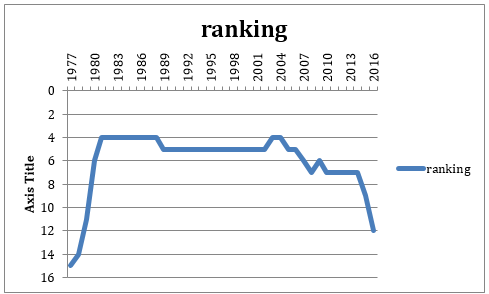
The first book reviewed here is a work of historical fiction by Luis Vielma Lobo. The author, who is now a Mexican citizen, had a long career in Venezuela’s PDVSA before coming to Mexico. He is very pro-Pemex in his adopted country, noting in the dedication that it is “a great national company which for eight decades has contributed to the nation’s growth.” Vielma highlights Pemex’s impressive growth in the 1970s, which propelled Mexican production above the three-million-barrel-a-day level—something which had only been achieved by five other nations.
Vielma’s work opens as Miguel Enrique Hernández López, a third-generation oilman, faces retirement. The narrative then goes back in time to trace the development of Mexico’s oil industry from the days of
chapopote
(tar) to its becoming the world’s No. 2 oil producer, and then to its conflicts with foreign oilmen, who are referred to as “
ladrones con licencia
(thieves with a license).” Mexico’s larger-than-life early oilmen are introduced, with only thinly veiled identities. For example, Weetman Pearson makes an appearance as William Payton who, as was the case with Pearson in real life, was described as “
la person que sacó de México la mayor fortuna jamás pensado, sólo después de Hernán Cortés
(the person who took the most wealth out of Mexico, just after Cortés)” (p. 160).
Much of the text recounts the conflicts between revolutionary Mexican regimes and investor nations, to the detriment of developing any characters in the novel.
Only on page 216 (of 321) does the novel reach the 1938 oil expropriation. The remaining pages consider Mexican national oil development as carried out by EPEM, the author’s fictional Pemex. His best scene is the recreation of how fisherman Rudesindo Cantarell, who bears the same name as the real-life character, was responsible for Pemex’s locating the supergiant Cantarell field.
The author justifiably portrays his fictional Pemex as a capable entity which developed the Cantarell field. At the same time, he whitewashes politics in the oil workers’ union, quoting a fictional union leader who declares that union leaders are “protecting the rights of oil workers, and one of these rights is freedom to vote for whom they consider best” (p. 308). The novel implies that union idealism remained intact until corrupted by Cantarell-generated wealth. That is far from the reality of Joaquin Hernández Galicia (La Quina), who left a sordid record as he headed the union from 1958 to 1989.
The author’s motivation for writing the book is unclear. It would appear that the book runs counter to the energy reform in that it portrays Pemex as capable of propelling Mexico into the three-million-barrel-a–day club without foreign assistance. Yet the author, on his personal website, declares:
“I am rather impressed with both the dimension and comprehensiveness of the energy reforms approved by congress. Mexico’s energy reform encompasses all of the critical elements that any transformation of the sector will require in any country.
In her 690-page tome, Isabelle Rousseau takes on three separate tasks. First she traces the history of Mexican oil development. In addition, she provides a history of Venezuelan oil development. Her third task is comparing the two experiences. The book is divided into five sections, each of which begins with a consideration of the Mexican experience, followed by a discussion of Venezuela at its comparable stage of development, and finally a comparison of the two experiences.
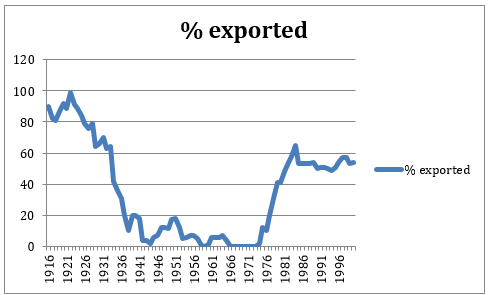
Rousseau’s first section covers the period up to the nationalization of each nation’s oil industry. Before the nationalization of the Mexican industry, British and American companies supplied know-how and capital. From 1917 up until 1938, there was constant conflict between Mexicans attempting to assert the national ownership of oil enunciated in Article 27 of the 1917 Constitution and foreign companies wishing to continue oil extraction as they had before 1917. The stakes were enormous, as Mexico produced 193 million barrels of oil in 1921—the second highest level worldwide.
In the second section, Rousseau notes that Mexico’s 1938 oil nationalization resulted from the decision which one man—President Lázaro Cárdenas—made on his own. In contrast, the Venezuelan decision was taken only after parliamentary debate. Since Venezuela had never privatized subsoil wealth (as Mexico had), the question of oil ownership never dominated discussion. In Venezuela, the 1976 nationalization was agreed to by oil companies, was legal under international law, and did not involve a complete rupture with oil companies, which hoped to profit from dealing with Venezuela after the nationalization. Since Venezuela had previously mandated the training of technicians by foreign oil companies, most of the oil workers continued at their posts after the nationalization. In both nations, the nationalization was viewed as a symbol of national resolve and as paving the way to national development.
Mexico faced several tasks after its abrupt rupture with producing companies in 1938. It had to unify the production operations of 17 different companies. It also had to train technicians, obtain spare parts, and seek export markets in a world dominated by major oil companies that were attempting to reverse the nationalization. Mexico shifted from exporting to supplying the domestic market—a task made especially difficult by foreign oil companies’ having removed rail tank cars to the United States. Finally, Mexico had to decide that the role of oil productions was to provide inexpensive oil to stimulate domestic industrial development.
Between 1938 and 1975, the Mexican oil industry was largely insulated from international market forces. In 1955, Pemex Director General Antonio Bermúdez stated:
Mexico is not a major exporter of petroleum and it is not national policy that it should become one. It is illusory, and would be harmful, to pretend that petroleum produced and exported in large quantities could become the factotum of Mexico’s economy or the panacea for Mexico’s economic ills. (1)
Venezuela’s nationalization experience contrasts sharply with the Mexican experience in that the industry enjoyed operational continuity in terms of employees and equipment. Based on the government’s decision to maximize oil income, Venezuela’s national oil company, PDVSA, enjoyed complete autonomy. Rather than having its oil exports cut off, as occurred in Mexico, Venezuela continued to be a major oil exporter. In both nations, inexpensive fuel produced a surge in post-nationalization consumption. In Mexico, per capita consumption rose 800 percent between 1940 and 1948. In the four years after the Venezuelan nationalization, gasoline consumption increased by 37 percent and diesel by 66 percent.
The third section covers the growth of both companies through 1982. In Mexico, Pemex became a major exporter, responding to a new director general, new oil discoveries, and high international oil prices. President José López Portillo (1976-1982) wrote in his memoirs, “Beginning in 1976, I decided to make oil the key to developing Mexico, using it as a resource to develop other resources.” In response to this decision, Pemex investment increased six-fold between 1972 and 1978. By 1982, Mexican crude production was up 250 percent, refining capacity had doubled, and basic petrochemical production had tripled. Oil exports increased from only 4.8 percent of exports, rising to 77.6 percent in 1982.
Rather than leading to Mexican development, as López Portillo sought, the oil-export boom left a pernicious legacy. The rapid expansion of the industry favored importers and U.S. manufacturers. Oil production was managed by politicians who knew little about the industry. Oil-export revenue became a financial crutch. In 1980, Pemex paid $7.06 billion in taxes—a rate of taxation which forced the company to borrow $2.7 billion to meet operating expenses. Finally, heavy borrowing to stimulate oil development and other areas of the economy resulted in a prolonged economic crisis which would plague Mexico during the 1980s.
Given its membership in OPEC, PDVSA was much more attuned to the international market than Pemex. The $10 billion a year that oil exports generated became the basis for Venezuelan development and social strategy. As was the case with Pemex, top PDVSA posts went to those who were loyal to the political elite or who enjoyed personal connections.
Rousseau’s fourth section covers 1980 to 2000—a period during which neoliberalism swept Latin America. Given oil’s status as a nationalist icon, neoliberal policies were adopted more slowly in Mexico than in Venezuela. In Mexico, private investment was allowed in secondary petrochemicals. Also, private capital was allowed into natural gas production—an area less politically sensitive than oil production. Even though Pemex’s production monopoly remained intact, outsourcing of services became common, allowing Schlumberger and Halliburton to consolidate strong positions.
The impact of neoliberalism was much more immediate in Venezuela than in Mexico. President Carlos Andrés Pérez, who during his first term (1974-1979) had overseen the nationalization of the oil industry, in his second term (1989-1993), opened the way for foreign capital to reenter the industry. Natural gas production was opened to private capital. Later, due to the lack of government funds and know-how to process heavy crude, the Orinoco Basin was opened to foreign companies. The reliance on private capital produced dramatic results. Oil reserves increased from 59.8 billion barrels in 1989 to 71.7 billion in 1998, and production increased from 1.6 million to 3.5 million barrels a day (mbd) during the same period.
As the 2000 election of Vicente Fox indicated, Mexico shifted to the political right as it entered the new millennium. Despite his pro-business views, given his lack of the necessary political alliances, Fox could make no major changes in oil policy. However, both nature and outside influences affected Mexico. Production at the Cantarell field, Mexico’s cash cow, peaked at 2.2 million barrels a day and then began a sharp decline. Mexico, the source of 1.6 percent of the world’s greenhouse emissions, also began to take environmental concerns seriously.
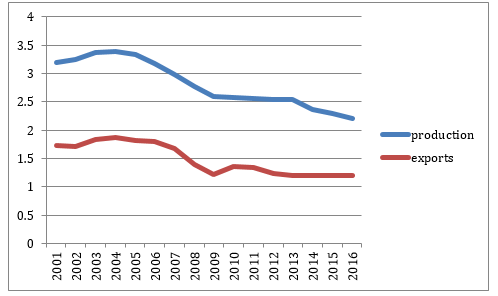
Although Mexico’s next president, Felipe Calderón, shared Fox’s pro-business stance, he also faced stiff political opposition which prevented him from making major changes in oil policy. Pemex production continued its decline from 3.17 mbd in 2006 to 2.54 mbd in 2012, as production from Cantarell plunged. However, a rise in oil prices at least cushioned the financial impact of this decline.
Enrique Peña Nieto, elected to the 2012-2018 presidential term, had both the pro-business leanings and the political skills to assemble a broad coalition that instituted major reforms. His first full year in office, 2013, saw major constitutional changes. The following year saw the passage of secondary laws to implement the changes.
The new policy ended Pemex’s monopoly and allowed private corporations to enter into production, refining, transport, storage, and distribution of hydrocarbons. Pemex was to remain in government hands but was no longer to be the exclusive oil producer. Independent producers were promised operational autonomy. As has been the case with previous changes in oil policy, the reforms were portrayed as ushering in increased production and economic growth.
Venezuelan policy shifted in the opposite direction under Hugo Chávez, elected president in 1998. He favored an increased state role in hydrocarbon production, but not the total exclusion of private capital. He felt that PDVSA had been granted too much autonomy, and as a measure to reassert government control, he replaced the president of PDVSA.
In response to Chávez’s increased control of the company, in 2002, oil workers went on strike to protest government meddling. After 69 days, Chávez sent the army to break the strike and subsequently fired 18,000 PDVSA workers to ensure a loyal labor force. As a result, production declined by 735,000 barrels a day.
After the strike, Chávez was faced with declining production from mature fields and a lack of technicians—the result of his mass dismissal. After the initial decline, PDVSA was able to maintain production, though, as Rousseau notes, there has been little agreement on just how much oil has been produced in Venezuela since the strike. She comments on Chávez’s legacy: “One of the major positive aspects of
chavismo
was an alternative model of distributing oil income, which produced greater equality and stimulated consumption” (p. 585).
In conclusion, Rousseau compares Venezuelan and Mexican policy shifts. She comments: “Just as in ballet, over time there has been an exchange of positions of each nation with respect to State and Market; however, there have never been harmonious relations between these two actors” (p. 634). Despite their similar backgrounds, having began as oil exporters in the early twentieth century, neither country has maintained a consistent oil policy nor have the two countries’ energy policies paralleled each other. As recently as the mid-1970s, exporting Mexican crude was seen as treason, while Venezuela relied on foreign exports, thus allowing social and economic progress. Today, Mexico embraces foreign producers while Venezuela sharply limits them.
El petróleo en México y sus impactos sobre el territorio
is a collection of seven essays, not all of which will be considered individually. The essays focus on
extractivismo
and its impact on surrounding territory.
Extractivismo
is defined as massive resource extraction, especial of non-renewables, exported with little processing.
The first of the seven essays, by Martín Checa-Artasu, is a survey of literature concerning the Mexican oil industry. In it the author challenges the assertion that massive extraction of non-renewable resources will lead to development. Rather, he finds that such production “has enormous social, cultural, and environmental impacts on the land from which resources are extracted and that residents of the extraction zone are poorly integrated into the extraction process” (p. 17). He notes that the literature focuses on oil’s contribution to modernity rather than the social impact of the industry on territory surrounding production sites. Checa-Artasu’s essay is followed by an 18-page bibliography on the subject.
The outstanding essay of the collection is Myrna Santiago’s, which is really two essays in one. She first considers oil law as it has developed in Mexico since the days of President Porfirio Díaz (1884-1911). She describes how Article 27 of the 1917 Constitution shifted oil law back to the colonial model, reversing Díaz’s transfer of oil rights to surface-land owners. Following the 1938 oil nationalization, various modifications to Article 27 occurred, each in response to perceived encroachment of private interests on Mexico’s oil wealth. It was only in 1958 that a law regulating Article 27 specifically excluded all private interests from oil production, declaring, “Only the nation may carry out exploitation of hydrocarbons.” The law also decreed that oil- production rights were superior to those enjoyed by any other land use—in effect, the power of eminent domain. Based on this legislation, Pemex entered its golden age. Santiago quotes George Grayson’s declaration: “Mexico is the only Third World oil-exporting nation that can effectively run its petroleum industry without assistance from foreign companies.” (2)
In the second part of her essay, Santiago continues with the issues raised in her 2006 book
The Ecology of Oil
, which describes the environmental impact of oil production. This impact has been a social concern since well before the 1938 oil nationalization and was described in B. Traven’s novel
The White
Rose.
In Santiago’s consideration of Pemex’s post-1
938 ecological impact, she declares that it was no exaggeration to consider the company as “nature’s public enemy number one.” She then provides information to buttress this conclusion, including a description of the 1979 explosion of Ixtoc 1, which resulted in oil flowing into the Gulf of Mexico for nine months. She carries this discussion into this century, noting that the National Hydrocarbon Commission found that Pemex was responsible for 57 percent of Mexico’s environmental accidents between 1997 and 2001. Much of the Gulf Coast, as a result of oil development, became what she describes as “sacrifice zones.” She concludes her essay on a pessimistic note, declaring, “This historian is fully convinced that in the future all the communities which share land and environment with hydrocarbon extraction will be involved in conflict” (p. 71).
The last two essays in the collection consider the impact of the 1970s-1980s oil boom on the Gulf Coast. Eduardo Hernández Melgar describes in detail the burst of housing, pipeline, and heliport construction as well as traffic congestion in Ciudad del Carmen, Campeche. He also describes negative impacts such as the navy’s prohibiting fishing in offshore oil-production areas, thus undermining the vigorous pre-boom fishing industry. Oil came to dominate the city, with 92 percent of the economically active population involved directly in oil production or in providing services to oil workers. The population of the
municipio
soared from 76,747 in 1970 to 144,684 in 1980.
Regina Hernández Franyuti considers the impact of the boom on the port of Dos Bocas in Tabasco. She begins with a detailed description of the area’s geography, flora, and fauna before the oil boom. She then traces the rapid development of the port to serve as an export terminal and a logistical support base for offshore production in the Gulf. Hernández Franyuti also considers the failed attempt to diversify the port. The lack of rail connections to bring in agricultural produce and the lack of tourist destinations and infrastructure doomed the diversification effort. In conclusion, she lists some of the results of oil development, which include deterioration of the shoreline environment, population increase, and increased costs of living, of rent, and of urban land.
The purpose of Ackerman’s collection of six essays (not all of which will be considered individually) is quite clear. In the introduction, Ackerman states (p.14):
Fracking contaminates water, land, and air, and generates artificial earthquakes, putting at risk not only human lives but those of the flora and fauna of the affected regions… . The good news is that there is still time to make a thorough analysis of the implication of these new policies in order to protect public health and the environment in Mexico.
Ackerman views France’s outright ban on fracking as the appropriate way to address the issue. To emphasize this point, he includes in the appendix Spanish translations of the French law prohibiting fracking and the French Supreme Court decision upholding the law.
The first essay, by legal scholar Marisol Anglés Hernández, provides a general description of fracking and the risks related to it. She laments that Article 96 of the Hydrocarbon Law prioritizes hydrocarbon exploration and extraction above any other land use, disregarding public interest. She cites the recommendations of the 1992 Rio Declaration on Environment and Development for a “precautionary approach” in dealing with technology which may produce serious or irremediable harm.
She comments on problems associated with fracking, including the adverse effects of air pollution and methane releases on human health. Her legal knowledge is on display as she cites several documents which she feels prohibit fracking as currently permitted in Mexico. These documents include the 2010 U.N. Resolution 64/292 and the amendment to Article 40 of the Mexican Constitution, which both guarantee water rights, as well as the Constitution of the World Health Organization, which declares good health to be a right.
Anglés finds the current regulatory framework inadequate to protect the rights guaranteed in the documents noted above and recommends that the government “should not just consider economic and energy advantages of fracking, but the risks associated with air, water, and soil quality, and the impact on human health” (p. 53). Her essay is followed by an impressive bibliography from various nations commenting on the risks of fracking.
María del Carmen Carmona Lara also approaches the issue of fracking from a legal point of view, noting that the U.S. model is not applicable to Mexico in that the United States divides regulatory authority among federal, state, and municipal authorities, while Mexican regulatory powers are centralized at the federal level.
She discusses several laws governing fracking and closes evenhandedly by stating: “Hopefully, within a few years we will have sustainable environmental regulations for shale gas in Mexico, which have as their fundamental object meeting constitutional principles for a benevolent environment and sustainable use of national resources” (p. 85). Her detailed description of fracking laws makes her essay worth reading for those opposing fracking as well as those planning to engage in it.
Aroa de la Fuente López continues the discussion of regulations affecting fracking. She takes issue with Article 96 of the Hydrocarbon Law, which provides a form of eminent domain for oil and gas developers. However, the article provides for the rental, not a transfer of title, of areas to be developed. Hydrocarbon development has priority over all other uses including commercial, ejido cultivation, or indigenous community, and compensation to the owner for “rental” is based on profits from the land. As a result, if a dry hole is drilled, landowners might receive little compensation and have contaminated land returned to them.
She also deals directly with the question of whether natural gas can serve as a bridge fuel between hydrocarbons and renewables, declaring, “During the production cycle, including extraction, transportation, storage, and combustion, more emissions are generated from fracked gas than from other sources” (p. 95).
The final three essays in the collection add little new material not discussed in the initial three essays. They address the impact that fracking will have in northern Mexico, where water resources are limited, and include largely repetitive discussions of how fracking violates the human right to a healthy environment and, in the case of indigenous communities, the right to self-determination.
The fourth book reviewed here is a collection of 19 essays edited by Jaime Cárdenas García. The book, published in December 2015, is based on presentations made at an October 2013 symposium organized in opposition to the energy reform. Even though some of the information is dated, the 439-page work contains much of interest, even to those supporting and/or participating in the energy reform. Other essays, not all of which will be considered individually, are more of interest in that they represent the opinions of broad swaths of Mexican intelligentsia. In one way or another, they deal with the question of whether it is better for the government (i.e., Pemex) to develop oil reserves or whether development should be carried out by the private sector. Surprisingly, since the essays uniformly support the government’s continuing to produce oil, none consider the example of Saudi Aramco and the lessons it could offer Mexico.
Several of the essays take a historical approach. Historian
Lorenzo Meyer traces the thinking behind Mexican oil legislation, dating back to the Porifirato (1884-1911) when oil was viewed principally as locomotive fuel. He then discusses the rapid increase in oil production, leading to its providing 33 percent of government revenue by 1922. He also considers the clashes between Mexican nationalists, seeking to control and profit from the oil industry, and foreign oil companies, which asserted highly favorable (to them) contractual rights granted during the Porfiriato. Meyer then describes the 1938 oil nationalization, which he characterizes as “one of the few examples of Mexico successfully confronting foreign powers” (p. 382). He makes two telling points on the nationalization. One is that it was not the result of a mass movement, but Cárdenas’ simply decreeing the nationalization. The other point is that the nationalization was not based on Article 27 of the Constitution, but on the 1936 expropriation law. After the nationalization, however, Meyer comments, “For the first time oil, society, and government formed a single entity” (p. 387). He claims that the advent of World War II prevented the United States from reversing the nationalization and notes that the nationalization allowed the Mexican government to “use oil income for purposes defined by the state, which ‘supposedly’ represented the interests of most Mexicans” (p. 388). Meyer concludes that, indeed, an energy reform is needed, but one which addresses the ills of Pemex and, especially, corruption.
Former PRI election fixer turned anti-imperialist Manuel Bartlett covers much of the same ground, describing post-1917 oil legislation and the backlash from oil companies seeking to defend their pre-1917 contractual rights. He discusses the first two presidencies of this century, which allowed private service companies to obtain contracts, and notes, “The service companies obtained exorbitant profits and insinuated themselves everywhere in violation of the constitution” (p. 365).
In a 58-page essay, legal scholar Jaime Cárdenas, editor of this volume, discusses the changes resulting from amending Articles 25, 27, and 28 of the Constitution. He then breaks new ground in analyzing each of the 21 transitory decrees which provide the legal framework for the energy reform. These decrees cover a wide variety of subjects including converting Pemex and the Federal Electricity Commission into productive state enterprises (
empresas productivas del Estado)
(Decrees Three and Twenty), accounting procedures for productive state enterprises (Decree Five), rules governing Round Zero of the energy auction (Decree Six), rules governing contracts signed as part of energy reform (Decree Nine), the agencies which will administer the reform (Decrees Ten, Twelve, and Nineteen), and the establishment of the Mexican Fund for Stabilization and Development (Decrees Fourteen and Fifteen).
In addition to considering relevant legislation, Cárdenas asks rhetorically if regulatory agencies will be able to control large transnational oil corporations once they begin operations in Mexico. He considers a wide variety of sources to make his case against the energy reform including Article 171 of Mexico’s 1824 Constitution, which set limits on the degree to which the Constitution could be amended.
Claudia Shienbaum’s expertise (a doctorate in energy engineering) is on display in her discussion of the Mexican energy sector. Using 14 graphs, she discusses Mexican energy sources, noting that Mexico derives 55 percent of its energy from petroleum derivatives versus 32 percent for the world as a whole. Similarly, it relies less on coal: only 8 percent versus 19 percent for the world.
After her description of the energy sector, she concludes that the reform is not designed to lower greenhouse gas emissions, but to increase oil and gas production, including fracked gas. She finds that the reform will serve to increase U.S. energy security at the cost of Mexican energy security, while failing to address climate change.
Perhaps the essay most relevant to current energy development, given problems facing wind-energy developers in Oaxaca, is Rodrigo Gutiérrez Rivas’ consideration of International Labor Organization Convention 169, which governs relations with indigenous peoples. This convention, ratified by Mexico in 1990 and thus legally binding, stipulates that before development projects are carried out in areas with an indigenous population, these people must be consulted. The Convention (paragraph 2) requires that consultation be carried out “in good faith and in a manner to achieve agreement or consent.”
While this provision appears simple in principle, it has proven vexingly complex. It is often difficult to determine just which people should be consulted and which parties are the appropriate ones to consent. Other questions arise, and have been used to challenge projects, such as whether consultations must be carried out in the indigenous language of the people in question. Gutiérrez Rivas also discusses a related court case which came before the Interamerican Court of Human Rights. In the 2005 Saramaka decision (Moiwana Community v. Suriname), the Court held that the State “shall refrain from actions—either of State agents or third parties acting with State acquiescence or tolerance—that would affect the existence, value, use or enjoyment of the property located in the geographical area where … community members traditionally lived …” (pp. 81-82 of opinion). (Jaime Cárdenas García, pp. 299-358, also considers the application of Convention 169 to energy development.)
Most of the essays in the volume consider various aspects of the petroleum industry. Law professor Manuel Barquín, however, does provide a good summary of how the electricity industry has evolved since its 1960 nationalization. He describes the nationalization as a shift from Adam Smith’s “invisible hand”—i.e., the market—to the post-nationalization “helping hand,” which had as its goal the provision of electricity to rural residents. Having largely fulfilled that function, Barquín concludes, the Federal Electricity Commission has become mired in corruption and serves as “political spoils for the party in power” (p. 149).
Lawyer Javier Jiménez Gutiérrez reflects the general consensus of the authors in that he sees the reform as reflecting the neoliberal opinion that the less the economic role of the state, the better. He challenges that notion, concluding: “Private oil companies don’t come to lower gas prices, or those of electricity or gasoline and other services. They come with the single goal of making money, as much as possible, thus increasing the value of their stock” (p. 209). He sees Petrobras, which given the benefit of hindsight was a poor choice, as a model to follow since its profits accrue to the government for the public good. He then concludes, even after acknowledging Pemex’s faults, that the “principle we should follow in any energy reform is the strengthening of this great enterprise” (p. 221).
Finally, since most of the material in the book dates from 2013, there is scant consideration of how the energy reform would affect climate change. The sole article focusing on the subject, by Marisol Anglés Hernández, claims that the reform will lead to more fracking, which, given the combination of leaked methane and CO
2
from combustion, would cause fracking to have a greater impact on climate change than the use of conventionally produced natural gas. Thus, she finds fracking to be in violation of both the U.N. Convention on Climate Change and Mexico’s General Law on Climate Change.
The last three works reviewed here look to the future.
El cambio climático
was written by a team headed by Nobel prize-winning chemist Mario Molina. It provides a comprehensive introduction to climate change. As the prologue notes (p. 12):
The authors consider it worthwhile to present a concise compendium containing the basic elements of knowledge about climate change, changes in the chemical composition of the atmosphere, and its impact on the planet’s climate as well as matters relating to the economic, social, legal, and ethical repercussions of these changes on a global scale and, especially, those aspects which are relevant to Mexico.
This book is very much a call to action, noting that future generations “will not have time to respond in ways which we can and should, at less cost” (p. 12).
The first chapter considers the fundamental notions underlying climate-change science, beginning with John Tyndall (1820-93), who discovered that some gases such as water vapor and CO
2
are opaque to infrared. The second major contribution was by Nobel prize-winning chemist Savante Arrhenius (1859-1927), who realized what the climate implications of Tyndall’s discovery were. This led him to coin the phrase “greenhouse effect.” A final figure considered is Roger Keeling (1928-2005), who established the CO
2
-monitoring station on Mauna Loa in Hawaii.
Given that the volume is aimed at the non-specialist, the second chapter considers various concepts, such as the difference between climate and weather. It also discusses the gases making up the atmosphere (nitrogen 78%, oxygen 21%, and carbon dioxide 0.03%). Another concept presented is electromagnetic energy and its flow to and from the earth. The chapter concludes with a discussion of how ocean and air currents shape climate. The authors apply this to Mexico, noting that the arid zone surrounding Tehuacán is produced by the rain shadow of the Sierra Madre Oriental.
The third chapter discusses the drivers of climate change—the billions of tonnes of CO
2
emitted annually, as well as methane. The authors note that greenhouse gas emissions result from the combined effect of increased population, increased per capita consumption, and which technology is used. Notably, population is given status as a major factor—a consideration often considered politically incorrect by climate commentators and thus simply ignored. Of these three, the most easily manipulated variable is the dominant source of energy—i.e., the burning of fossil fuels.
The authors note that, scientific consensus notwithstanding, global emissions have continued to rise for various reasons. Factors include increased U.S. oil usage and the rapid rise in emissions generated by developing nations. An additional factor worldwide is increasing auto use. In 2014, more than 71 million cars were sold—12 times the number sold in 1951. Here, the United States is the major culprit, with U.S. drivers covering a distance equal to that driven by the rest of the world’s drivers. Electrical generation is yet another contributor, followed by cement production, which accounts for 5 percent of world CO
2
emissions. Another contributor is deforestation; Mexico is in eighth place worldwide, with an estimated 200,000 hectares of forest lost per year. Deforestation is one of the few greenhouse factors for which neither the United States nor China is among the top 12 culprits.
Concluding the chapter is a brief discussion of the consequences of this rising level of emissions. Some are difficult to predict. However, the most certain include increased atmospheric temperatures, rising sea levels, and increased intensity of hurricanes. This latter consequence is of special concern to Mexico, given its long coastline on both the Atlantic and the Pacific.
Having brought readers through the causes of climate change, the book’s fourth chapter then considers the impact of such change on the earth’s ecosystems. It will especially affect migrating animals which respond to changes in day length, if the food they depend upon responds to changes in air temperature. Thus, migrating birds might find that the caterpillars they have fed upon are no longer present, if the birds’ migration is initiated in response to changed day length, while they food sources appear in response to temperature change. Other organisms, especially those living in cloud forests at elevations between 1,800 and 2,200 meters, will suffer because they cannot move north to cooler climates. The impact on biodiversity will not be limited to land, since the world’s second largest barrier reef, off Quintana Roo, will be affected. Finally, there will be systematic changes, such as increases in the number of forest fires and in the number of mosquitos which serve as disease vectors.
The fifth chapter discusses vulnerability, noting that, while the majority of the world’s insured climate-related losses are in North American and the Caribbean, the majority of climate-related deaths are in Asia. This illustrates the sad paradox of global warming—those least responsible for global climate change are the most affected, including the more than 15 million Mexicans enduring hurricanes between 2001 and 2013. As is the case worldwide, the severity of these impacts on Mexico is accelerating. Between 1995 and 2000, losses from climate events were already five times those in the 1970-1974 period. The authors praise steps that Mexico has taken to mitigate damage, but claim that they are “not proceeding with the rapidity needed to confront climate change” (pp. 120-21).
Chapter Six states that ever-increasing worldwide greenhouse gas emissions exceed the ability of land and sea to absorb them. Even though the percentage of CO
2
emissions by OECD countries declined from 67 percent of world emissions in 1973 to 37 percent in 2013, large increases by developing countries have contributed to a sharp rise in total emissions. In China alone, CO
2
emissions rose by 6 percent a year during this period. Mexico, whose emissions increased steadily between 1990 and 2012, has contributed to this increase. It is the second largest emitter in Latin America (behind Brazil) and the 11th largest emitter worldwide.
The authors state that per capita emissions worldwide should not exceed 2 tonnes of CO
2
equivalent per year—a figure well below Mexico’s current rate of emissions. They then describe the difficulty faced by the world’s nations: “The great challenge which we face is achieving adequate, equitable economic growth without an unacceptable increase in emissions…” (p.142).
Having laid out the basis of climate change, in Chapter Seven the authors then describe past international efforts to address climate change, beginning with the 1979 World Climate Change Conference in Genoa, Italy. They briefly describe various Conferences of the Parties, concluding with a consideration of COP 21 in Paris, which they characterize as producing “the most exhaustive, universal, and balanced agreement ever signed in the history of the Conferences of the Parties” (p. 149). On a less optimistic note, they claim that the intended nationally determined contributions presented at the COP 21 will not limit climate change to 2° C, even though they lower the likelihood of change beyond 4 or 5° C.
In Chapter Eight, preparing for climate change is compared to buying insurance in that current small spending can prevent catastrophic results. The authors note that this is not only an ethical duty to future generations but the economically logical response to climate change, since spending in advance of climate change will cost far less than doing nothing to mitigate it. The authors favor placing a price on carbon. To emphasize how complex this will be, they quote Richard Tol: “
Climate change is the mother of all environmental externalities: Larger, more complex, and more uncertain than any other environmental problem.”
(3)
One of the problems in responding to climate change is the free-rider effect—those who don’t sacrifice but reap benefits. Another problem is how to set carbon prices given uncertainty in estimating the cost of climate change damage. All this is compounded by uncertainty over population growth and the energy intensity of the world economy. Despite such uncertainty, the authors state that “clearly the costs of failing to mitigate the emission of greenhouse gases will far exceed the costs of reducing emissions” (p. 153).
Chapter Nine focuses on Mexico. Given the diversity of its terrain, the impact of climate change will vary widely. To emphasize the degree of Mexico’s diversity, the authors note that, with only 1.3 percent of the earth’s surface, Mexico has 10 percent of the earth’s flora and fauna species.
In 2015, Mexico remained heavily dependent on fossil fuels, with 51 percent of its energy coming from oil and 32 percent from natural gas. As a result of burning fossil fuels, Mexico annually produces 6.7 tonnes of CO
2
equivalent per capita. This is very close to the world average of 6.6 tonnes per capita. To compound the problem, Mexico’s per capita greenhouse emissions increased by 19 percent in the past decade. On the positive side, there was a decline in Mexican energy intensity, as energy use increased by 2.3 percent a year between 1990 and 2010, while the GDP increased by 2.5 percent annually.
The intended nationally determined contribution submitted by Mexico at the Paris COP 21 foresees Mexico beginning to reduce emissions in 2020 and achieving a 22 percent reduction in greenhouse emissions and a 51 percent reduction in carbon black by 2030. The authors see the threat of climate change as an opportunity for Mexico, propelling it into sustainable development using low-carbon technology.
The conclusion presented in Chapter Ten declares that radical change, involving a profound shift in the generation and efficient use of energy, will be required both in households and industry. Failure to act would lead to a temperature increase of as much as 4°C, irreversible climate change, and enormous economic and social costs. How to produce such a shift is considered in the next work reviewed here.
The authors have produced in words what Al Gore has produced on film—a concise description of climate change and the consequences of failing to act. All this is presented in clear language, well illustrated by color graphs and illustrations. If there is a downside to
El cambio climático
, it is that its print run was only 4,000 copies, when so many more need to read the book.
Hacia un sistema energético bajo en carbon
provides a detailed consideration of how Mexico can substantially reduce its carbon footprint. The book presents measures to lower Mexico’s greenhouse-gas emissions by 52 percent—22 percent below the goal Mexico set as its intended nationally determined contribution plan submitted to the 2015 U.N. Climate Change Conference in Paris.
The book sets a substantial task for itself as Mexico is the 12th largest emitter of greenhouse gases from burning fossil fuels. It produced 1.4 percent of the world’s total greenhouse gas emissions in 2010. Fossil fuels provided 91.6 percent of Mexico’s primary energy. Of this energy, 43 percent came from oil, 42.5 percent from natural gas, and 6.1 percent from coal.
The book is divided into nine chapters. The first five chapters describe current energy use and propose mitigation measures for different sectors of the economy. The sixth and seventh chapters have a structure similar to the first five and consider energy use in the hydrocarbon and electricity-generation sectors. The eighth chapter provides a cost-benefit analysis of the various mitigation measures suggested, followed by a final chapter presenting conclusions.
The chapter on residential energy use notes that energy use in this sector increased by 1 percent a year between 1990 and 2010. In this past year, the residential sector consumed 765 petajoules (PJ)—17 percent of final energy use. Factors contributing to the increase in residential energy use include population growth, increased income, and a shift from rural to urban living. Mitigation measures involve air-conditioning, water heating, lighting, and appliances. Barriers to reducing residential energy use include cultural inertia, lack of mechanisms to finance mitigation, and poor income distribution, which leaves much of the population unable to afford measures such as switching to LED lighting.
Energy use in the commercial sector increased at an annual rate of 3.3 percent between 1990 and 2010, reaching 126.3 PJ. This rise is the fastest increase of any sector as Mexico shifts from manufacturing into services. LP gas is the main source of energy in this sector. Many of the same mitigation measures which applied to residences also apply to the commercial sector, since the largest users of energy in this sector are air-conditioning and lighting.
Energy use by the public sector increased by 2.7 percent annually between 1990 and 2010 to total 27.8 PJ. The main public-sector energy uses are street lighting and water and sewage pumping. Mitigation measures include the use of LED lighting and solar streetlights, as well as the use of solar energy for pumping.
The industrial sector, which saw energy use increase by 1 percent annually between 1990 and 2010, reached 1,368.7 PJ at the end of this period. Mitigation efforts focus on electric motors, which consume 69 percent of industrial energy use, as well as improved refrigeration and lighting.
Historically, the sector which has been the major energy consumer in Mexico has been the transport sector. Energy use in this sector grew 3 percent annually between 1990 and 2010, reaching 2,248 PJ. Land-vehicle use is responsible for 90 percent of energy use in this sector. Of this energy, 67 percent is supplied by gasoline, much of which is imported at high cost. Mitigation efforts in this sector include a shift to public and non-motorized (bicycle) transportation, banning the import of vehicles which are not energy-efficient, and better city planning in order to reduce distances between residences and employment.
The production and processing of hydrocarbons—the source of most of Mexico’s energy—required 842.2 PJ. Despite the decline in hydrocarbon production, total energy use by this sector rose by 2 percent annually between 1990 and 2010. Mitigation efforts could be directed to heaters, boilers, gas compressors, and gas turbines, which consume 88 percent of energy use in this sector.
The electricity-generation sector saw the greatest change between 1990 and 2010. At the beginning of the period, fuel oil provided 22 percent of electricity, while at the end it only provided 9 percent. In contrast, natural gas produced 51 percent of electricity in 1990 and 85 percent in 2010. There was major deployment of solar and wind generation. However, of the 13.2 gigawatts of renewable capacity in 2010, 83 percent came from hydro.
The book lists various options for reducing energy used to generate electricity, ranging from more efficient illumination and refrigeration to co-generation. Energy efficiency in this sector is especially important since electricity use in 2035 is projected to be 171 percent above what it was in 2010. The main barriers to saving in this sector are public polices which favor hydrocarbons and the lack of mechanisms to finance renewables.
The book ranks the cost per ton of greenhouse emissions avoided through the use of different mitigation measures. The least costly is simply raising the retail price of gasoline, and the most costly measure considered is a shift to plug-in hybrid cars. The total estimated cost of suggested measures is $98 billion in 2007 U.S. dollars. These upfront costs would later be offset by reduced fuel, operation, and maintenance costs.
This excellent, detailed roadmap to greenhouse-gas reduction leaves the reader wanting two additional chapters. One would consider energy used in agriculture, which is not discussed in the book. The other would consider how Mexican policymakers could be persuaded to adopt the mitigation measures suggested.
The final work under review here,
Brown to Green,
evaluates each G20 member. Despite the entire report’s being only 35 pages long, it does, as its foreword notes, provide “politicians, business leaders, experts, media, and civil society with the information with which they can easily compare G20 government climate action.” As the foreword also notes, the G20 nations account for 85 percent of global GDP and 80 percent of worldwide CO
2
emissions.
Present efforts to reduce emissions, which the report characterizes as “brown to green,” are deemed to be insufficient in both speed and depth to keep global warming within the 2˚C limit set in the Paris agreement. A major cause of this insufficiency is the failure of the G20 nations to live up to their commitment to phase out fossil-fuel subsidies, estimated to have totaled more than $230 billion in 2014. Another factor is insufficient financial contribution by developed nations to support energy efficiency in developing nations.
The report notes that G20 greenhouse gas emissions increased by 34 percent between 1990 and 2014. Within the G20, there has been a decoupling of emissions and economic growth, with energy-related emissions rising more slowly than economies grew.
In the section considering Mexico, the report notes that Mexico’s greenhouse-gas emissions per capita and energy use per capita are relatively low. However, despite a significant amount of renewable-energy capacity having been installed in 2016, Mexico’s increase in installed renewable-energy capacity was below the G20 average. The report specifically criticizes Mexico’s lack of clear plans to comply with the emission-reduction targets set in its Climate Change Law. Also faulted was Mexico’s continuing to subsidize its oil and gas industry through tax breaks and budgetary support.
To its credit, Mexico remained below the 7.7 percent average increase in greenhouse-gas emissions per capita among the G20 nations between 2009 and 2014. Similarly, it fell below the average 8.3 tons of CO
2
equivalent per capital emissions in 2014, and it falls below the average rate of increase (p. 17).
Mexico was close (just above 0.3 tons of CO
2
equivalent per megawatt-hour generated) to the median for new generating facilities in its power sector. Mexico provided less public finance for fossil fuels in 2013 and 2014 than all but three members of the G20. (This low level of finance largely was the result of a shift to private finance, thanks to the energy reform.)
In contrast, Mexico scores worse (i.e., lower) than all but two G20 members in its effective carbon tax rate for non-road energy. Such a tax rate is the sum of carbon taxes, taxes on energy use, and tradable emission-permit prices.
In conclusion, the report rated the G20 nations on their decarbonization performance. Of the 20, four were rated “very high” and four, including Mexico, were rated “high.” Of the various components of this rating, Mexico was rated “high” thanks to low energy use per capita, the low share of coal in its total primary-energy supply, and the low energy intensity of its economy.
(Absolute values are not given for Mexico’s greenhouse emissions per capita (p. 17), the rate of increase in emissions (p. 17), the emission intensity of new investments in the power sector (p. 26), public finance for fossil fuels (p. 27), and effective tax on non-road carbon prices (p. 29). Mexico’s position relative to other G20 nations can, however, be viewed in bar graphs on the noted pages in the report, which is available online.)
Notes:
(1)
George Philip,
Oil and Politics in Latin America
, p. 338.
(2) George Grayson,
The Politics of Mexican Oil
, p. 144.
(3)
Encyclopedia of Ocean Sciences
, 2nd ed., pp. 197-200.
IV. SPARKS
Mexico’s primary energy sources include petroleum (58%), electricity (18%), dry gas (13%), renewables (6%), coke (4%), and coal (2%).
Programa de Desarrollo del Sistema Eléctrico Nacional 2017-2031
, p. 17, Graph 1.3.3.
The Energy Department (SENER) estimates that fuel use will rise by 3% per year until 2030, reaching 1.5 mbd.
Expansión
, June 15, 2017, pp. 302.
Between 2005 and 2015 (the last date for which official statistics are available), the number of vehicles in the Mexico City metropolitan area rose from 3.7 million to 9.5 million.
El Economista
, Aug. 1, 2017.
OIL
The oil industry, and especially the traditional oil industry which dominates Mexico, is fighting an uphill battle, given the surge of unconventional oil (fracking) abroad and the drastic plunge of the cost of renewable energy. Given all this, most people feel that the oil auctions in Mexico came too late, occurring as they did just as the oil age is ending.
David Shields,
Reforma,
June 20, 2017, p. 5
negocios.
Oil has ceased to be a strategic resource, and, thanks to current legislation, it is handled in almost the same way as other resources.
Cuauhtémoc Cárdenas
,
El Universal
, Sept. 1, 2017.
In 2012, oil extraction generated 8.9% of Mexico’s gross domestic product (GDP). This figure has now declined to 4.1%.
Milenio
, July 23, 2017.
Mexico’s proven oil reserves fell to 7.37 billion barrels as of January 1, 2017, 7.9% below the corresponding figure for January 1, 2016. At the current rate of production, without new reserves being added, these reserves will last for 8.9 years.
Reforma
, April 1, 2017, p. 1.
Pemex blamed this decline on its lack of funding for locating new fields.
El Financiero
,
April 5, 2017.
Only 2% of Mexican production comes from fields where production began less than 25 years ago.
Milenio,
March 23, 2017.
GAS
Natural gas, when combined with renewables, can play a balancing role in intraday fluctuations in power demand, including a complementary role to variable renewables.
Manish Vaid,
Oil & Gas Financial Journal
, April 2017, p. 41.
Paralleling the opening of retail gasoline sales to private interests, the private sector began delivering natural gas to consumers. BP Energía México announced that it had begun delivery of 200,000 mmbtu/d of natural gas to industrial users, local distribution companies, and independent power producers in eight states. BP was awarded pipeline transportation rights at an auction hosted earlier this year by the National Center for the Control of Natural Gas (CENAGAS).
PennEnergy
, Sept. 21, 2017.
Mexican natural gas reserves total 10.4 mmmcf, 17.8% below the 2016 figure. In 2013, gas reserves totaled 17.1 mmmcf.
Energía a debate
, May-June 2017, p. 16.
Insufficient infrastructure, pipeline maintenance, and declining Pemex natural -gas production has led to natural gas shortages in northern Mexico.
Reforma,
May 9, 2017, p. 3
negocios
.
Natural gas imports averaged a record 4 bcfd in 2016.
World Oil
, May 2017, p. 53.
Such exports are projected to rise to nearly 6 bcfd by 2020.
Wall Street Journal
, March 15, 2017, p. A10.
Generating electricity consumes 50.5% of the natural gas used in Mexico. Pemex consumes 29.3%; industry 18.3%; and residences, services, and vehicles use the remaining 1.9%.
El Universal
, June 18, 2017.
The Energy Regulatory Commission (CRE) removed maximum prices on natural gas sales.
As a result, the 16 private natural gas producers will be free to set their own prices. In the future, those consuming imported LNG will have to pay the higher cost of this imported gas. In the past, the cost of LNG was distributed throughout the system so that those consuming it did not pay a premium.
El Financiero
,
June 17, 2017.
The Federal Electricity Commission (CFE) continues to shift from fuel oil to natural gas for electrical generation. In 2015, its fuel costs were 139 billion pesos. Last year, as a result of its increased use of natural gas, its fuel costs declined to 130 billion pesos. By 2021, as a result of this shift, it projects additional savings of between 74 billion and 97 billion pesos a year.
Milenio
, March 4, 2017
.
Piped natural gas only reaches 2.2 commercial and residential users, while 22 million homes use LP gas. Investors seeking to build infrastructure to extend natural gas service to additional households complain that investment is hampered by the opposition of LP gas providers, the lack of support from local authorities, skepticism by users, and confusing, unfavorable regulations. They claim that natural gas is both safer and less costly than LP gas. Monterrey, where more than 80% of consumers receive natural gas service, leads the nation.
Milenio
, April 3, 2016.
Rodrigo Pinto Scholbach, senior analyst for the International Energy Agency, notes that Mexico’s increased use of natural gas is following a worldwide trend. Twenty-one percent of the world energy mix is now supplied by natural gas, compared to 30% by coal and 31% by oil.
Milenio
, Dec. 12, 2016.
Iberdrola plans to build a combined-cycle plant, El Carmen, in Nuevo León. The 866-megawatt plant is estimated to cost $450 million. CFEnergía, a subsidiary of the Federal Electricity Commission, signed a 24-year contract to supply the plant with natural gas.
Excélsior
, Sept. 5,
2017.
During the life of the contract, the plant will consume an estimated $4 billion worth of gas.
El Economista
, Sept. 5, 2017.
Mexican natural gas production during the first six months of the year averaged 4.341 bcfd, down from 4.866 in 2016. In contrast, during the first five months of 2017, natural as imports averaged 4.040 bcfd, up from 1.377 bcfd in 2016.
El Universal
, Aug. 10, 2017.
COAL
Coahuila produces more than 34 million tons of coal annually. In addition, significant amounts of coal are imported to fuel the CFE’s coal-fired power plants.
Milenio
, Dec. 12, 2016.
Mexico’s three coal-fired power plants had a generating capacity of 5,378 MW and produced 11% of Mexico’s electricity in 2016. They produced 819 kilograms of CO
2
per megawatt-hour (MWh).
Programa de Desarrollo del Sistema Eléctrico Nacional 2017-2031,
p. 32.
ELECTRICITY
Fossil fuels supply 80% of Mexico’s electricity.
El potencial eólico mexicano
, p. 4.
The Federal Electricity Commission (CFE) is Latin America’s 16th largest corporation, with net sales of $18.8 billion and 69,063 employees.
Expansión,
Aug. 1, 2017, p.106.
The company is Mexico’s fifth largest by sales and its tenth largest employer.
Expansión
, June 15, 2017, pp. 218-19.
As the peso has declined in value relative to the dollar and the price of natural gas has risen, some of these costs have been passed on to industrial consumers who now pay 1.71 pesos per kilowatt-hour. U.S. prices average 1.33 pesos per kilowatt-hour, or $0.0745.
Reforma
, Sept. 12, 2017, p. 1
negocios
.
In 2016, Mexico generated 319,364 gigawatt-hours, up 3.2% from 2015.
Programa de Desarrollo del Sistema Eléctrico Nacional 2017-2031
, p. 157, Table 2.2.3.
Electricity supplies 20% of agricultural energy, 34% of industrial energy, and 33% of residential, commercial, and public-sector energy.
Programa de Desarrollo del Sistema Eléctrico Nacional 2017-2031,
p. 17, Graph
1.3.4.
Between 2006 and 2016, the electric industry grew at an average annual rate of 4.1%, compared to 2.1% for the national economy.
Programa de Desarrollo del Sistema Eléctrico Nacional 2017-2031,
p. 16.
Mexico’s 71 combined cycle plants account for 27,274 megawatts (MW) of generating capacity, 37% of the national total. In 2016, they generated 50% of Mexico’s electricity. They emitted an average of 417 kilograms of CO
2
per megawatt-hour (MWh), compared to 680 kilograms per MWh for conventional thermoelectric plants.
Programa de Desarrollo del Sistema Eléctrico Nacional 2017-2031,
pp. 31-32.
They also cut NOx emissions by 70% and eliminated SO
2
emissions. Their energy efficiency is 60%, compared to 30% for coal- and fuel oil-fired plants.
Branded Media/El Financiero,
May 9, 2017.
Sales of hybrids and electric cars in 2016 totaled 8,260—0.5% of Mexican auto sales. Of these, the Toyota Prius, with sales of 6,560, was the most popular. The Nissan Leaf was the most popular electric car.
Reforma,
March 27, 2017, p. 12
negocios
.
During the first three months of 2017, 2,488 hybrids and electrics were sold, 180% above the corresponding figure in 2016.
Milenio,
June 13, 2017.
Currently, 1.8 million Mexicans lack access to electricity. Energy Secretary Pedro Joaquín Coldwell announced a 438-million-peso fund to provide service to 45,000 of these Mexicans. In addition, the CFE has a program underway to extend electric lines to those lacking service. By extending lines and providing solar panels, these two programs will provide service to 180,000 Mexicans.
Milenio
, May 23, 2017.
The Federal Electricity Commission (CFE) operates 186 generating plants and has more than 41 million clients. Plants and clients are connected by more than 100,000 kilometers of transmission lines and more than 800,000 kilometers of distribution lines.
Milenio,
June 13, 2017.
In 2016, installed generating capacity of the National Electrical System (SEN) was 73,510 MW, 8.1% above 2015. Combined-cycle plants accounted for 3,232 MW of this increase.
Programa de Desarrollo del Sistema Eléctrico Nacional 2017-2031,
p. 25.
Ninety-five percent of Mexicans now receive electricity.
Aristegui Noticias
, April 2, 2017.
Natural gas is the fuel used to generate almost 60% of Mexico’s electricity. Three-fourths of this gas is imported from the United States
.
Aristegui Noticias
, April 2, 2017.
The Spanish energy producer Iberdrola, Mexico’s largest private power generator, began construction of a 100 MW solar project in Hermosillo, Sonora. Completion of the $135 million project is expected in 2018.
PV-Tech
, April 6, 2017.
Another Iberdrola project, Topolobampo III, in Ahome, Sinaloa, is scheduled to begin operation in 2020. This $400 million combined cycle plant will have a capacity of 766 MW.
El País
, March 22, 2017.
The company currently has 10 generating plants under construction in Mexico, including photovoltaic, wind, and combined-cycle. The company will invest $3 billion in these plants.
expansion.mx
, March 31, 2017.
Of these 10 plants, four, with a capacity of 600 MW, will produce renewable energy.
Expansión Newsletter
,
April 3, 2017.
Iberdrola monitors its worldwide operations, including those in Mexico, from a control center in Toledo, Spain. Individual power-generating plants send a signal, via satellite, to Iberdrola’s control center.
Milenio
, April 20, 2017.
In 2016, losses due to unpaid debts and illegal connections to distribution lines (
diablitos
) equaled more than 20% of the Federal Electricity Commission’s income.
El Financiero, July 3
, 2017
. Total losses from diablitos and other illegal uses, billing errors, and faulty meters total 40 billion pesos a year.
El Universal
, Sept. 9, 2017.
In 2018, the Federal Electricity Commission is projected to spend an average of 95,456 pesos per month on each of its 47,917 retirees.
El Universal
, Sept. 13, 2017.
Costs of Projects Mentioned in this Issue, per MW of Capacity
Combined cycle: Iberdrola/
Topolobampo III,
$520,000
Combined cycle: Iberdrola/El Carmen $519,630
Solar: Enel /Viesca $862,000
Solar: Allen Renewable/El Llano $911,000
Solar: Enel/Don José $1,082,000
Solar: Iberdrola/Hermosillo $1,350,000
Wind: Cubico/El Mezquite $1.200,000
Wind: Iberdrola/Puebla $1,364,000
Wind: Peñoles & Energías/General Cepeda $1,790,000
Wind: Soriana/
La Mesa Wind Park $2,121,212
RENEWABLES
The continued extraction of hydrocarbons will disincentivize investment in and development of renewable energy sources.
Aroa de la Fuente, FUNDAR,
Milenio,
July 23, 2017
Annual Energy Production, in Gigawatt-Hours
Hydro 36,991
Wind 7,676
Geothermal 6,027
Biomass 1,414
Solar 62
Source:
Perspectivas Energéticas
, Jan.-April 2017, p. 18.
The Energy Department (SENER) predicts that clean-energy generation will increase at an annual rate of 8%. Photovoltaic is projected to grow at 29% and wind at 12%, while generation by hydro is only projected to increase by 1.4% a year.
Milenio
, July 10, 2017.
To supply its stores, Soriana, the second largest retailer in Mexico, will operate the La Mesa Wind Park, in Güémez, Tamaulipas. The 49.5-megawatt wind farm represents an investment of more than $105 million.
Milenio
, Aug. 21, 2017.
British firm Cubico Sustainable Investments announced that it will begin construction of the El Mezquite Wind Park in Mina, Nuevo León. The $300 million facility will have a capacity of 250 megawatts.
El Economista
, Sept. 6, 2017.
The Spanish IPP Allen Renewable Energy, in a partnership with Cubico, began work on a 350 MW solar project in El Llano, Aguascalientes. The project will require $319 million in investments.
PV Tech
, Oct. 13, 2017.
In 2017, Mexico fell from sixth place to a still-respectable ninth place worldwide in the
Renewable Energy Index
. It was leapfrogged by both France and Japan, which
made considerable strides to inject new momentum into their domestic markets. Chile remains as the only Latin American country ranked higher than Mexico.
Renewable Energy Attractiveness Index 2017.
Between 2015 and 2016, clean-energy generation capacity increased by 1,956 MW. Wind accounted for 71% (930 MW) of this clean-energy increase. Generation capacity defined as “clean” rose from 28.3% in 2015 to 28.8% in 2016.
Programa de Desarrollo del Sistema Eléctrico Nacional 2017-2031,
p. 25, Graph 2.1.1.
The percentage of gigawatt-hours provided by clean energy remained constant at 20.3%.
Ibid., p. 27, Graph 2.2.1.
“Clean energy” is defined as that producing fewer than 100 kilograms of CO
2
per megawatt-hour generated. Thus, efficient cogeneration and nuclear plants are included in this category.
Ibid., p. 33.
In 2016, Mexico’s renewable-energy generation capacity totaled 18,529
gigawatts (
GW). Of this, hydro accounted for 12.6 GW, wind 3.7, geothermal 0.9, distributed solar 0.2, and utility-scale solar 0.1.
Programa de Desarrollo del Sistema Eléctrico Nacional 2017-2031,
p. 26, Graph 2.1.1.
Mexico currently has 400 MW of PV installed—19% of Mexico’s renewable- energy capacity
.
Rapid growth, 2 GW in 2018 alone, is forecast.
PV-Tech,
May 2017, pp. 27-28.
Mexico’s 41 wind farms, with an installed capacity of 3,735 MW, generate 3% of Mexico’s electricity. Of this capacity, 62.8% is located in Oaxaca.
Milenio
, July 10, 2017.
In 2016, Mexico ranked fourth worldwide in geothermal investment.
This resulted from the Geothermal Energy Law’s allowing private geothermal investment.
Renewables 2017 Global Status Report
,
p. 25.
Three percent of geothermal capacity added worldwide in 2016 occurred in Mexico
.
Mexico’s geothermal generating capacity ranks fifth worldwide
.
Ibid.,
pp. 52-53.
Mexico’s geothermal capacity is 873.6 megawatts. This figure should soon increase since the Energy Secretary (SENER) has granted 21 geothermal exploration permits.
Milenio
, Sept. 17, 2017.
Mexico’s eight geothermal plants accounted for 1.2% of installed capacity and generated 1.9% of Mexican electricity in 2016.
Programa de Desarrollo del Sistema Eléctrico Nacional 2017-2031,
p. 36.
At the inauguration of the Eólica de Coahuila wind farm in General Cepeda, Coahuila, President Peña Nieto declared, “We are a country that is becoming more competitive based on a new legal environment that incentivizes clean energy.” The Mexican firm Peñoles and the Portuguese firm Energías invested $358 million in the 200-MW project.
Milenio
, June 13, 2017.
Enel Green Power México, a subsidiary of the Italian power giant Enel, has broken ground on
the largest single PV plant in the Western Hemisphere
.
PV-Tech
, May 2017, p.
30.
Enel will invest $650 million in the 754-MW plant located in Viesca, Coahuila. Commissioning is expected in the second half of 2018. The plant will power the equivalent of 1.3 million Mexican households.
The firm was awarded a 15-year supply contract in the first clean-energy auction.
PV-Tech
, March 30, 2017.
This shift to solar will eliminate an estimated 780,000 tons of CO
2
emissions during the life of the plant.
Reforma
, March 30, 2017, p. 1
negocios
.
The same company has also begun construction of the 238-MW Don José PV plant in San Luis de la Paz, Guanajuato. Commissioning is also expected in 2018
.
PV-Tech
, April 4, 2017.
The Don José plant will represent an investment of $220 million.
Energía a Debate
, May-June 2017, p. 39.
Wind accounts for 5% of Mexico’s installed generation capacity. In 2016, wind generated 3% of Mexico’s electricity. Oaxaca accounted for 76.7% of wind generation
.
Programa de Desarrollo del Sistema Eléctrico Nacional 2017-2031,
p. 35.
Solar in Mexico is still in its infancy. In 2016, its installed generating capacity of 145 MW represented less than 1% of the Mexican total.
Programa de Desarrollo del Sistema Eléctrico Nacional 2017-2031,
p. 36.
The world’s largest beer maker, Anheuser-Busch InBev, announced that 100% of its purchased electricity will come from renewables by 2025. The company’s CEO, Carlos Brito, stated, “Cutting back on fossil fuels is good for the environment and good for business, and we are committed to helping drive positive change.”
Fuelfix.com
,
April 3,
2017.
To meet this commitment in Mexico, the beer producer’s Mexican arm, Grupo Modelo, signed an energy- supply contract with the Spanish company Iberdrola. A 220 MW-capacity wind farm in Puebla will supply Modelo with electricity. The $300 million project will produce an estimated 490 gigawatt-hours a year. In addition to the Puebla wind farm, Iberdrola is developing another wind farm and two PV projects in Mexico with a total capacity of 600 MW. Investment in Iberdrola’s four Mexican projects is expected to total $700 million.
Aristegui Noticias
, March 30, 2017.
Vestas is the only global energy company dedicated exclusively to wind energy. In Mexico, it has 10 wind farms with an installed capacity of 650 MW. Its Mexican investments in wind energy total roughly $300 million. Angélica Ruiz, Vestas director general for Mexico and Latin America, commented: “The market [for wind] will increase by a gigawatt per year, and we want to supply a large share of that. We want to remain among the top three firms in Mexico.”
Reforma
, March 13, 2017, p. 5
negocios
.
Leopoldo Rodríguez Olivé, president of the Mexican Wind Energy Association (AMDEE), warned that the Isthmus of Tehuantepec is losing its attractiveness for renewable-energy developers due to social instability, the lack of the rule of law, and excessive municipal charges.
El Universal
, March 8, 2017.
As if to illustrate Rodríguez Olivé’s point, ejidatarios in the municipality of Santo Domingo Ingenio blocked access to the Cinco Palmas Wind Farm, which belongs to the firm Eólica de Francia. They demanded the firm make an “anti-blockade” payment of 30,000 pesos to each of the 214 participants in the blockade. The firm declined to make the demanded payments, declaring that such payments were not stipulated in the contract it had signed. Its spokesman noted that they were making the agreed-upon social-support payments for funding such projects as street paving and remodeling of classrooms.
Aristegui Noticias
, April 19, 2017
. The ejidatarios stated that even if the payments were not called for in the contract, the contract was “
modificable
.”
La Jornada,
April 25, 2017.
In April, two months after the blockade began, 80 state police arrested 11 ejidatarios blocking access to the wind farm, thus ending the blockade.
proceso.com.mx, April 23, 2017.
In another case, a group known as the Juchiteco Popular People’s Assembly (APPJ) sued the firm Eólica del Sur and the Energy Department (SENER), claiming the firm’s wind farm violated their community rights. They alleged they had suffered threats and harassment to force their consent to the project and that the company failed to make information available in Zapoteco, the local indigenous language. After 20 months, a judge dismissed their suit.
Reforma
, April 20, 2017.
In 2016, Mexican ethanol production (excluding beverages) increased from near zero to 20 million liters.
Renewables 2017 Global Status Report
,
p. 40.
This ethanol is produced from sugarcane and sorghum. Beginning in June, the permissible ethanol content of gasoline was increased from 5.8% to 10%. This matches the U.S. standard, thus allowing gasoline to be imported from the United States without special blending, which increases cost.
Milenio
, Sept. 4, 2017.
NUCLEAR
In 2016, Laguna Verde, Mexico’s lone nuclear-power plant, generated 10,567 GWh, or 3% of total generation.
Programa de Desarrollo del Sistema Eléctrico Nacional 2017-2031,
p. 34.
The CFE has budgeted 215 million pesos to study the feasibility of building three new nuclear generating plants in Veracruz. At the close of 2016, its generating facility at Laguna Verde had an effective capacity of 1,608 megawatts—2.8% of the CFE’s capacity.
El Financiero
, Sept. 19, 2017.
PEMEX
President Peña Nieto commemorated the 79th anniversary of President Cárdenas’ oil expropriation at a ceremony in Campeche. Before hundreds of bused-in oil workers, he praised the energy reform, which he claimed will have attracted $70 billion in investment by the end of 2017.
La Jornada
, March 18, 2017, p. 2.
He declared: “Those who claim that the energy sector and Pemex should not have been opened to private investment do so due to ignorance or irresponsibility. The irresponsible do so in order to get easy applause, without taking into consideration production or Pemex finances. The ignorant do so because they have not realized that the context has changed.”
Milenio
, March 18, 2017.
Cuauhtémoc Cárdenas, President Cárdenas’ son, did not share Peña Nieto’s views on the reform. On the anniversary, he commented: “The contracts awarded by the government to private firms only provide the State with 14% to 16% of the profits—far below the 70% Pemex has been providing in tax revenue. Nor do they provide the stimulus that Pemex provided to Mexican industrialization and development. The contracting should be stopped.”
Reforma
, March 19, 2017, p. 2.
With $57.7 billion in net sales last year, Pemex is the third largest corporation in Latin America by sales. (Petrobras sales totaled $81.6 billion.)
Expansión,
Aug. 1, 2017, p. 106.
The company is Mexico’s largest by sales. However, with 126,052 employees, it is only the fifth largest employer, behind Femsa, Walmart, AméricaMóvil, and Cemex
.
Expansión
, June 15, 2017, pp. 218-19.
Production
Between 1994 and 2016, Mexico’s crude production declined by 20%, its crude exports by 9%, and its production of gasoline by 24%.
Reforma
, Aug. 9, 2017, p. 8
negocios
.
In July, Pemex produced 1.986 mbd—the first time in 27 years that its production was below 2 mbd.
La Jornada
, August 24, 2017, p. 23.
Its August
production averaged 1.93 mbd, 10% below the corresponding figure for 2016.
El Economista
,
Sept. 25, 2017.
The decline in Pemex production is a result of existing fields being exhausted and a decline in funding for exploration. During the first half of 2017, the budget for Pemex Exploración y Producción was 37% below the corresponding figure for 2016.
Milenio
, Sept. 5, 2017.
In 2012, Pemex drilled 36 exploratory wells and 1,254 development wells. By last year, these figures had fallen to 23 and 70, respectively.
La Jornada
, May 28, 2017.
Mexico’s proven oil reserves total 8.560 billion barrels. At the current rate of production, if there are no new finds, these reserves will last 11 years.
El País
, Aug. 24, 2017.
Trade
As U.S. crude production increased and Mexican production declined, in 2016, Mexico exported an average of 582,000 barrels a day to the U.S.—50% below the 2011 rate
.
Expansión
, Aug. 1, 2017, p. 32.
Only 7% of U.S. oil imports now come from Mexico. During the first quarter of 2017, such imports averaged 569,000 barrels a day
.
Oil & Gas Jr.
, July 3, 2017, p. 13.
In 2008, 81.6% of Mexico’s crude exports went to the United States. By 2016, that figure had declined to 48.5%.
expansión.mx,
July 31, 2017.
From January through July, Pemex exported $10.128 billion worth of crude. This figure was 29.6% above the corresponding figure for 2016. Even though the volume exported in 2017 was 3.43% below the 2016 volume, the value of exports increased as the price of a barrel of crude rose.
Milenio
, Aug. 24, 2017.
In 2016, Mexico imported an average of 497,000 barrels of day of gasoline, 60% of its 822,000-barrel daily demand.
Petróleo y
Energía,
March-April 2017, p. 36.
Mexico has been a net importer of petroleum products since 2015.
Economist
,
June 17, 2017, p. 62.
This category includes not only crude oil, but gasoline, diesel, jet fuel, LP gas, and natural gas. In 2016, petroleum exports totaled $18.8 billion, while imports totaled $31.6 billion. During the first three months of 2017, this deficit totaled $4.376 billion—73% above the corresponding figure for 2016. During this period, natural gas imports were 99.7% above their 2016 level, gasoline 65% above, and diesel 173% above.
El Economista
, May 30, 2017.
In 2004, when Pemex production was its peak, the company supplied 466,600 barrels of gasoline daily—73.2% of domestic demand. By the first five months of 2017, supply had declined to 318,400 barrels a day—40.7% of domestic demand. Between 2004 and the first five months of 2017, gasoline imports rose from 94,000 to 503,000 barrels a day.
El Universal
, June 26, 2017.
During the first five months of this year, the volume of imported gasoline was 16% above that of the corresponding period of 2016, while, due to increased price, its cost rose 35%.
El Economista
, July 3, 2017.
During the first seven months of 2017, Pemex sold an average of 789,300 barrels a day of gasoline—0.4% below the corresponding figure for 2016.
Reforma
, Aug. 31, 2017, p. 6
negocios
.
Pemex is by no means out of retail gasoline sales. Between December 1, 2012, and June 30, 2017, the number of Pemex stations increased by 16.3% to 11,685.
El Universal
, Aug. 7 2017.
Finances
In 2015, Pemex losses exceeded $30 billion in cash flows. Its 2016, losses fell to $14.3 billion
.
Oil & Gas Jr
., May 1, 2017, Supplement:
Energy Review
, p. 4.
Pemex finances continue to improve due to cost cutting, the increased price of crude on the international market, the appreciation of the peso relative to the dollar, and increased domestic gasoline and diesel prices. During the first quarter of 2017, the company posted an 88 billion-peso ($4.58 billion) profit.
Petroleum Economist,
June 2017, p. 30.
This was followed by a profit of 32.8 billion pesos in the second quarter.
Reforma
, July 28, 2017, p. 2
negocios
.
For each peso of new debt that Pemex assumed in 2016, 55 centavos were devoted to paying interest, commissions, and expenses associated with its $98.117 billion debt. During 2016, Pemex debt (as measured in pesos) increased by 28.1%.
La Jornada
,
Jan. 20, 2017, p. 24.
Throughout Latin America, the share of public revenues derived from hydrocarbons declined between 2014 and 2015. In Mexico, this decline, from 7.0% of gross domestic product in 2014 to 5.9% in 2015, resulted from decreased prices and declines in the production of crude oil and natural gas.
Revenue Statistics in Latin America and the Caribbean 2017
, p. 83, Table 2.2.
Stories continue to appear in the press concerning Pemex’s extraordinarily generous pensions. Fourteen former Pemex employees receive more than 2 million pesos a year—more than incumbent senators receive. In addition, they receive more than 6,000 pesos a month in cash allowances for purchases of gasoline and other goods. While the minimum wage is 2,412 pesos a month, these 14 pensioners receive between 238,000 and 362,000 pesos a month. Currently, Pemex has 1.3 active workers for each pensioner. This ratio is likely to decline because 95% of current employees will be eligible for retirement within the next 15 years
.
El Universal
, March 13, 2017.
During the first two months of 2017, wage and benefit costs for Pemex’s 126,052 workers were 8.8% above the corresponding period in 2016. Average monthly spending per worker was 98,459 pesos ($4,763.38 at the February 1 exchange rate). Despite having 12,339 fewer employees than at the beginning of 2016, Pemex’s labor costs increased because the cost per worker rose. Many of those leaving the company simply passed from Pemex employment rolls to its retiree pool
.
El Universal
, April 21, 2017.
Between 2014 and 2015, the Pemex work force declined by 14,194, while the number of pensioners rose by 10,459.
Reforma
, June 27, 2017, p. 4.
In 2018, Pemex is projected to spend an average of 54,607 pesos per month on each of its 97,474 retirees.
El Universal
, Sept. 13, 2017.
In April 2017, Pemex employees numbered 130,803, down from a peak of 163,868 in September 2013
.
El Financiero
, Aug. 10, 2017.
Offsetting the effect of the
gasolinazo
(see issue No. 1) which increased revenue from gasoline sales, during the first five month of 2017, the amount of fuel tax (IEPS) collected by the government on sales of gasoline and diesel declined in real terms by 29.1% compared to the corresponding period of 2016
.
Reforma,
July 1, 2017, p. 14.
In 2016, former officials of the
Brazilian construction firm
Odebrecht confessed that they had dispensed $10.5 million in bribes to Mexicans. The NGO Mexicans against Corruption and Impunity (MCCI) calculated that Odebrecht bribes in Mexico, which date back to 2009, total $16.6 million.
Reforma
, Sept. 11, 2017, pp. 1, 6.
According to former officials of the firm, at least $3.4 million was deposited in Virgin Islands accounts of former Pemex head Emilio Lozoya. As columnist Denise Dresser noted: “Lozoya is only part of a process by which Odebrecht bought candidates to protect its interests and guarantee increased investment opportunities. And it succeeded.” Dresser commented on the lack of legal action against those implicated in the bribery scheme: “Impunity persists here.”
Reforma
, Aug. 28, 2017, p. 13.
Carlos Murrieta, Pemex’s Director of Industrial Transformation, estimated that, since 2010, thieves, known as
huachicoleros
, have stolen $2.410 billion worth of fuel from Pemex pipelines. Clashes resulting from attempts to prevent such theft sometimes turn deadly. In May, such a clash in Puebla left six presumed thieves and four soldiers dead.
expansion.mx,
June 2, 2017.
Pemex has virtually admitted defeat in its effort to prevent fuel theft. Rather than defending the integrity of its pipelines, it plans a 32% increase in fuel transport by truck, even though truck transport costs are as much as 14 times those of pipeline transport.
Reforma
, Sept. 18, 2017, p. 1
negocios
. From January to July of this year, 5,789 illegal taps were discovered, 56% above the corresponding figure for 2016.
Reforma
, Sept. 25, 2017, p. 1.
REFORM
The scale of ambition is truly impressive. Mexico’s energy reform has already made remarkable progress.
IEA Executive Director Fatih Birol
,
Oil & Gas Jr.,
May 1, 2017, Supplement:
Energy Review
, p. 3.
Today, oil exploration in Mexico is more intense than anywhere else in the world.
Energy Secretary Pedro Joaquín Coldwell,
Aristegui Noticias,
July 27, 2017.
In June, the National Hydrocarbon Commission (CNH) announced the results of the first phase of Round Two auctions. Ten of the 15 tracts in the Gulf of Mexico were awarded to bidders. Pemex obtained two contracts in conjunction with foreign companies.
Aristegui Noticias
, June 22, 2017.
Ten different companies from 10 different nations were awarded contracts.
El
Financiero
, June 20, 2017.
Auction Rounds 2.2 and 2.3 for drilling rights were held simultaneously in July. Twenty-one of the 24 blocks offered were successfully bid on. Winning bidders are expected to invest a total of $2 billion.
El Economista
, July 13, 2017.
Six of the successful bids in Round 2.3 involved Chinese interests
.
Petróleo y Energía
, July-Aug. 2017, p. 42.
With these bids, petroleum contracts from energy auctions total 70, with anticipated investment of $60 billion. Of the 66 firms winning contracts, half are Mexican.
Milenio,
July 13, 2017.
Private oil production has gotten off to a slow start. Non-Pemex producers now account for only 0.06% of national production. In February, their production was only 1,263 barrels a day, 846 barrels below the rate in March 2016. Similarly, private natural gas production has declined. In February, production by private producers totaled 35.7 million cubic feet a day (mcfd), 9 mcfd below the rate of March 2016. In February, private natural gas production equaled 0.82% of national production.
expansión.mx
, March 30, 2017.
In March, private production was up slightly reaching 1,429 barrels a day of oil and 36.4 mcfd of natural gas
.
Reforma
, May 16, 2017, p. 5
negocios.
On March 30, controls on gasoline prices were removed in the states of Sonora and Baja California.
El Financiero
, April 1, 2017.
On June 15, the government removed gasoline price controls in an area of northeastern Mexico stretching from Chihuahua to Tamaulipas. At least 2,148 gasoline retail stations were thus freed to set their own prices. However, as was the case in northwestern Mexico, there was little price variation because Pemex remained the sole supplier of gasoline.
Reforma
,
June 15, 2017, p. 4
negocios
.
As a result of this measure and of the previous removal of price controls in northwestern Mexico, 20% of Mexico’s gasoline stations are free to set their own prices.
Reforma
,
June 16, 2017, p. 6
negocios
.
In July, the consortium composed of Sierra Oil & Gas, Talos Energy, and Primero Oil announced the discovery of the fifth largest oil deposit, worldwide, during the past five years. The deposit, 37 miles offshore from Dos Bocas, Tabasco, contains reserves estimated at between 1.4 and 2 billion barrels. A ebullient Energy Secretary Pedro Joaquín Coldwell noted: “The great advantage of the new energy model is that the State does not go into debt and does not divert public investment for exploration. The State merely offers areas for drilling. Risk is borne by the investors, and the State reaps handsome profits.” Analyst Miriam Grunstein was less enthusiastic at Pemex’s being sidelined, noting, “It seems like Pemex will disappear.”
Aristegui Noticias,
July 27, 2017.
Production from the field will begin in 2020 or 2021.
expansion.mx,
July 12, 2017.
The World Economic Forum’s
Global Energy Architecture Performance Index Report 2017
ranked Mexico 44th among 129 nations, up from 55th place in 2015. The Report noted this improvement resulted from Mexico’s “
ending a state monopoly on oil and gas exploration and production, transitioning continuously to a low-carbon economy, and gradually liberalizing fossil-fuel prices.”
Mexican energy developer IEnova signed a $115 million deal with the steel firm DEACERO for a 110 MW solar plant in Caborca, Sonora. This is the first contract between a private generator and an industrial customer in Mexico. The CFE is absent as a middleman between producer and consumer.
PV-Tech
, March 28, 2017.
An editorial in
Desde la Fe
, a publication of the Archdiocese of Mexico, criticized the energy reform for “destabilizing the future of the most vulnerable sectors.” The editorial also noted, “Its benefits enrich the few, and unfortunately it has impoverished a new generation.”
La Jornada
, March 13, 2017.
In January, the United States exported an average of 454,000 barrels a day of liquid fuel to Mexico. This represented 56.75% of U.S. fuel exports, up from 51.9% in 2016.
El Universal
, April 4, 2017.
Additional companies continue to announce that they are plunging into the retail gasoline-sales market.
Shell, which opened its first station in September, plans to invest $1 billion over the next decade to build new stations and fuel-logistics infrastructure.
PennEnergy,
Sept. 7, 2017.
ExxonMobil will invest $300 million in retail gasoline sales. BP plans to build 1,500 stations in next five years, and Gulf plans 2,000.
All major retailers plan to import refined fuel rather than refining in Mexico.
Expansión
, June 15, 2017, pp. 164-66.
As of September, 9,019 stations operated under the Pemex franchise, while 2,678 stations sold 21 other brands.
El Universal
, Sept. 5, 2017.
CALVIN
Tropical Storm Calvin caused flooding and the closure of Pemex’s 330,000 barrel-a-day Antonio Dovalí Jaime Refinery in Salina Cruz, Oaxaca.
Rising floodwaters in the containment dam of a crude-oil storage tank resulted in an oil spill which later ignited.
Oil & Gas Journal
, July 3, 2017, p. 13.
Up until the time of the fire, the refinery, Mexico’s largest, produced 77,000 barrels of gasoline a day.
El Financiero
, June 27, 2017.
As a result of the fire, in July, Pemex production of gasoline was 24% below the June rate and that of diesel 9% was below.
Reforma
, Aug. 24, 2017, p. 1
negocios.
HARVEY
Two-thirds of the gasoline that Mexico consumes is imported from the United States. Of these imports, 83% come from Texas. As a result of hurricane Harvey, 3.1 million barrels a day of Texas refining capacity was offline.
El País
, Aug. 31, 2017.
To guarantee supply, Pemex placed orders for gasoline from suppliers in Singapore, Holland, South Korea, and Canada. To further complicate matters, after the 8.2-magnitude earthquake struck southern Mexico, the Ing. Antonio Dovalí Jaime refinery, which had been restarted, shut down again due to damage it suffered.
Excélsior
, Sept. 11, 2017.
Texas natural gas exports to Mexico declined by 22% post-Harvey. In response, Mexican authorities requested that users reduce their consumption by 20%.
El País
, Sept. 6, 2017.
2018
The 2018 campaign could become a referendum on the energy reform.
Luis Miguel González,
El Economista
, March 8, 2017.
As columnist Enrique Quintana wrote, the only politician not celebrating the oil find by
Sierra Oil & Gas, Talos Energy, and Primero Oil (see above) was Andrés Manuel López Obrador. He has consistently opposed the energy reform since its passage. This find makes his position more difficult to defend.
El Financiero
, July
13, 2017
. Notably absent from the discourse concerning the find was how it would impact Mexican efforts to transition to clean energy.
Writing in
Reforma
, reporter Dayna Meré linked an increase in electric rate subsidies to 2018’s being an election year. The 50 billion-peso subsidy budgeted for 2018 for residential and agricultural electricity users is 16.2% above the 2017 level and 66% above the 2016 level.
Reforma
,
Aug. 26, 2017, p. 1.
In an move variously interpreted as a desperate effort to stop the PRI, stop AMLO, or save themselves from irrelevance, the PAN, the PRD, and a small party, Movimiento Ciudadanos, presented a 15 point legislative agenda. Included was a call to reverse the gasolinazo (see Issue No. 1), arguing, “The gasolinazo has produced a generalized increase in prices, which has affected the most vulnerable sectors.”
El Financiero
, Sept. 14, 2017.
OF INTEREST
C. Galdeano, M.A. Cook, and M.E. Webber. “Multilayer Geospatial Analysis of Water Availability for Shale Resources Development in Mexico,”
Environmental Research Letters
, 12 (2017): 1-12.
Jacobson et al., “100% Clean and Renewable Wind, Water, and Sunlight All-Sector Energy Roadmaps for 139 Countries of the World,”
Joule
(2017), http://dx.doi.org/10.1016/j.joule.2017.07.005
Pérez, Ana Lilia (2017)
Pemex RIP. Mexico City:
Grijalbo.
|
|
Dos Bocas, Tamalín, Veracruz
Petroleum continues to rise to the surface of the water-filled craters. In her book
The Ecology of Oil, Myrna Santiago described the site on a visit in 2004, “Hydrogen sulfide strikes the nostrils and the lungs hard, just as the grasses shorten to display the lake that formed in the aftermath of the 1908 explosion” (p. 2). Photo by Philip L. Russell.
|
|
Potrero del Llano, Veracruz
In 1910, a gusher erupted at the well known as Potrero del Llano No. 4, spewing 100,000 barrels of oil a day into the air. The well ran wild for more than three months, killing all the vegetation within 1,500 feet. Photo credit: DeGolyer Library, Southern Methodist University, Catalogue No. Ag 1981.0004. Photographer unknown.
|
|
Potrero del Llano, Veracruz
Once controlled, Potero del Llano No. 4 became the most productive well in the world, yielding 117 million barrels. It has continued to produce to this day. Still visible, behind the well, is an earthen dike built in 1910 to contain the flow of oil. Photo by Philip L. Russell.
|
|
1910: The Mexican Revolution broke out and led to increased Mexican
nationalism. This resulted in decades of conflict because any change in the
status quo concerning oil production was opposed by the major world powers.
1912: President Madero decreed the first tax on oil production— $0.015 a
barrel. American oil companies condemned the tax as “confiscatory.”
1916: Edward Doheny’s Cerro Azul No. 4, northwest of Tuxpan, spewed 260,000 barrels per day into the air—the largest gusher in the history of the industry. Its flow was more than four times that of BP’s Macondo well which fouled the Gulf
of Mexico in 2010.
Brown 1993: 128.
1917, February 5: Article 27 of Mexico’s new constitution granted the nation ownership (
dominio directo) of minerals and oil as well as all liquid, solid, and gaseous hydrocarbons. This article led to conflict with world powers which believed that rights previously granted in oil leases should have precedence over the constitution and Mexican nationalists who believed that provisions of the constitution should prevail, even if they infringed on previous contractual rights
1917, April: President Venustiano Carranza increased the tax on oil to 10 percent
of the value of the oil produced, leading to a backlash from producers who
claimed their concessions specifically prohibited such taxation.
1918: Mexico supplied 20 percent of the world’s crude.
Puyana Mutis 2015: 156.
1920: Mexico was the world’s second-largest crude producer and its largest
exporter.
Smil 2008: 114.
1929: By the end of the 1920s, Mexico had fallen to seventh place as a crude producer as its fields along the Gulf Coast were exhausted.
1937: The Federal Electricity Commission (CFE) was founded to promote
social equity, economic development, and rural electrification. Through 1960,
the government and the private sector would both generate electricity.
Morales Aragón y Dávalos López 2015: 358, 390.
1938, March 18: President Lázaro Cárdenas nationalized the oil industry, based
not on rights conferred by Article 27, but on oil companies’ refusal to accept a Mexican Supreme Court ruling resolving a labor dispute with oil workers. The expropriation decree included land as well as machinery, installations, buildings, pipelines, refineries, storage tanks, roads, vehicles, distribution stations, and boats. The Mexican position was that, as provided by Article 27, oil in the ground belonged to the state even before the industry was nationalized and thus it was not included in the decree. The Spanish text of the nationalization decree can be found at
http://ow.ly/oadEl. 1938, June 7: A national oil company, Petróleos Mexicanos (Pemex), was
created to manage the newly nationalized oil industry.
Morales Aragón y
Dávalos López 2015: 226 & Russell 2016: 345.
1942: Given wartime imperatives, the U.S. government pushed through a
settlement on debt claims arising from the 1938 nationalization of U.S. oil
assets. The value set for U.S. oil holdings in Mexico was $29 million—well
below the $260 million claimed by U. S. oilmen.
1947: The British, who broke diplomatic relations with Mexico as a result of the 1938 oil nationalization, only reached a settlement in 1947. Mexico agreed to pay $81.25 million for British-owned assets which, hydrocarbon deposits included,
had a market value of $387 million.
1960: Private electricity generation was nationalized. The government monopoly
in the generation and distribution of electricity was raised to the constitutional
level through an amendment to Article 27. The goal of the nationalization was to accelerate rural electrification which the government felt was not being carried
out with sufficient vigor by private power companies.
Morales Aragón y
Dávalos López 2015: 342, 391.
1992: Limited private-sector participation in power generation was allowed
through independent power projects, which were obliged to sell to the Federal Electricity Commission (CFE) or to captive industrial customers.
IEA 2016: 28.
2000-2006: During the presidency of Vicente Fox, many activities relating to
natural gas were opened to the private sector, including construction of gas pipelines, natural-gas regasification plants, the production of gas not associated
with oil, and the storage and distribution of gas.
Morales Aragón & Dávalos
López 2015: 372.
2004: “Peak oil” became a reality—at least for Mexico. Pemex production
reached a record 3.368 million barrels a day and then began a steady decline.
El Financiero,
April 26, 2015.
2008, November 29: The “Pemex Law” explicitly allowed Pemex to sign
contracts with private companies, providing the legal basis for outsourcing
services ranging from seismic work to well drilling. The law directed the
company to “maintain exclusive ownership and control of hydrocarbons.”
2008 November 29: A separate law, the Law for the Utilization of Renewable Energy, 1) opened electricity generation by renewable energy to private corporations, 2) defined such generation to be a public service, thus prioritizing land use for this purpose over other uses, and 3) charged the Energy Regulating Commission (CRE) with facilitating use of renewable energy for electricity generation. Other energy-related laws were also promulgated that day, as were changes to and derogation of existing laws.
Foro Internacional
, July-Sept. 2016, p. 666.
2012, October 10: The General Law of Climate Change took effect. It officially recognized the need to address global climate change and charged states and municipalities with joining the effort. The 45-page-long law set as an indicative objective (
objectivo indicativo) and an aspirational goal (
meta aspiracional) a 30% reduction in emissions by 2020 and a 50% reduction by 2050, using the level of emissions generated in 2000 as a baseline.
IEA 2016: 36.
2012, December 2: The “Pact for Mexico” was announced. This agreement by
the three major political parties, the Revolutionary Institutional Party (PRI), the National Action Party (PAN), and the Party of the Democratic Revolution (PRD), called for wide-ranging reforms including energy reform.
Russell: 2016: 420.
2013, December 20: Thanks to the Pact for Mexico, constitutional changes to Articles 25, 27, and 28 of the constitution were approved. Private capital was allowed into the exploration, production, and refining of oil, the distribution and sale of gasoline and natural gas, and the generation of electricity. The new constitutional provisions provided for converting the Federal Electricity Commission and Pemex into “productive state enterprises,” which meant in effect shifting control from congress to the president and the secretary of treasury.
Villamil 2015: 9, 92.
2014, August 11: Secondary legislation implementing the energy reform was published in the
Diario Oficial de la Federación. Included were the texts of:
ONE: The Hydrocarbon Law, which set rules for contracts with private
firms producing hydrocarbons and included procedures for measuring
costs, a payment schedule for the exploration phase of concessions,
formulas for determining the value of crude and natural gas, and rules
for taxation and the disposition of revenue.
TWO: The Law of the Mexican Fund for Stabilization and Development, which established a fund to “receive, administer, invest, and distribute” funds received from oil contracts.
THREE: The Electric Industry Law, which declared a goal of promoting sustainable development of the electricity industry while maintaining “its continual, efficient, dependable operation.” The law increased the power of the Energy Department (SENER), and added two new regulatory agencies—the Energy Regulatory Commission (CRE) and the National Center for Energy Control (CENACE).
IEA 2016: 29.
FOUR: The Law of Energy Regulation Agencies, which established and defined the powers of the National Hydrocarbon Commission and the Energy Regulatory Commission.
FIVE: The Geothermal Energy Law, which set rules for private geothermal energy development paralleling those for oil development.
SIX: The Law of the National Industrial Security Agency and for the Protection of the Environment Relating to Hydrocarbon Production, which created a new agency, defined its structure, and listed its powers. These powers include dismantling abandoned installations, sanctioning those violating its regulations, and regulating contaminating wastes and emissions.
2014, August 13: In what was known as Round Zero of the energy reform, Pemex selected 381 areas the company wished to develop. Pemex may develop them
on its own or bring in private Mexican and/or foreign investors to jointly develop
the areas. The latter option allows Pemex to draw on others’ financial resources
and technical expertise.
El Universal
, Oct. 26, 2015. The areas selected contained proven reserves of 10.3 billion barrels of crude oil, condensates, and liquefiable hydrocarbons and 10.86 trillion cubic feet of gas.
Petroleum Economist
, March 2015, p. 59. Round Zero gave Pemex the right to develop 83% of Mexico’s
proven and probable oil reserves and 21% of its prospective reserves.
La
Jornada
, Dec. 10, 2016, p. 16.
[In addition to allowing Pemex to partner with private firms, the energy reform allowed private firms to bid on the right to produce from blocks on land and offshore. Bidders, Mexican and foreign, could bid on production rights in a series of auctions known as Round One, which auctioned the right to produce oil from 34,074 square kilometers. Each individual auction was known as a “phase.”
Latin America Monitor
, Jan. 2016, p. 7]
2015, July 15: Round One, Phase One—The first auction opened 14 shallow-
water blocks off the coasts of Tabasco and Veracruz to bidding. Eight blocks
did not receive a bid and only two received bids high enough to meet the government-imposed minimum. These disappointing results were seen as the product of implementing a reform, which had been designed at a time of high oil prices, after those prices had plummeted. Winning bidders in Phase One will invest an estimated $2.7 billion.
Expansión
, Nov. 1, 2016, p. 102.
2015, September 29: Round One, Phase Two—Three of the five off-shore blocks offered were successfully bid on. While this was an improvement over Phase
One, interest in the offered sites was limited by the sites’ producing heavy oil
and by their distance from shore. Winning bidders in Phase Two will invest
an estimated $3.1 billion.
Expansión
, Nov. 1, 2016, p. 102.
2015, December 15: Round One, Phase Three—All 25 of the blocks, which
Pemex had already invested in, were successfully bid on. Unlike the previous
sites offered, these 25 were all on land in Chiapas, Nuevo León, Tabasco, Tamaulipas, and Veracruz. Twenty of the 25 winning bidders were Mexican. Dutch, Canadian, and U.S. companies also made successful bids.
World Oil
, May 2016, p. 70. Winning bidders in Phase Three will invest an estimated $1.2 billion.
Expansión
, Nov. 1, 2016, p. 102.
2015, December 25: The Energy Transition Law took effect on this date, one
day after its publication in the
Diario Oficial. The law set various goals
including the “gradual increase in the use of clean energy in generating
electricity” and the “reduction, while remaining economically viable, of contaminating emissions from generating electricity.” The duties of myriad
energy-related agencies were spelled out in detail. These included the
Consultative Council for Energy Transitioning (Articles 87-88), the Institute of Electricity and Clean Energy (Article 78-79), the Ministry of Environment and
Natural Resources—SEMARNAT (Article 19), the National Program for
Sustainable Energy Use—PRONASE (Article 36), the National Center for
Energy Control—CENACE (Article 16), and the National Commission for
Efficient Energy Use (Articles 17-18). In 128 articles and 22 transitory provisions,
the law provided a detailed roadmap for a shift to clean energy. Included in the
law were emission-reduction goals—generating 25% clean energy by 2018, 30%
by 2020, and 35% by 2024. Clean energy was defined as renewables, nuclear,
high-efficiency cogeneration, waste-based generation, and thermal plants with carbon capture and storage. I
EA 2016: 24-25.
2016, March 28: The first auction of contracts to produce clean energy drew 69 companies. The sole purchaser of the clean energy to be produced was the Federal Electricity Commission (FCE).
Reforma
, March 29, 2016. The average price to
be paid to the bidders for the clean energy is $40.50 per megawatt-hour (MWh) for solar and $43.90 for wind.
El Universal
, March 30, 2016. Eleven U.S., Mexican, and Chinese project developers contracted to build 620 megawatts of new wind capacity and 1.1 gigawatts of solar capacity. These developers promised to invest more than $2 billion in building the facilities.
Petroleum Economist
, July-Aug. 2016, p. 53.
2016, September 28: In the second auction for long-term clean-energy projects, 23 bidders were selected to develop $4 billion of photovoltaic, solar, wind, and other clean-energy projects.
Energy Business Review
, Sept. 29, 2016. Winning bids averaged $33/MWh, roughly 32% less than winning bids in its first auction.
Renewable Energy Country Attractiveness Index
, Oct. 2016, p. 10. Solar dominated once more—securing 54% of the contracts awarded, with 43% awarded to wind.
PV Tech
, Oct. 3, 2016.
2
016, December 5: In Round One, Phase Four, bids were accepted for eight of the 10 deep-water blocks being offered. Their depths range from 500 to 3,600 meters.
Petroleum
Economist
, Dec. 2016-Jan. 2017, p. 26. Firms whose bids were accepted included Statoil, BP, Total, ExxonMobil, Chevron, and the China National Offshore Oil Company, which acquired rights to two of the blocks. It will take as long as 12 years to develop the sites bid on in Phase Four.
El Economista
, Jan. 2, 2017. Winning bidders are expected to invest $41 billion, roughly six times the investment resulting from Phases One through Three.
Expansión
, Dec. 15, 2016, p. 10. In addition, the Australian firm BHP Billiton bid $624 million to develop the Tirón field as a partner of Pemex. Developing the Tirón field, which is 40 kilometers south of the maritime border with the U.S. in the Gulf of Mexico, will require an estimated $11 billion.
Aristegui.noticias
, Dec. 6, 2016;
El Financiero
, Dec. 6, 2016; and
Expansión.newsletter
, Dec. 6, 2016. Bibliography:
Brown, Jonathan C. (1993)
Oil and Revolution in Mexico. Berkeley: University of California Press.
Galarza, Ernesto (1941)
La industria eléctrica en México. Mexico City: Fondo de Cultura Económica.
IEA (2016)
Mexico’s Energy Outlook: Paris: International Energy Agency.
Morales Aragón, Eliezer & Juan José Dávalos López, eds. (2015)
Reforma para el saqueo: Foro petróleo y nación. Mexico City: Ediciones Proceso.
Puyana Mutis, Alicia (2015)
La economía petrolera en un mercado politizado y global: México y Colombia. Mexico City: FLASCO.
Russell, Philip L. (2016)
The Essential History of Mexico. New York: Routledge.
Santiago, Myrna I. (2006)
The Ecology of Oil. New York: Cambridge University Press.
Smil, Vaclav (2008)
Oil. Oxford: One World Publications.
Villamil, Jenaro (2015)
La caída de telepresidente. Mexico City: Grijalbo.
III. Articles
The Other End of the Trans-Pecos Pipeline
by Philip L. Russell
Texans are a strange bunch. They consume more energy than residents of any
other state, yet they oppose the infrastructure necessary for providing energy. The Trans-Pecos Pipeline, which will carry natural gas from the Ft. Stockton area in West Texas south into Mexico, is a case in point. Discussion, pro and con, has
paid little attention to what will happen once gas from the pipeline reaches Mexico.
Given repeated charges by critics, it’s worth considering what the Trans-Pecos Pipeline won’t do. It won’t carry natural gas to Mexico to be re-exported from Mexico to Asia. That is about as likely as someone building a pipeline to carry water from El Paso to Houston.
The demand for natural gas in Mexico has been soaring because it’s used to replace fuel oil in the generation of electricity. Not only is Mexican natural-gas production declining, but at the current rate of production its reserves will only last for six years. (1) In contrast, natural-gas imports increased by 26 percent
annually between 2010 and 2015. (2) Last August natural-gas imports from the United States totaled 4.190 billion cubic feet a day. (3)
Nor will the pipeline put Mexicans (or Texans, for that matter) at undue risk. Moving energy always involves some risk—remember the
Exxon Valdez. The record of pipelines indicates that if energy is to be moved, pipelines are the way to go. The oil industry gives a good indication of pipeline safety. It is roughly 40 times safer to move oil by pipeline than by rail and 100 times safer than by road tankers. (4)
What the Trans-Pecos Pipeline will do is greatly reduce the amount of greenhouse gases and other pollutants by allowing natural gas to substitute for fuel oil in electrical generation. Using natural gas to generate electricity emits only 53 percent as much carbon dioxide as using fuel oil. (5) Generating electricity with natural gas will also reduce the amount of nitrogen oxides and sulfur oxides emitted, thus contributing to public health.
In addition to cleaning up the skies, natural gas from the pipeline will reduce the cost of electricity. Mexico’s Federal Electricity Commission reports that generating electricity with natural gas is only 27 percent as costly as generation with fuel oil. (6) Lower energy costs not only benefit residential consumers, but favor the establishment of job-creating industries in Mexico. In anticipation of gas from the Trans-Pecos Pipeline, a German company has started construction of what will be Mexico’s largest fertilizer plant. It will use natural gas as a raw material.
In an ideal world, both Mexico and the United States would shift to renewable energy with the same intensity that industry shifted to arms production during World War II. (7) However, given political reality, this doesn’t appear to be likely anytime soon in either Mexico or the United States.
Rather, the shift to renewables looks to be a long, drawn-out process, just as the shift from wood to coal and from coal to oil were. (8) In the United States only 5.5 percent of electricity comes from wind and 1.4 percent from solar. (9) Mexico is still further away from zero emissions. During this protracted process of shifting to renewables, gas from the Trans-Pecos Pipeline will lessen greenhouse-gas emissions—benefiting not only Mexicans but the rest of the Earth’s inhabitants.
1.
BP Statistical Review 2016, p. 20
.
2. IEA,
Mexico’s Energy Outlook, pp. 23-24.
3.
Expansión.newsletter, Jan. 16, 2017.
4. Vaclav Smil (2015)
Natural Gas: Fuel for the 21st Century, p. 59.
5.
La Jornada, May 8, 2016, p. 8.
6.
Reforma, Feb. 2, 2016, p. 1
negocios.
7. Bill McKibben discusses this scenario.
New Republic, Sept. 2016, pp. 22-31.
8. For a superb graph depicting this transition see
Atlantic, Nov. 2015, p. 60.
9.
PV Magazine, March 2, 2017.
Looking at Positive Aspects of the Energy Reform?
by David Shields
The polemics generated by the opening of the gasoline market have led to a critical discussion about the benefits of the energy reform, given that further fuel-price increases are expected. Many wonder what the energy reform offers if it does not meet the expectation, created by authorities, of lower energy prices for the public.
Setting prices according to market conditions produces volatility—including abrupt swings—in pricing. Thus, it is difficult to determine if the consumer benefits over the long run. In any case, sudden price increases cause anger, especially when other economic problems produce inflation and a declining exchange rate.
Energy technicians see things differently. They assure us that the Reform was passed in response to the monopolistic model having run its course. Given the collapse of oil prices and of income from crude exports, without the Reform opening the energy industry to private capital, they claim that things would have been much worse. Nonetheless, the operational and financial indicators of Pemex and of the Federal Electoral Commission have worsened.
It is time to evaluate various aspects of the Reform. On the plus side, in Round One, 30 contracts, including nine in deep water, were awarded. Large international oil companies are involved.
However, contracts for production on land and in shallow water are small in scale and will be hard to fulfill, given low oil prices and the necessity of coordinating projects with multiple government agencies, as is provided for in the complex Reform measures. It’s not clear when there will be an increase in Mexican oil production. The recent deep-water contracts offer only a distant promise, with the first barrels to be produced well into the future.
When it comes to electricity, on the plus side, the first auctions assure large investment in renewable energy at competitive prices in the near future. The electricity market will offer competition in each of the diverse segments of the industry, thus benefitting the consumer. The new Energy Transition Law creates conditions to promote clean energy, energy efficiency, and sustainable energy use in the long term. However, if there have been reductions in the cost of electricity for industrial and commercial users, the overwhelming majority of Mexicans have not seen a cost reduction due to the long-standing policy of subsidizing household rates. Consumers do not see improved service or lowered costs.
The Energy Reform has been an audacious, visionary action for the future, thus assuring a better energy future for Mexico. However, public opinion is expected to harden and be critical of the Reform due to the general unpopularity of Enrique Peña Nieto’s government. Thus, despite its positive aspects, it is possible that, given hardship in the lives of most Mexicans, the Reform will be viewed negatively, whether or not such a view is justified.
Originally published in Spanish in the January-February 2017 issue of
Energía a debate.
The
Gasolinazo
by Philip L. Russell
During the last week of 2016, the Mexican government announced that the prices of gasoline and diesel would increase by between 14 percent and 24 percent, effective Jan. 1, 2017. Rather than following the previous precedent of setting uniform national fuel prices, fuel prices varied among the 90 distinct geographic areas into which Mexico had been divided for purposes of administering the price increase. The government explained that the different fuel prices reflected the cost of importing fuel from the United States, the cost of transporting fuel to its destination, and the cost of retailing it. (1)
A firestorm of protest erupted in response to the price increase, which became known as the
gasolinazo. Anti-gasolinazo protests were reported in 29 of Mexico’s 32 states. (2) Protesters blocked roads, railroads, and Pemex distribution terminals. Throughout Mexico, protests morphed into the sacking of 400 nearby retail
stores. (3) Insurance adjusters estimated the damage to retailers at $250 million. (4) As of Jan. 9, 1,852 people had been arrested for participating in the demonstrations and the sackings. (5)
The gasolinazo set off a wave of price comparisons. While Mexicans began paying $0.76 per liter for fuel, they learned prices ranged from $0.01 per liter in Venezuela to $1.91 in Hong Kong. (6) The newly set price for Mexico City drivers came to roughly $2.85 per gallon. (7)
The gasolinazo resulted in unprecedented scrutiny of the components of retail gasoline prices. The post-gasolinazo consumer price is the sum of three numbers: 1) the cost of gasoline as established by government fiat, 2) a tax known as the Special Tax on Production and Services (IEPS), and 3) the value-added tax (IVA). The first component is the sum of transport, storage, retail markup, and domestic production costs or the cost of purchasing imported gasoline. The sum of the second and third components comes to 33 percent of the 15.99-pesos-per-liter cost of Magna (regular) gasoline. (8)
While it was not clear to the average consumer, the tax burden on gasoline actually decreased after the gasolinazo. Taxes in 2017 average 5.75 pesos per liter, while in January of 2016, they totaled 5.90 pesos. What was apparent to the average consumer was that retail gasoline prices increased—the result of the increased cost of imported fuel, which reflected the 2016 increase in world crude prices. (9)
Once the protests erupted, President Enrique Peña Nieto explained to the public that the price increase was the result of factors over which Mexico had no control—the depreciation of the peso and the increase in world crude prices. On this last point there was little dispute, as the price of West Texas Intermediate did increase by 54 percent during 2016. (10) Mexico’s president declared that, if the government failed to pass this cost increase on to consumers, it would be necessary to subsidize fuel purchases, which would result in the government’s having to reduce spending for social programs. Peña Nieto closed his explanation with a rhetorical “What would you have done?” (11)
Pundits responded to Peña Nieto’s question by suggesting cost-cutting measures which would not involve government social programs. Political scientist Denise Dresser, for example, proposed cutting the 126 billion pesos spent annually by the government for publicity and communication, the 8.4 billion pesos of public financing for political parties, and the 4.4 billion pesos used for the 121 vehicles of the Chamber of Deputies. (12) Others suggested fighting corruption and impunity, taxing multinational companies more heavily, and reducing salaries and perks for elected officials.
With an eye to the upcoming 2018 presidential elections,
políticos from across the political spectrum rose to denounce the gasolinazo. Former First Lady and 2018 presidential aspirant for the center-right National Action Party (PAN) Margarita Zavala commented: “The government thinks the outrage is just the result of the gasolinazo, but it’s wrong. The outrage is also the result of abuse, lies, injustice, and corruption.” (13) At the other end of the political spectrum Andrés Manuel López Obrador of the Movement for National Renovation (MORENA) called for national unity in opposition to the gasolinazo without regard to political party and claimed that members of his party were the only ones to have opposed increased energy prices. (14)
A variety of other commentators also chimed in. Economist Gerardo Esquivel noted: “An increase of 20 percent is not the ideal way to adjust prices. It could have been done gradually.” (15) Columnist Eduardo R. Huchim noted, “The gasolinazo revealed economic mismanagement based on frivolity, corruption, extravagance, and lies.” (16) Writing in
Proceso, José Gil Olmos pointed out that, without an increase in the price of gasoline, investors would not be attracted to investing in gasoline retail stations. (17) Finally, Sergio Sarmiento, who commented extensively on the gasolinazo in the newspaper
Reforma, noted that taxes on gasoline are 1) progressive in that the wealthy use more gasoline, 2) hard to evade since they are collected at the pump, and 3) are environmentally sound since they reduce fuel use. (18)
Polling numbers indicate that the Peña Nieto administration paid a high political price for its handling of the gasolinazo. Ninety-six percent of those polled felt that the price increase should be rolled back. (19) Peña Nieto’s approval rating, which was already at a record low of 24 percent in December, declined to 12 percent in January. More significantly for the future, during the same one-month period, the approval rating of MORENA, whose 2018 candidate opposes the energy reform, increased from 22 percent to 27 percent. (20)
1.
Reforma, Dec. 28, 2016, p. 10.
2.
El País, Jan. 11, 2017.
3.
Proceso, Jan. 8, 2017, p. 20.
4.
Excélsior, Feb. 28, 2017.
5.
El Universal, Jan. 9, 2017.
6.
Reforma, Dec. 30, 2016, p. 10.
7.
Washington Post, Jan. 2, 2017, p. A6.
8.
Reforma, Dec. 28, 2016, p. 1.
9.
El Financiero, Jan. 6, 2017.
10.
Reforma, Jan. 5, 2017, p. 10.
11.
New York Times, Jan. 9, 2017, p. A4.
12.
Reforma, Jan. 16, 2017, p. 13.
13.
Reforma, Jan. 9, 2017.
14.
Artristegui Noticias, Jan. 14, 2017.
15.
El País, Jan. 2, 2017.
16.
Reforma, Jan. 11, 2017, p. 11.
17.
Proceso, Jan. 2, 2017, p. 10.
18.
Reforma, Jan. 12, 2017, p. 12.
19.
Reforma, Jan. 9, 2017, p. 4.
20.
Reforma, Jan. 18, 2017, p. 1.
What Can Happen When an Emeriging Market Opens Up to Wind and Solar:Two Big Auctions in 2016 Were Heavily Oversubscribed and Resulted in Record Low Pricesby Tim Buckley
Twice in 2016 Mexico held renewable power auctions that raised significant investor participation. The most recent, in September, saw 23 winning bids out of a pool of 57 to build renewable projects worth $4 billion for 2,871 megawatts of new capacity. More important, the average price at the auctions was US$33.47 per megawatt hour, (MWh) 30 percent less than prices from a previous auction in March. In the September auction, 54 percent of the supply was awarded to solar projects and 43 percent to wind farms. The March auction drew 69 prequalified bidders and awarded 18 projects with a total of 1,691 megawatts for solar and 394 for wind. The average contract price was $47.60/MWh with the lowest bid for solar coming in at $35.50/MWh.
One reason such auctions are attracting enormous interest is because Mexico’s energy reform mechanisms are driving investor appetite. Mexico began a series of reforms aimed primarily at increasing private investment in the country’s oil and gas and power-generation sectors. Some of those reforms streamlined and simplified the permitting process for new projects and created a wholesale electricity market, which allows large industrial customers to purchase electricity directly from wholesalers.
Under the 2013 initiative, more than half of the 120 gigawatts of new power-generation capacity expected to be installed by 2040 will be renewables-based, halving the electricity sector’s emissions intensity while materially lowering real electricity prices. Targets written into law now mandate that 35 percent be sourced from clean energy by 2024, effectively doubling the renewable energy’s current market share.
Mexico’s plan also produces an absolute decline in power-sector emissions in line with the country’s 2012 Climate Change Act, the 2015 Energy Transition Act and Mexico’s commitment at the Paris Climate Change Conference (COP21). Mexico now has mandatory greenhouse gas emission reduction targets in local and international frameworks. As part of its plan to meet its commitments, Mexico is making it obligatory for big energy consumers that directly buy energy in the country’s new centralized power market to show that they consume at least 5 percent of their electricity from clean energy sources.
The Mexican government’s clear commitment in transforming the energy sector has made this market one of the global hot spots in renewable energy. But there are other factors at work as well:
Mexico is in the emerging-market Sun Belt, so it has rich solar resources. Daily solar radiation varies from 1,600 to –2,250 kWh/m² per year, which is comparable to some of the other best locations in the world, including in the Middle East and North Africa (MENA) and across Chile.
Access to international, low-cost financing in U.S.-dollar-denominated contracts and the very large project sizes (the average is 150 megawatts, the largest is the 427MW Enel project) are keeping costs down.
Mexican wind and solar power have already achieved grid parity with traditional fuel sources, mostly because electricity prices historically have been very high. It has done so without feed-in tariffs, tax credits or other subsidies.
These underpublicized auction results stand as a powerful market example of what can happen when an emerging economy is committed to clean energy.
Tim Buckley is IEEFA’s director of energy finance studies, Australasia.
Originally published in the IEEFA Daily Dispatch.
IV. Review Essay
by Philip L. Russell
Jalife-Rahme, Alfredo (2014)
La muerte de Pemex y suicidio de México. Mexico City: Orfila.
Lajous, Adrián (2014)
La industria petrolera mexicana: Estrategias, gobierno y reformas. Mexico City: Fondo de Cultura Económica & Consejo Nacional para la Cultura y las Artes.
IEA (2016)
Mexico’s Energy Outlook:
Paris: International Energy Agency.
Morales Aragón, Eliezer & Juan José Dávalos López, eds
. (2015) Reforma para el saqueo: Foro petróleo y nación.
Mexico City: Ediciones Proceso.
Puyana Mutis, Alicia (2015)
La economía petrolera en un mercado politizado y global: México y Colombia.
Mexico City: FLASCO.
There are three generations of 21st century publications on the Mexican energy sector. The first was published before President Peña Nieto’s energy reform was passed. These studies, such as David Shields’
Pemex: La Reforma Petrolera
(2005), remain valuable for showing opinion in the period leading up to the energy reform as well as for insight into Pemex. The second generation considers the Mexican petroleum industry after the passage of the energy reform, but before any private investment occurred. All of the studies reviewed here are second generation. The third generation will only be published after private capital has been invested in the energy sector and has established a track record.
Jalife-Rahme’s book considers Mexico to be going against the worldwide trend of state-owned oil producers such as Saudi Aramco (p. 12). The author views Pemex as highly profitable, but overburdened by taxes, which he estimates to provide 40 percent of the government budget.
Jalifre-Rahme opposes what he fears the energy reform will lead to—fracking and multinationals producing in deep Gulf waters. He cites several sources which condemn fracking for producing earthquakes and leading to excessive methane leakage, water use, aquifer contamination, and air pollution (pp. 129-38). Fearing a repeat of the BP experience, he opposes allowing multinationals to drill in Mexican waters of the Gulf of Mexico (p. 146).
His negative view of both fracking and foreigners’ drilling in deep water lead him to refer to the energy reform as “suicidal” (p. 148). Jalifre-Rahme is not at all hesitant about expressing what he thinks of various entities. For example, J.P. Morgan is labeled “
maifioso
” (p. 149). He repeatedly attaches the term “Israeli” where it is inappropriate. For example (p. 125), President Carter’s energy secretary James Schlessinger is called an Israeli-American (
israelí-estadounidense
).
Jalifre-Rahme considers Mexico to be too weak to stand up to foreign oil companies, just as it was when Porfirio Díaz was president of Mexico from 1884 to 1911. Jalifre-Rahme comments on possible future litigation between oil companies and the Mexican government: “I can imagine a court case in which the Mexican government would be overwhelmed by an all-powerful ExxonMobil in Mexican courts, not to mention in the biased U.S. courts and ‘international’ tribunals” (p. 149).
Writing at a time when the price of oil was more than $100 a barrel, Jalife-Rahme cites Pemex’s high profitability rating (EBITA).* Given his acritical approach to Pemex, he fails to inquire if the EBITA would have been even higher if Pemex were not overstaffed and corrupt. Nor does he ask if the high EBITA resulted from piling up debt, deferred maintenance, failing to fund pensions, and allowing crude reserves to decline.
As was the case with Jalife-Rahme, Eliezer Morales Aragón and Juan José Dávalos López oppose the energy reform. In their introduction to the collection of 33 essays on the energy sector, they comment that the energy reform will bode poorly for Mexico since it will open “a period of deep confusion and enormous political and social instability” (p.11).
The first essay was published as a display ad—a major form of Mexican political discourse— in 2013. The ad laments that, as a result of the energy reform, the government would no longer have the power to formulate energy policy nor supervise Pemex. It also laments shifting conflict resolution to international tribunals and the failure to consider petroleum production as the key to national development.
The remaining essays, not all of which will be considered individually, continue in a similar vein. While the essays were selected to buttress the case against the energy reform, they also offer a trove of information on current and past experiences in oil and electricity production.
Economist (and co-editor) Eliezer Morales Aragón bases his opposition to the energy reform on its being part of a long-term trend which has seen “the fusion of interests of the Mexican oligarchy and transnational capital” (p. 35). He criticizes the reform for not providing specifics on protecting the environment and shifting to renewable energy. He also feels that the reform would result in too much reliance on foreign technology, rather than emphasizing Mexican technology development. A final criticism is the reform’s failure to include proposals to deal with “rampant corruption in the energy sector” (p. 41).
Javier Jiménez Espiriú, former president of the Mexican Engineering Academy, bases his criticism on Mexico’s failure to emulate the success of state-owned oil companies such as the Norwegian Statoil. He feels that the energy reform would result in foreign corporations developing technology and passing the costs on to Mexico. Jiménez Espiriú also considers that these companies “will seek the highest possible profits in the shortest possible time and will look out for the interests of foreign countries, such as the United States, which seek to preserve their own reserves by pressuring Mexico into increasing its production” (p. 59). Another author (p. 281) criticizes the reform for clinging to the model of the past 30 years—the rapid extraction and export of crude.
The book’s 533 pages allow for the consideration of many aspects of the energy sector. An 18-page essay (pp. 65-83) considers how Mexico’s referendum law could be used to reverse the energy reform.** Another essay (pp. 103-17) summarizes the constitutional changes which form the legal basis of the reform. Round Zero is the focus of a third essay (pp. 195-207).
In addition to buttressing opposition to the reform, many essays fault the manner in which the oil industry had been run. One author (pp. 167-68) criticizes the handling of the supergiant Cantarell field, noting that so much nitrogen has been injected into it to maintain oil production that the natural gas produced from the field has been rendered unmarketable. Therefore, the energy equivalent of 100,000 barrels of oil a day has been flared off. Another criticism is excessive export of crude and the parallel import of refined products and petrochemicals (p. 175). Pemex management is also taken to task for allowing the labor debt to grow so large (p. 214). An author sees the oil workers’ union as a problem, calls for “total transparency” in Pemex-union relations, and notes that union benefits “have gone beyond revolutionary rationales of the 1920s and 1930s” (p. 314).
Several essays offer suggestions for management of the energy sector. Suggestions include reducing the rate of oil production so that it doesn’t exceed Mexico’s refining capacity (p. 260) and reducing Mexico’s reliance on oil for energy and instead using it to produce petrochemicals and other value-added products (pp. 256).
A few essays take an historical approach and examine the history of the Mexican oil industry, seeking lessons from past experience. President López Mateos’ (1958-64) amending the constitution to slam the door tightly shut to private capital is considered, as is José López Portillo’s (1976-1982) aggressive export policy.
Generally, authors advocate a continued reliance on Pemex, finding a way to sustain the federal government that does not overtax Pemex, and strengthening the Mexican Petroleum Institute so it can to carry out research and develop technology.
Unlike the other books under review here, there is extensive commentary (pp. 339-429) on the electricity sector. Essays discussing this sector also oppose the energy reform, noting (p. 351) that there were “no sufficiently solid technical, economic, or financial reasons to privatize the electricity sector.” One essay compares private electricity generators’ use of the already-paid-for electric grid to the buyer of railroad rolling stock being allowed to use rail tracks without charge. The Federal Electric Commission (CFE) is characterized as “profitable and being capable of self-financing via rate restructuring” (p. 353). The essay claims the charges of inefficiency leveled at the CFE are the result of its relying on oil-fired power plants while the private sector relies on more efficient combined-cycle plants (p. 384).
Even if one disagrees with the authors’ opposition to the energy reform, the book does provide the best available statement of the anti-reform position.
This position is rooted in 20th-century Mexican nationalism. Examples include comments such as, “One of the most disastrous aspects of this reform is the granting of rights over subsoil and water to national and foreign capital” (p. 22). Another author claims that the reform, rather than modernizing, “will return Mexico to colonialism” (p. 244). Still another author wrote that NAFTA is “the most important colonizing instrument since 1848” (p. 317). Finally, an author declares that the energy reform reflected the notion, imported from the United States, that “the state is inefficient and corrupt, and in contrast, private investors are efficient and honest” (p. 421).
A long essay by biologist Juana Margarita Garza Castro (pp. 465-88) opposes the energy reform since it “will not only contaminate the air, water, land, flora, and fauna, but will use large amounts of water to obtain gas and oil by hydraulic fracturing” (pp. 465-66). She also considers that Mexican land will “be turned over to oil companies and energy companies, regardless of whether it is currently in public or private hands, and regardless of whether it is now being used for agriculture, forestry, fishing, industry, commerce, service, or housing, or if it forms part of an ecological reserve” (p. 484).
Since the unabashed purpose of the book is to make the case against the energy reform, it is hardly fair to find fault with that position. That, however, is no excuse for the lack of editing. Given the number of essays, there is a substantial amount of repletion, especially of the notion that it is folly to export crude and import refined products. Also, the reproduction of some graphs prepared for larger formats results in as many as 14 horizontal lines of nearly unreadable text per inch. Similarly, what were presumably once color graphs are reproduced in black and white, leaving readers to distinguish between 31 different shades of gray in one graph (p. 405).
The work of Adrián Lajous, director general of Pemex from 1994 to 1999, considers many aspects of the company. With minimal commenting on the reform, he makes a case for it with his portrayal of Pemex.
Lajous’ failure to comment more on the reform per se reflects the dates when the 24 essays in the book were written. With the exception of one written in 1999, the other 24 were written between 2008 and 2013. These essays are divided into four sections: 1) exploration and production, 2) international contexts, 3) governing mechanisms in Mexico, and 4) the 2013-14 reforms.
His comments on production and refining shed light on the state of Pemex as it faces numerous challenges, including low oil prices. In the preface, Lajous states that it is unlikely that oil production will increase in the next few years and that any increases in natural-gas production, if they occur, will be modest (p. 12).
Lajous’ most scathing criticism is of the refining division of Pemex. He notes that Pemex refineries “are among the most inefficient in the world” (p. 37) and that “the program of reconfiguration and modernization of Pemex refineries has moved forwarded extremely slowly” (p. 39).
As with the other authors reviewed here, Lajous views much of Pemex’s problems as resulting from its being overtaxed by the government, which has been unable or unwilling to impose taxes to support itself (p. 57). Their belief is that this led to the oil industry’s falling behind other industries in Mexico and behind oil industries in other nations (p. 58).
Lajous makes it clear that Pemex will face an uphill fight in coming years. He notes that Pemex production is in decline, just as production in the North Sea and Alaska is in decline (p. 61). While production is declining, the company has to deal with “multiple examples of overemployment” (p. 37). Finally, he notes that Pemex must come to terms with its union, which “has managed to directly appropriate a substantial part of oil income via their generous wages and benefits” (p. 62). He also feels that Pemex lacks both management and technology for massive deep-water exploration (p. 196).
Lajous provides detailed information on the Chicontepec and Cantarell fields. This latter field, which initially held 17 billion barrels of oil and covered 162 square kilometers, went into decline well before the passage of the energy reform (p. 69). Lajous notes Cantarell’s production declined by 1.6 million barrels a day between 2003 and 2009 (p. 147), despite Pemex’s $2 billion recovery effort (p. 151).
The gas sector also receives consideration. Writing in 2010, he notes that “the country faces a structural deficit in natural gas which will be difficult to overcome mid-range” (p. 170). Lajous also notes Mexico has the highest per capita LP gas consumption in the world (p. 188).
The discussion of natural-gas use describes in detail a trend which will presumably continue well into the future. Lajous notes that, beginning in 1992, the use of natural gas increased substantially with the shift from generating electricity with fuel oil to natural gas. In 1998, 51 percent of Mexico’s electricity was generated with fuel oil and only 14 percent was generated with natural gas. By 2008, the figures were 18 percent for oil and 49 percent for natural gas (p. 187).
In contrast to the other books reviewed here, Alicia Puyana Mutis takes a historical approach in her consideration of the Mexican and Colombian oil industries and their social impact.
Puyana Mutis’ book takes the reader back to the early 20th century, noting that, at the beginning of World War I, Mexico was the world’s second-largest oil producer, accounting for 20 percent of global crude production. This was a time when economic liberalism reigned in the industry and production was based on concessions to foreign corporations. The book then considers state-led development, which began with the 1938 oil nationalization. The author’s initial summary observes that the 2013 reforms mark a return to liberalism and foreign concessions.
Puyana Mutis offers far more than a simple history. Chapter One discusses the interplay between OPEC pricing, non-OPEC production, and such new energy sources as fracking. In this chapter she notes the increased influence of financial institutions in pricing oil, which she feels leads to price instability.
Her next chapter discusses the economic and political rationales for expanding reserves and increasing production capacity. Some of the factors she considers are predictions of prices in the medium and long range, the cost and availability of capital, and political factors influencing extraction. She notes that, to obtain production in the deep waters of the Gulf, Mexico will have to offer Mexican and foreign investors very attractive terms, meaning less revenue for the government than it currently receives.
The third chapter examines the interplay between technological change, politics, and supply and demand. Puyana Mutis emphasizes that it is hard to model oil markets because prices are impacted by the general state of the economy, actions of individual citizens, and national-security considerations. She delves into Mexican politics, wondering how three-time presidential candidate (2006, 2012, and 2018) Andrés Manuel López Obrador hopes to lower prices to domestic users while keeping production in public hands and still invest sufficient funds to maintain oil reserves.
Only in Chapter Four does Puyana Mutis’ consideration of the history of the Mexican and Colombian oil industries begin. She contrasts the Mexican experience after the 1938 oil nationalization with that of Venezuela. Mexico, using domestic capital, produced oil to generate electricity, as a raw material for industry, and to enable land transport to expand. In contrast, Venezuela relied on foreign capital to produce oil for export. Mexico’s strategy shifted after 1982, and oil returned to the same function it had during the Porfiriato—providing foreign exchange and government revenue.
Puyana Mutis wonders if a return to relying on private capital in Mexico will have the same impact that private capital had in Colombian oil development. She characterizes this impact as the concentration of income, as indicated by the Gini index, and failure to improve the lot of citizens, as indicated by the Human Development Index. She unequivocally predicts that the Mexican reform will strengthen the executive branch and weaken the legislative. She also notes, having written before the price plunge of 2014, that the administration’s claim that Mexico would produce three million barrels a day by 2018 was highly unlikely.
The final chapter considers the impact that the 1980s oil bonanza had on Mexico. The author describes how the “Dutch disease” set in, and, as a result, the rate of economic growth declined and job growth slowed. Other results included the increased power of technocrats directing government spending and worsened income distribution. The bonanza allowed government spending to rise without increasing taxes on other productive sectors, as oil revenue provided 33 percent of government revenue from 1994 to 2012 (p. 221). Puyana Mutis concludes her study of the social impact of the oil boom, stating that oil development “does not always favor lower-income or less wealthy groups” (p. 199).
The author then returns to some points discussed earlier, claiming “excessive dependence on Pemex to fund the government has made the company unsustainable.” She considers the question of why the Mexican economy performed better before the discovery of the Cantarell field than after. She also considers how national strategic concerns permeate decisions regarding oil in Mexico and the rest of the world. Commenting on such strategic concerns, she observes, “Today no one believes the invasion of Iraq was due a search for weapons of mass destruction, but rather due to oil” (p. 283).
Puyana Mutis’ is the most technical of the books reviewed here, with 37 graphs, 43 tables, and 27 equations. Since she is not a partisan in the controversy over energy reform, she is much better at presenting a balanced picture. She concludes her book: “With these reforms, Mexico is plunging into
neoextractivismo
, which has received so much commentary in South America. Only time will tell what the outcome will be” (p. 292).
A little mundane fact-checking would have further improved an already impressive piece of scholarship. On page 81, readers are told that Cantarell was discovered in 1971 and went into production in 1979. Page 151, however, places its discovery in 1973, and page 87 states it went into production in 1976.
The final book reviewed here,
Mexico’s Energy Outlook,
by the International Energy Agency (IEA), considers Mexican economic development since NAFTA took effect, how the energy sector is structured, recent legislative changes affecting the energy sector, and how Mexican energy use will evolve. Unlike the first two works reviewed here, this book is unabashedly pro-reform, noting (p. 3), “Mexico’s Energy Reform has already made remarkable progress, in no small part thanks to the leadership and vision shown by [Energy] Secretary Pedro Joaquín Coldwell.”
The book notes that, since NAFTA went into effect, both exports and direct foreign investment soared upward, outpacing other Latin American nations. Rather than lamenting the late 20th-century surge of Chinese exports, it portrays them as a stimulus pushing Mexico into higher value-added exports. The auto sector, which increased by 12 percent annually since 2004, is also cited as a NAFTA success (p. 27, box 1.2).
Paralleling the discussion of economic development in general is a consideration of how the energy sector has evolved. Data is provided on each energy source, ranging from photovoltaics with 0.2 gigawatts of capacity in 2015 to oil, which accounted for 62 percent of final energy consumption (p. 54). There is also a consideration of energy use, with transport accounting for almost 45 percent of final energy consumption (p. 13). Various trends are also described. One notable trend is an increase in primary energy demand, which rose by 25 percent between 2000 and 2015—roughly matching the expansion of the economy (p. 17). Another trend is the expansion of renewable energy from a very small base. Wind-generated power increased from zero to 6 terawatt-hours between 1990 and 2014 (p. 117).
The last quarter-century’s legislative changes are described, beginning with the 1992 legislation which permitted private-sector power generation under some circumstances. The energy reform of the early Peña Nieto administration is considered in detail. The rationale for allowing private capital into the oil sector was that Pemex would be unable to arrest the decline in oil production on its own. More recent legislation, such as the 2015 Energy Transition Law, is also described.
Following the description of the energy sector and the legislative framework for energy development, the book provides an extensive consideration of how Mexican energy use will evolve. By 2040, the economy is projected to double, but primary energy demand will only increase by 20 percent, reflecting a decrease in energy intensity and a shift from industry to services (p. 13). The 3.1 percent annual economic growth projected until 2040 is well above the 1.9 percent rate projected for nations in the Organization for Economic Cooperation and Development, and above the 2.9 percent projected rate of Mexican growth had there been no energy reform (p. 41).
To meet the energy demand of an expanding economy, by 2040 natural gas is projected to meet 38 percent of primary energy demand, up from 32 percent in 2014. During this same period, oil’s share will decrease from 51 percent to 42 percent. As has been the case with past energy revolutions, replacing fossil fuels with renewables will be a protracted affair. Between 2014 and 2040, the share of primary energy supplied by renewables is projected to rise from 9 percent to 14 percent (p. 50). In 2040, fossil fuels are still projected to account for 83 percent of primary energy demand (p. 62, table 2.4).
More than the other volumes reviewed here, the IEA volume has a uniformly positive outlook—on NAFTA, on the energy reform, and on Mexico’s future. It is also very pleasing esthetically, with 55 full-color graphs and maps. If one had to make a criticism, it would be that it is overly positive, finding fault with nothing. About as close as it comes to criticism is the following statement (p. 32): “Residential electricity tariffs do not adequately reflect the cost of electricity supply with the CFE (until recently the state-controlled monopoly) absorbing most of the loss.”
* EBITA stands for “earnings before interest, taxes, and amortization.” It is widely used to judge the profitability of a corporation.
** After this essay was written, the Mexican Supreme Court ruled that the energy reform was not subject to repeal by referendum. The decision was based on Article 35 of the constitution’s specifically declaring that matters concerning government revenue were not subject to repeal by referendum.
V. Graphs
|
|
Graph 1: Mexican Oil Production, 1910-1960
Units: Millions of barrels per day
Source: Estadísticas Históricas de México
|
|
Graph 2: Mexican Oil Production, 1960-2000
Units: millions of barrels per day
Source: Estadísticas Históricas de México
|
|
Graph 3: Percentage of Crude Exported, 1916-2000
Sources: Estadísticas Históricas de México
|
|
Graph 4: Crude Production and Crude Exports, 2000-2016
Units: Millions of barrels per day
Sources: Pemex annual reports
|
|
Graph 5: Mexico’s Ranking as an Oil Producer
Source: Petroleum Economist
|
|
VI. Sparks
“A profound change that puts Mexico on the path to a genuine, vast, and accelerated energy transition is needed. Let the current model based on avarice, depredation, inefficiency, waste, exclusion, pollution, and damage to health be replaced by a different model—one based on security, moderation, sustainability, and sovereignty, as well as real national interests.”
Víctor Rodríguez Padilla & Flavio Ruiz Alarcón,
Petróleo & Energía,
Sept.-Oct. 2016, p. 18.
In 2015, Mexico’s primary energy consumption totaled 185 million tonnes of oil equivalent, down 2.6% from 2014. This equaled 1.4% of the world total—close to its percentage of world population.
BP Statistical Review
2016
, p. 40.
In Mexico, per capita energy demand is less than 40% of the Organization for Economic Co-operation and Development (OECD) average.
IEA 2016: 17.
In 2015, Mexico had 19 GW of non-fossil-fuel generation capacity out of a total capacity of 70 GW.
IEA 2016: 21.
The OECD reported that Mexico is the least efficient energy user of its members. Odón de Buen, director of the National Commission for Efficient Energy Use (CONUEE) recognized the problem, but noted that, despite being last place in the OECD, at least Mexico used energy more efficiently than Colombia and Brazil.
Reforma,
Dec. 11, 2015, p. 2
negocios.
Mexican annual per capita energy consumption equals 1,546 kilograms of oil equivalent, compared to 1,438 for Brazil, 6,914 for the U.S., and 1,894 for the world.
Economist Pocket World in Figures
2017.
OIL
“The spectacular plunge in the price of Mexican oil—at the beginning of 2012 it was almost at $120, and it is now at $32—combined with the corruption of the “white house,” the inability of the state to carry out basic functions—it still cannot explain the forced disappearances of the Ayotzinapa students—as well as Pemex’s inability to even pay suppliers, makes the outlook for oil similar to what it was at the end of the Porfiriato: let foreign capital and technology shape the industry.”
Lorenzo Meyer,
Reforma,
March 24, 2016, p. 9.
As of 2014, Mexico had one of highest oil-dependency rates in world, with 51% of primary energy being supplied by oil.
IEA 2016: 18.
Between 2012 and 2015, Mexican oil production declined from 2.547 million barrels a day (mbd) to 2.266 mbd.
Reforma,
Sept. 6, 2016.
The 2015 figure equaled 2.9% of world production.
BP Statistical Review 2016
, p. 8
.
According to the Energy Information Agency, Mexican oil production fell by 200,000 barrels a day in 2015—the largest decline of any nation.
El Financiero
, June 8, 2016
. The year 2015 marked the 11th straight year of declining production.
El Financiero
, Sept. 9, 2016
.
Mexico produced 2.154 mbd of crude in 2016.
Pemex website, accessed 3/16/17.
Production from the Cantarell field peaked at 2.1mbd.
El Universal
, March 4, 2017. It declined from 273,000 barrels a day in 2015 to 216,000 in 2016.
Reforma,
March 6,
2017,
p. 9
negocios.
In 2012, Mexico ranked eighth worldwide as an oil producer. By 2016, it had fallen to 12th place.
Reforma
, March 6, 2017, p. 9 negocios
.
The 2017 Mexican federal budget foresees crude oil production of 1.9 mbd in 2017
.
Reforma
, Oct. 13, 2016, p. 2
negocios.
Mexico is lessening its economic dependence on oil. In 2011 oil production represented 7.0% of GDP, while in 2015 it only represented 5.1%.
El Financiero
, Feb. 29, 2016.
Between 2012 and 2016, as a result of falling oil prices and decreased production, the share of government income from oil declined from 40% to 15%.
El País
, Sept. 11, 2016.
Canadian-owned Renaissance Oil became the first private oil producer in Mexico since 1938. It produced 1,700 barrels a day from wells in Chiapas, which it acquired in Round One, Phase Three.
El Financiero
, June 20, 2016
. This is the perfect example of
le plus le change, le plus le même chose.
The Renaissance wells produced for Pemex before the auction. After the auction Pemex continued to manage the wells and transport the oil and associated gas from them. Renaissance pays Pemex for its services.
Reforma
, June 21, 2016.
GAS
“The rapidly increasing importation of natural gas, fuels, and chemical products is draining foreign reserves and poses a risk for national energy security.”
David Shields,
Reforma,
Nov. 1, 2016, p. 4
negocios.
Natural-gas production has declined along with that of oil, since three-quarters of production is associated gas. Between 2010 and 2015, gas production declined by 18% while gas imports increased by 26%
annually
.
IEA 2016: 23-24.
Mexico produced 5.792 billion cubic feet per day (bcfd) of natural gas in 2016, down from 6.401 in 2015
.
Pemex website, accessed 3/16/17.
Between 2000 and 2014, gas consumption for power generation almost tripled. In 2003, gas overtook oil as the main energy source for power generation.
IEA 2016: 21.
Between February 2016 and February 2017, the price of natural gas sold in Mexico City increased by 95.5%. This increase in retail gas prices reflects the price of imported gas exceeding $4.00 per million BTU for the first time since 2015. The February retail price of natural gas sold in Mexico City was 94.97 pesos per gigajoule.
El Financiero
, Feb. 16, 2017.
At the end of 2015, Mexico’s natural-gas reserves totaled 11.4 trillion cubic feet—0.2% of the world total. At the current rate of production, its reserves will last for 6.1 years.
BP Statistical Review 2016
, p. 20.
According to the Federal Electricity Commission (CFE), by 2018 Mexico will have 20,230 kilometers of gas pipeline—78 percent more than existed in 2012. This pipeline construction will require the investment of $21 billion.
El Financiero
, Sept. 28, 2015.
Imported gas will be used to generate electricity as well as by industry and the commercial sector.
Reforma
, July 26, 2016, p. 7 negocios
.
Natural gas imports from the United States averaged 4.157 bcfd in January—54% of Mexican consumption.
Reforma,
March 6, 2017, p. 1
negocios.
The corresponding figure for 2015 was 41%.
Reforma, Feb. 20, 2017, p. 1.
RENEWABLES
“For many years the government has used the term “sustainability” in its declarations, speeches, and documents. Such usage does not reflect official actions which have shown a marked preference for exporting oil, burning natural gas, and buying refined petroleum products from the United States.”
Víctor Rodríguez Padilla & Flavio Ruiz Alarcón,
Petróleo & Energía,
Sept.-Oct. 2016, p. 17.
‘Mexico produces roughly six tons of greenhouse-gas emissions per capita per year. This indicates that we have to be cleaner. In large part the response lies in technology. The response also requires changes in use and consumption of goods in general and of energy in particular.”
Andrés Flores, Centro Mario Molina
,
Energía a debate,
Sept.-Oct. 2016, p. 6
9.
Energy Secretary Pedro Joaquín Coldwell stated that, by 2019, as a result of clean energy auctions, 34 companies will have invested $6.6 billion in 52 new green-power generation plans
.
PV-Tech,
Feb. 18, 2017.
Mexico ranks number two in Latin America, after Chile, in photovoltaic capacity. It has 390 MW operational, 658 MW under construction, and 4,256 MW contracted for.
Latin America
PV Playbook, Q 4 2016, Executive Summary,
p. 9
.
In the Renewable Energy Country Attractiveness Index, Mexico ranked sixth worldwide and second in Latin America, after Chile.
Renewable Energy Country Attractiveness Index,
Oct. 2016, p. 10.
Mexico has 12.4 GW of hydroelectric-generation capacity, with limited scope for expansion. It ranks fifth worldwide in geothermal production, with 900 MW of operating capacity.
IEA 2016: 24-25.
Installed wind-generation capacity is 4 GW.
Expansión/Energía 360
, Nov. 2016, p. 6.
At the end of 2015, 117 MW of distributed photovoltaic capacity had been installed. During 2016, such capacity increased to 151 MW.
Reforma
, Nov. 21, 2016 p. 1
negocios
.
Mexico generates 11.5% of its electricity with hydropower, 4.4% with nuclear, and 2.6% with geothermal.
Reforma
, April 2, 2016, p. 5
negocios.
Winning bidders in the first two clean-energy auctions will invest $6.6 billion to install 4,889 MW of generating capacity. The three states which will receive the most investment are Tamaulipas, Coahuila, and Yucatán
.
El Economista
, Jan. 20, 2017.
Based on data from 2008 to 2013, a Germanwatch report noted that Mexico was the only G20 member to have a decldine in its share of energy generated by renewables. The report noted that Mexico had 1.85% of the world’s GDP, 1.66% of the world’s population, 1.40% of world carbon dioxide production, and 1.41% of the world’s primary energy supply.
The Climate Change Performance Index Results 2015
.
[Editor’s note: Although the Germanwatch report did not explain the decline in renewables, likely it resulted from fuel oil replacing hydroelectric production in 2013, after many reservoirs were depleted by drought. In 2008 electricity generated by hydro totaled 8.8 million tonnes of oil equivalent, while in 2013 it only totaled 6.2 million.
BP Statistical Review 2016,
p. 36.
Other factors contributing to a decreased reliance on renewables include soaring natural-gas use and a sharp increase in auto use. By 2014, the percentage of total energy use provided by renewables had declined to 8.5%.
IEA 2016: 18
. Presumably, future reports will portray Mexico more positively due to an increase in hydroelectric generation and new investment in wind and solar.]
During the first half of 2016, Mexico generated 30,586.81 gigawatt-hours of clean energy, 19.68% of total generation. This figure was 10.38% below the corresponding figure for 2015 due to decreased hydroelectric generation resulting from low rainfall. In addition, the Laguna Verde nuclear power plant (considered to be “clean energy”) was offline to load fuel between March and May.
SENER Press Release #147,
December 26, 2016
.
Mexico’s generation of renewable energy (excluding hydro) has increased rapidly from a small base. In 2006, it equaled 1.7 million tonnes of oil equivalent, and by 2015 equaled 3.5. This last figure was 15.7% above the corresponding figure for 2014.
BP Statistical Review 2016,
p. 38.
Only 15.8% of Mexican energy is produced by renewable sources such as solar, wind, hydroelectric, geothermal, and biomass.
Reforma,
July 10, 2016, p. 2.
Similarly, distributed solar generation has been growing rapidly, but from a very small base. In 2008, it totaled 24 kilowatt-hours, while by 2015 it reached 117,560.
Reforma
, July 18, 2016, p. 8
negocios
.
At the end of 2015, Mexico’s wind-generating capacity reached 3,073 MW, with generation occurring in 37 states. Oaxaca accounted for 76.8% of this total. Other states with wind generating capacity were San Luis Potosí (6.5%), Baja California (5.4%), Nuevo León (4.8%), Puebla (2.1%), Tamaulipas (1.8%), and Chiapas (0.9%).
El Economista
, Aug. 16, 2016.
The Energy Department (SENER) reported that as of June 30, 2016 Mexico’s clean energy generation capacity reached 20,160 MW, 28.39% of total capacity. This represented a 6.29% increase over June 2015.
SENER Press Release #147,
December 26, 2016.
Mexican officials have confirmed that the country’s third long-term clean-power auction is scheduled for April 2017. In addition, the International Energy Agency (IEA) issued a report predicting that Mexico will hit between 30-40 GW of solar PV deployment by 2040.
PV Tech
, Jan. 2, 2017.
PEMEX
“I think it’s no longer news that Pemex is broke. Some people continue to think that this is due to the federal government’s plundering the firm, or that there is a conspiracy to privatize it. It’s useless to talk to people who think that way since evidence won’t convince them.”
Macario Schettino, El Financiero, Feb. 15, 2016.
Production
Mexico agreed to join OPEC’s effort to reduce oil production in an attempt to increase crude prices. The 100,000-barrel-a-day reduction which Mexico agreed to will be quite easy, given the steady decline in production preceding the agreement. Since 2012, this decline has totaled 400,000 barrels a day.
La Jornada
, Dec. 12, 2016, p. 26.
During the first eight months of 2016, Pemex refineries operated at 65% of capacity. By comparison, U.S. refineries operated at 93%.
Reforma
. Aug. 31, 2016, p. 6
negocios.
According to its 2015 annual report, Pemex oil reserves totaled 9.632 billion barrels. At the current rate of production, these reserves will last 8.1 years. In 2014, reserves were sufficient for 9.6 years of production.
El Financiero
, May 17, 2016.
In 2016, Pemex produced an average of 325,000 barrels of gasoline per day, 14.7% below the corresponding figure for 2015. Gasoline imports totaled 504,000 barrels a day, 18% above the corresponding figure for the previous year.
Reforma,
Feb. 20, 2017, p. 1.
Pemex refined 1.065 mbd of crude in 2015. In 2016, refining fell to 933,000 barrels a day
.
El Economista
, Feb. 28, 2017.
Trade
In 2010, 10% of U.S. oil imports came from Mexico, while by February of 2016, only 4% did.
El Financiero
, March 18, 2016, p. 4.
In 2012, Mexican petroleum exports exceeded petroleum imports by $11.817 billion
.
El Universal
, Jan. 14, 2017.
In that year, petroleum exports accounted for 14% of Mexico’s exports. By 2016, petroleum accounted for just 4.7% of Mexico’s exports. The country’s 2016 petroleum trade deficit totaled $13.135 billion.
Pemex website, accessed 3/16/17.
The U.S., which once received 85% of Mexico’s crude exports, now only purchases half of its exports. The other half is sent to markets in Europe and Asia.
Energía a debate
, March-April 2017, p. 7.
In 2016, Mexico exported an average of 1.194 mbd of crude, up from 1.172 in 2015 and 1.142 in 2014. Exports are up slightly even as production declines due to a reduction in the amount of oil refined domestically.
Pemex website, accessed 3/16/17
.
Employment
During the first eight months of 2016, Pemex reduced its number of employees by 21,199. As of September, Pemex employees numbered 157,797, down from a peak of 195,600 in 2013. As the number of Pemex employees declined, production per employee rose to 13.8 barrels of oil a day.
El Financiero
, Dec. 21, 2016
.
Much of Pemex’s decrease in employment is due to retirement, swelling its number of retirees to 97,474. Pemex retirees receive pension payments of as much as 5,463 pesos a day. The average pension is 17,773 pesos a month.
El Universal
, Aug. 16, 2016.
The only four states which registered an increase in unemployment between December 2012 and December 2016 were the oil-rich states of Campeche, Tabasco, Veracruz, and Chiapas. There, both Pemex employees and employees of Pemex service providers have been laid off.
El Economista
, Jan. 24, 2017.
By late 2016, private companies supporting offshore oil production had laid off more than 100,000 workers.
El Financiero
, Nov. 22, 2016.
Layoffs and decreased Pemex activity have impacted hotels, restaurants, and other businesses.
Reforma
, March 5, 2017, p. 1.
According to a 2016 poll, 65% of Mexico’s population “openly mistrusts” the oil workers’ union.
La Jornada
,
December 9, 2016, p. 30.
In 2015, the last year for which data is available, Valero refinery employees in the U.S. produced 283.7 barrels a day of refined products. That same year Pemex refinery workers produced 29.4 barrels a day.
Reforma,
Feb. 20, 2017, p. 1.
Retail
Mexican consumers have failed to benefit from low crude prices because taxes add substantially to retail gasoline prices. In September 2006 it required 11 hours and 8 minutes of work at the Mexican average wage (as computed by the Instituto Mexicano de Seguro Social) to fill a 50-liter tank with gasoline. By September of 2016 that figure had risen to 15 hours and 8 minutes
.
Reforma,
Oct. 17, 2016, p. 1
negocios.
Finances
In 2015, Pemex’s revenue of $67.6 billion was the third highest (after PDVSA and Petrobras) of any Latin American company.
Latin Trade
, Special Edition Semester 1, 2016, p. 54.
In an article published in
Reforma,
Luis Valle attributed stable gasoline prices during 2016 to the Treasury Department’s unwillingness to raise prices before the 2016 elections. Grupo Reforma calculated that the failure to raise prices to reflect the increased cost of imported gasoline in 2016 cost Pemex 35.567 billion pesos.
Reforma
, Jan. 23, 2017, p. 1
negocios.
In 2015, given lower prices for oil and declining volume, for the first time since official statistics began in 1980, remittances, which totaled $24.9 billion, exceeded earnings from crude-oil exports.
El Financiero
, Jan. 5, 2016, p. 65.
In 2016, food exports, valued at $30 billion, also exceeded the value of oil exports.
Milenio
, Dec. 9, 2016, p. 30.
Accidents, including pipeline leaks and fires, cost Pemex $859 million in 2015, compared to $146 million in 2014.
El Financiero
, April 22, 2016, p. 8.
In 2016, the government bailed out Pemex to the tune of $9.6 billion.
El País,
Nov. 4, 2016.
In September 2016, Treasury Secretary José Antonio Meade presented Congress with the 2017 budget. Funding for Pemex was cut by more than $5 billion.
El País,
Sept. 9, 2016
.
Every two hours, someone illegally taps into Pemex’s 68,000 kilometers of pipeline, a practice known colloquially as
ordeña.
During the past year the number of such taps increased 33%. Such theft has passed from the hands of petty thieves to large criminal organizations. Stolen fuel enters a $2-billion-a-year black market. Pemex employees are considered to be a key part of this criminal undertaking.
El País,
Feb. 16, 2017.
In 2016, the Special Tax on Production and Services (IEPS) yielded the government 277 billion pesos. Taxes on retail gasoline sales are projected to provide 7% of government income in 2017.
El Economista
, Feb. 20, 2017.
In 2016, Pemex lost $14.3 billion—58% below the corresponding figure for 2015.
El País
, Feb. 28, 2017
.
Since 2012, Pemex losses have totaled $77 billion
.
El Financiero
, Feb. 27,
2017.
Factors contributing to Pemex losses are corruption, high labor and pension costs, theft of product, increased importation of refined products, and declines in crude production and crude prices. The decline in the value of the peso also increases the number of pesos required for Pemex to service its dollar-denominated debt.
For having made $800 million in payoffs to receive contracts, in December the Brazilian construction company Odebrecht settled with the U. S., Brazil, and Switzerland for up to $4.5 billion under the Foreign Corrupt Practices Act.
New York Times
, Feb. 15, 2017, p. A3.
Between 2011 and 2014, according to documents filed with the U.S. federal court in Brooklyn, the firm paid $10.5 million in bribes to Mexican officials to obtain public-works contracts.
Aristegui.noticias
, Feb. 16, 2017 &
El Financiero
, Feb. 17, 2017.
Since 2000, Pemex signed $5.2 billion worth of contracts with Odebrecht, many of which were no-bid projects.
Reforma
, Feb. 23, 2017, p. 9.
During 2016, Pemex debt increased by 14% to reach $172 billion.
El País
, Feb. 28, 2017.
The company’s borrowing continued into 2017. In February, it issued $4.5 billion in euro-denominated bonds.
Wall Street Journal
, Feb. 15, 2017, p. B14
. Without some policy shift, as Mexican oil analyst David Shields noted, “The rest of us Mexicans will be paying with the nation’s foreign exchange and with our taxes to support a group of privileged workers with pensions and benefits which are exorbitantly generous.”
Reforma
, April 19, 2016, p. 6
negocios
.
Business Plan
In an attempt to dispel pessimism resulting from Pemex losses, in November the company’s Director General José Antonio González Anaya unveiled a business plan for 2017-2021. He noted that Pemex faced special challenges in that its retail prices were regulated, in that it had to guarantee supply even if it lost money, and in that it was Mexico’s largest taxpayer. González Anaya claimed that Pemex’s return to profitability would result from reducing management personnel and cutting back on investment in new energy projects. He foresaw Pemex’s becoming a service provider to other oil companies operating in Mexico.
El País,
Nov. 4, 2016.
The plan proposed forming associations with third parties for drilling, refining, and pipeline construction.
El Financiero
, Nov. 5, 2016.
Ceasing production from wells where cost exceeded $25 a barrel and having third parties inject capital were also mentioned. González Anaya foresaw a return to profitability beginning in 2017, even with oil at $42 a barrel and production at 1.944 mbd.
El Economista
, Nov. 4. 2016.
The credit rating firm Moody’s was not impressed with the Pemex business plan. Less than a month after the announcement of the business plan, it gave Pemex bonds a rating of Baa3, with a negative forward outlook.
Excélsior
, Dec. 10, 2016, p. 12.
Nor was columnist Samuel García impressed. He noted, “The general reaction was one of skepticism concerning the country’s largest public enterprise, not only due to the red numbers on its balance sheet but due to the management of the oil company’s being opaque and due to the continued suspicion of uninvestigated corruption.” He also observed, “The business plan presented by González Anaya on Friday is still not credible to many investors for the simple reason that Pemex sees itself as an appendage with which Los Pinos [the presidential residence] does as it pleases, while corruption continues to flourish within the company.”
El Universal
, Nov. 8, 2016.
ELECTRICITY
Electricity demand in Mexico has more than doubled over the last 20 years and in 2014 accounted for roughly 18% of final energy consumption (a level consistent with the global
a
verage share, albeit slightly below the OECD average of 22%).
IEA 2016, p. 20.
The Federal Electricity Commission (CFE) is plagued by high losses, large labor debts, and subsidized rates that don’t reflect the cost of generating electricity.
Karina Suárez,
Reforma
, March 15, 2016, p. 1
negocios
.
The CFE finds itself in an unfavorable position. It subsidizes 99% of the homes it serves, charging them the “low consumption” rate. José Antonio Prado, of the law firm Holland and Knight, stated, “To remove the subsidy or reduce it would be catastrophic for the budget of Mexican families.” At the same time, major industrial users will be sought after by private-sector electricity generators, so they cannot be counted on to subsidize residential consumers.
Reforma,
Sept. 20, 2016.
There was a 48% reduction in the CFE’s use of fuel oil to generate electricity between 2012 and the end of 2015.
Excélsior, Dec. 13, 2016, p. 5.
In 2015, Mexico had 19 GW of non-fossil-fuel generation capacity out of a total of 70 GW.
IEA 2016: 21
.
In 2015, the private sector generated 34% of Mexico’s electricity.
Expansión/Energía 360
, April-June 2016, p. xvii
. The Spanish company Iberdrola, with installed capacity of 5,400 MW, is the largest private producer. During the first half of 2016, the company produced 18,541 gigawatt-hours in Mexico
.
El Universal, Sept. 3, 2016.
Honeywell will deploy more than 200,000 smart electricity meters to seven cities serviced by the CFE. Honeywell has already provided the CFE with some 700,000 smart meters, which help to more quickly identify power outages. The meters are also expected to lower electricity losses, which total 13% of the energy produced by the CFE.
CleanTechnica, Oct. 11, 2016.
In 2015, the private sector generated roughly 34% of Mexico’s electricity.
Expansión/Energía 360
, April-June 2016, p. xvii.
Natural gas is used to generate 60% of Mexico’s electricity.
Expansión.newsletter
, Nov. 1, 2016.
Currently there are 63 combined-cycle generating plants in Mexico.
El Universal
, June 3, 2016
Other sources of electricity include geothermal, which accounts for 2.6% of total generation, nuclear for 4.4%, and hydroelectric for 11.5%.
Reforma
, May 2, 2015, p. 5
negocios
.
The CFE faces a huge labor debt. In a nation with a minimum wage of 76 pesos a day, some of its retirees receive a pension of as much as 15,659 pesos a day. CFE retirees receive an average of 1,200 pesos a day in cash, plus other benefits.
El Universal,
Aug. 16, 2016.
In 2016, the CFE had net profit of 85.516 billion pesos, after four years of losses.
El Financiero
, Feb. 27, 2017.
As a result of the cost of imported gas rising 92% between February 2016 and February 2017, the CFE raised electric rates in March. Industrial rates increased by 13.3% to 17.2% and are as much as 92.2% above the March 2016 rates. The CFE’s 35.8 million low-use domestic customers did not see a price increase.
Reforma
, March 2, 2017, p. 1.
Roughly 45% of Mexico’s residential electricity users live in zones with a hot climate. These air-conditioning-reliant residents use twice as much electricity as those living in temperate climate zones.
Energía a debate
, March-April 2017, p. 38.
In 2005, 34% of Mexico’s electricity was produced by natural gas. The corresponding figure for 2015 was 54%. Observers have noted that Mexico’s dependency on imported natural gas could leave Mexico vulnerable to the U. S., just as the Ukraine is vulnerable to Russia.
Energía a debate
, March-April 2017, p. 14.
ENERGY REFORM
“The Energy Reform has been implemented in record time, compared with other countries that have made similar reforms and shifted from a state-owned-companies model to competitive energy markets.”
Energy Secretary Pedro Joaquín Coldwell, Petroleum Economist,
Dec. 2016-Jan. 2017, p. 27.
As a result of the four energy auctions which constituted Round One, 38 companies from eight nations entered the Mexican energy market. Of these, 26 are Mexican.
Petroleum Economist,
Dec. 2016-Jan. 2017, p. 26.
In 2016, as provided for in the energy reform, the private sector was allowed to sell gasoline to retail customers. By the end of the year, 946 stations—7.8% of the total—had opened, selling under brand names other than Pemex. These brand names include OxxoGas, Petro-7, Hidrosina, Eco Gasolineras, Nexum, La Gas, and Combured. OxxoGas, with 300 stations in 10 states, operates the most non-Pemex stations. Some stations will combine a convenience store with gasoline sales, following the U.S. model.
Expansión/Energía 360,
April-June 2016, p. vi
.
Gulf, Chevron, and Costco plan to enter the Mexican market.
La Jornada
, Dec. 24, 2016.
In early February, to avoid further enflaming public opinion after the gasolinazo, the Department of Treasury and Public Credit (SHCP) lowered taxes on gasoline to match the increase in price of imported gasoline. Thus, the cost to consumers, rather than rising during the first week of the month as originally planned, remained unchanged from January. The government later announced that it would set gasoline prices on a daily basis, thus avoiding future gasolinazos. Gas stations are informed of daily prices via email or, in the case of more isolated stations, by phone or by paper messages delivered to the station.
Diario Oficial de la Federación
, Feb. 3 & 17, 2017 &
El Financiero,
Feb. 20, 2017.
Private companies plunge into retail gasoline sales even though profit margins are low. Oxxo Gas, for example, reported 1.5% profit on gasoline sales. Retailers sell gasoline to attract customers to associated convenience stores where profit rates are above 11%
.
El
Financiero, Jan. 16, 2017.
Opening retail gasoline sales to the private sector is expected to generate more than $16 billion in investment. This investment will finance the construction of new retail stations and fuel storage and transport facilities, including pipelines.
El Economista
, Dec. 22, 2016.
Having converted Pemex and the Federal Electricity Commission into “productive state enterprises,” the government has attempted to make them financially viable. Thus, in December it assumed 161.08 billion pesos of pension debt owed by the Federal Electricity Commission. Previously, the government had assumed 184.23 billion pesos of Pemex pension debt
.
Reforma, Dec. 29, 2016, p. 11.
I
Enova, the Mexican branch of the U.S. firm Sempra Energy, plans to invest $800 million in Mexico in 2017. Its biggest project is a submarine natural-gas pipeline between Texas and the port of Tuxpan. It is carrying out this $2 billion project in conjunction with TransCanada Corp.
El Financiero
, Jan. 16, 2017.
The Comisión Reguladora de Energía (CRE) announced that, beginning in 2017, it would let the market set retail gasoline prices. Rather than being done on a nationwide basis, prices would be freed area by area, with the process culminating in 2018. Price restrictions will be lifted first in Baja California and Sonora, followed by the remaining border states on June 15.
El País
, Dec. 23, 2016.
As a result of allowing private companies to import LP gas, Pemex has lost market share. Private firms now supply roughly 30% of Mexico’s LP gas—the fuel used in seven out of 10 Mexican homes to cook and heat water. As a result, Pemex sales of LP gas fell from 278,000 barrels a day in 2015 to 201,000 in 2016.
Reforma
, Feb. 13, 2017, p. 4
negocios
.
Since the beginning of this year, firms selling LP gas have been free to set their own prices.
Reforma
, March 16, 2017, p. 1.
Mexico has 896 electric-vehicle recharging stations, known as
electrolineras
, and 650 rechargeable vehicles, including hybrids. Thirty-one percent of these stations are in Mexico City. To stimulate electric-vehicle use, the Federal Electricity Commission does not charge for the electricity used to charge vehicles.
Reforma
, Feb. 15, 2017, p. 3
negocios.
2018
“An incoming left-wing government could do several things to spook investors: change the fiscal regime, provide a less receptive ear to the industry, compromise the autonomy of the regulator agencies and, most importantly, refuse to issue new bidding rounds”
Duncan Wood,
PE Outlook 2017,
p. 72.
Andres Manuel López Obrador, the 2018 candidate of the MORENA party, declared that if he is elected president he will hold a referendum on whether to rescind the energy reform and other reforms passed as part of the Pact for Mexico.
El Financiero
, Dec. 19, 2016.
Even though this referendum would be non-binding, a vote to rescind would strengthen the hand of López Obrador, who has adamantly opposed the reforms.
After the gasolinazo, López Obrador called for lowering fuel prices and for an end to the “corrupt business” of importing gasoline. The past and future presidential candidate attributed fuel-price increases to the privatization of fuel distribution—one of the provisions of the energy reform.
Reforma,
Feb. 2, 2017, p. 8.
|
|
|
|
|